


A generator can keep your fridge cold and your lights on for days. It can also hurt you fast if you set it up in the wrong place or connect it the wrong way.
Most generator accidents come from a short list of mistakes. The rules below cover each one, in the order they matter most, so you can set up calmly before the next outage.
Each rule links to a deeper guide, so you can read the short version now and the full version when it applies to you.
1. Run it outdoors, never inside
Generator exhaust holds carbon monoxide, a gas you can’t see or smell. The Consumer Product Safety Commission estimates, PIRG reports, that about 100 people die each year from carbon monoxide poisoning tied to portable generators.
The Portable Generator Manufacturers’ Association says these poisonings come from improper use. That means running a generator indoors, in partially enclosed spaces, or too near doors, windows and vents.
So “inside” covers more places than most people expect.
Here is how common spots compare:
| Where you run it | Safe? | What to do instead |
|---|---|---|
| Garage, even with the door open | No | Move it outside |
| Basement or crawlspace | No | Move it outside |
| Shed or enclosed porch | No | Move it outside |
| Open yard, far from the house | Yes | Keep it at least 20 feet out |
An open door doesn’t clear the exhaust. PIRG says a cracked window or garage door is not enough to prevent poisoning.
Picture a cold night and a garage that’s right next to the outlet you want to power. It looks like the easy choice, and it’s exactly the one that puts exhaust into your home.
If you’re tempted by one of these spots, read our guides on running a generator inside, in the garage and in a shed. Each one explains why the risk stays high, even in a space that feels airy.
2. Keep it 20 feet from the house
The Consumer Product Safety Commission advises running generators outdoors only, at least 20 feet from homes and buildings. The Centers for Disease Control and Prevention gives the same distance from any doors, windows or vents.
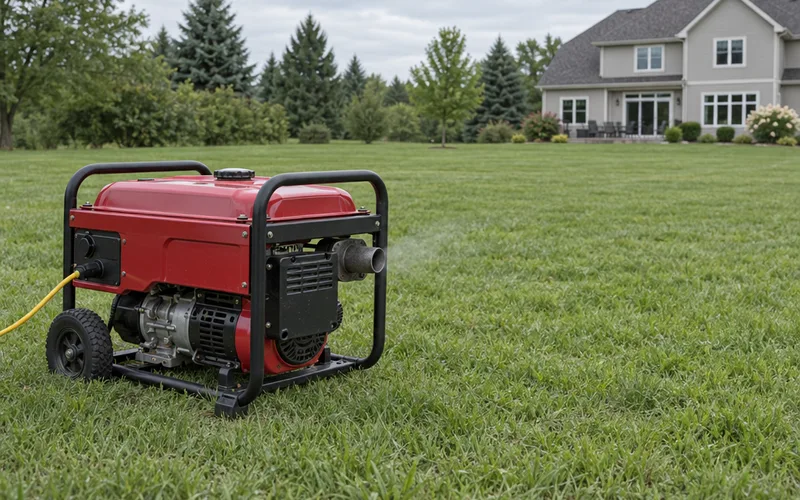
Point the exhaust away from the house, and away from your neighbor’s windows too. Wind can push fumes back toward a door, so check which way it’s blowing when you set up.
If you want a quick way to picture 20 feet, think of about seven long steps from the wall.
What if your manual says something different? PIRG, quoting NBC News, says manuals can be vague or inconsistent, and some tell owners to keep a generator as little as 5 feet from windows.
When your manual and an agency disagree, use the longer distance. Twenty feet isn’t a perfect shield, but it gives exhaust room to thin out before it reaches a door or window.
Our guide on how far a generator should be from the house covers odd lots and tight yards. If 20 feet doesn’t reach your outlets, a generator exhaust extension is a different question from moving the generator closer.
During a storm you may be tempted to shuffle the generator around. Plan the spot ahead, using our notes on where to put a generator during a storm.
3. Install carbon monoxide alarms and know the signs
Distance lowers the risk, but it doesn’t remove it. That’s why every home needs working carbon monoxide alarms, on every level and outside sleeping areas.
Battery-powered or battery backup models are the best fit, because the power may be out when you need them. PIRG says alarms should be tested each year, especially if you plan to use a portable generator.
Know the symptoms too. Carbon monoxide poisoning can feel like the flu, with headache, dizziness, nausea, weakness or confusion, and it can lead to passing out.
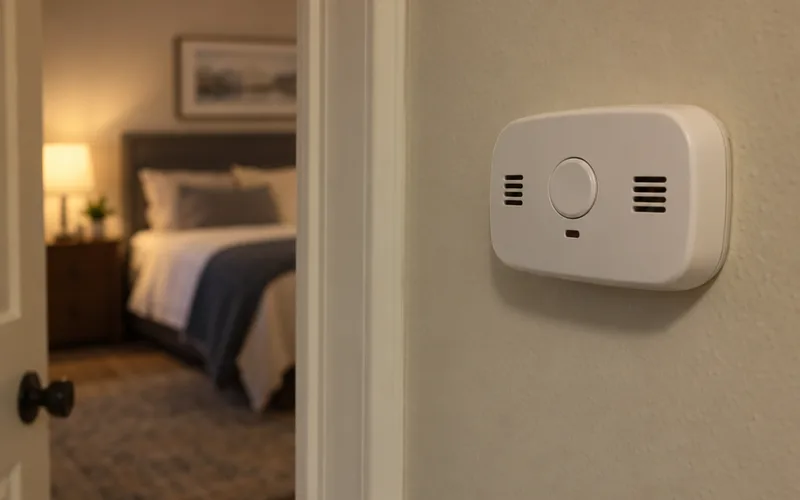
That flu-like feel is the trap. Someone may blame a long, stressful night, and keep resting in the room that’s filling with gas.
If an alarm sounds or anyone feels sick, get everyone outside into fresh air and call 911. Stay out until emergency responders say the home is clear.
Our guides on generator carbon monoxide safety and generator exhaust fumes explain how exhaust gets into a home. Read them before storm season, when you have time to think.
4. Keep it dry, but never boxed in
Water and electricity don’t mix, so a generator needs protection from rain and snow. PIRG advises that if you can’t keep it dry, you shouldn’t run it.
The usual fix is an open, canopy-like structure that sits overhead without touching the generator. PIRG says the cover shouldn’t touch the generator at all.
Don’t solve a wet-weather problem by moving the generator into a garage or under a low porch. Moving it in trades a shock risk for a carbon monoxide risk.
Keep your hands dry, keep cord connections off wet ground and check your manual for GFCI protection on the generator’s outlets. Our guide on running a generator in the rain goes through each step.
For a homemade cover, start with our DIY generator cover guide. If you’d rather buy one, compare portable generator covers made for use while running.
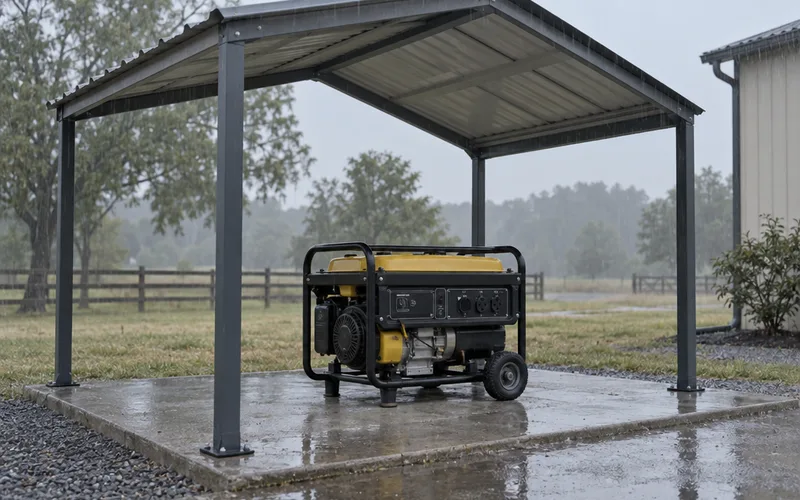
Whichever you choose, check that air can still flow around the engine. A cover that holds in heat or exhaust creates a new problem.
5. Clear snow and handle cold
Heavy snow can pile up around a generator faster than you’d think. Clear it away from the exhaust and the air intake, and keep the generator on a level, stable surface.
Cold weather adds trouble of its own, from hard starts to thick oil. Check how to protect a generator from snow and the notes on running a generator in cold weather before the first freeze.
Keep the clearance rule in mind during a snowstorm. Don’t tuck the generator against the house to keep it out of the drifts.
Check the exhaust and intake again after each new snowfall, since a clear spot can fill in overnight. If the snow is deep, shovel a wide path to the generator too, so you can reach it without stumbling.
6. Use the right cords, and never backfeed
The most dangerous shortcut is a cord with a plug on both ends. PIRG notes that these male-to-male cords, sometimes called “suicide cords,” are marketed for generator use even though the CPSC has long warned people not to use them.
Instead, use a heavy-duty, outdoor-rated, grounded extension cord that’s rated for what you’re plugging in. Check it for cracks or worn spots before every use, and don’t run it under a rug where heat can build up.
Keep it out of doorways too, where a closing door can pinch it and a foot can trip on it.
A cord that’s too thin for the load can overheat. That’s one more reason to match the cord to the appliance, and to keep it as short as the setup allows.
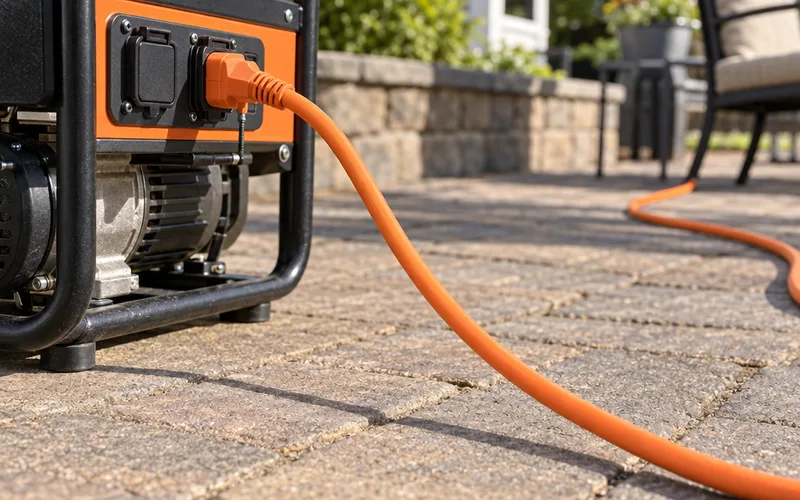
Never plug a generator into a wall outlet to power the house. That’s called backfeeding a generator, and it sends power back out onto the utility lines.
PIRG warns that if the power returns while you’re backfeeding, you can create a surge that can cause a fire. It also puts line workers at risk, since they may assume the lines are dead.
To power household circuits safely, you need a transfer switch or interlock kit installed by a licensed electrician. Our installation guides explain how each one works, and interlock versus transfer switch helps you choose.
Picking a cord for a long run? Start with the best extension cord for a generator.
7. Handle fuel and fire risks carefully
A generator engine gets hot, and gasoline vapor catches fire easily. Turn the engine off and let it cool before you add fuel.
Store fuel in approved containers, away from the generator and away from the house. Keep the area around the generator clear of dry grass, leaves and anything else that burns, and keep a fire extinguisher within reach.
Fuel that sits for months creates its own trouble. Our guide on generator fuel storage covers safe containers and how long fuel lasts.
Fire doesn’t always start with fuel. A frayed cord or an overloaded circuit can overheat, which is why our generator fire hazard page walks through the warning signs.
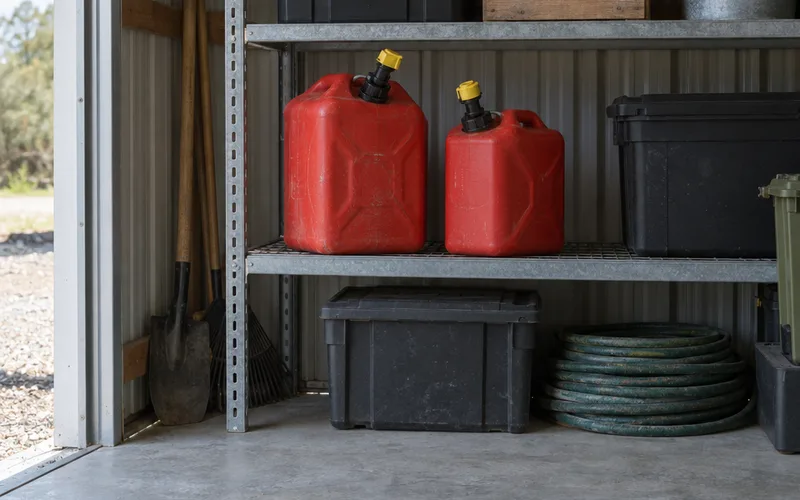
If you smell gas or see a fuel leak, shut the generator down and keep flames and sparks away. Don’t restart it until the leak is fixed.
8. Don’t overload it or run the wrong things
Every generator has a rated limit. Add up what you plan to run, and don’t go past it, because an overloaded generator can overheat or trip its breaker.
Motors need a burst of extra power to start. A refrigerator or sump pump can ask for more at startup than it needs while running, so leave some headroom.
Start with essentials like the fridge, a few lights and a phone charger.
You can add other items one at a time, giving the generator a moment to settle before each new load.
Our generator sizing guide shows how to total your loads, and what not to run on a generator lists the heavy hitters to skip.
Electronics are a common worry. Read about whether generator power is safe for electronics, including how to protect a TV, before you plug in anything valuable.
9. Look for built-in safety features when you buy
If you’re shopping for a portable generator, safety features are worth a look. PIRG, citing Consumer Reports, says models that shut off automatically when carbon monoxide rises are safer than those without that switch.
Some models also emit less carbon monoxide, which is worth asking about before you buy.
PIRG also advises buying well before a storm. You’ll have time to read the manual, test the unit and set up the cords and canopy without rushing.
A shutoff is a backup, not permission to relax. Keep the distance rule and your home alarms in place even if the generator has one.
Our best home generators page compares models for different homes, so you can weigh safety features alongside power and price.
10. Start, stop and shut down by the book
Read the manual before the first outage, not during it. Our guide on how to operate a generator walks through starting, loading and shutting down in a sensible order.
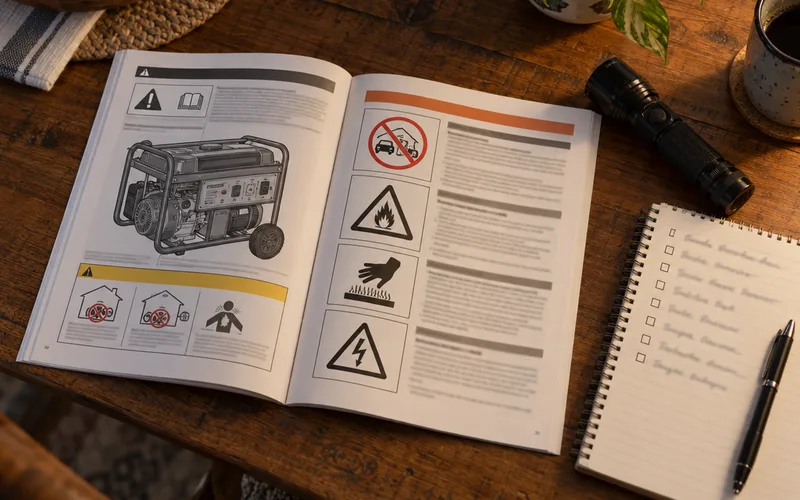
When utility power comes back, don’t just yank a cord. Follow the shutdown steps in how to turn off a generator when the power comes back on.
If you have a transfer setup, check the breaker position first. The question of whether the generator breaker should be on or off depends on your equipment, so follow your manual and your electrician.
11. Don’t leave it running unattended
Running a generator through the night adds risk. You can’t hear a fault while you sleep, you can’t spot a fuel problem, and carbon monoxide builds up while you’re least able to notice it.
If you must run it for hours, check on it, and refuel only when it’s off and cool. Our guide on leaving a generator running unattended covers what the manuals say about run time and breaks.
Neighbors count too. If yours runs a generator all night near your window, our page on a neighbor who runs a generator all night explains your options.
A running generator can also tempt thieves. See portable generator theft prevention for ways to lock it down without blocking its airflow.
12. Rules for apartments, balconies and tight lots
If you rent or live in a condo, your options shrink quickly. A balcony, breezeway or covered patio is a partially enclosed space, the kind of spot the PGMA warns about.
Check your lease or association rules before you buy a generator. Some buildings restrict them, partly because exhaust can drift into a neighbor’s unit.
If you can’t place a generator 20 feet from every door, window and vent, don’t run one at all. A battery backup system or a different plan may suit a small space better.
Compare home battery backup versus a generator, or look at other generator alternatives before you decide. Both pages weigh the tradeoffs without assuming you have a yard.
13. Keep kids and pets away
A running generator is loud, hot and full of moving parts. Make a clear no-go zone around it, and keep children and pets outside that line.
PIRG says portable generators are extremely dangerous to people and pets. Exhaust is the main reason, but hot metal and cords on the ground are real hazards for small hands and paws.
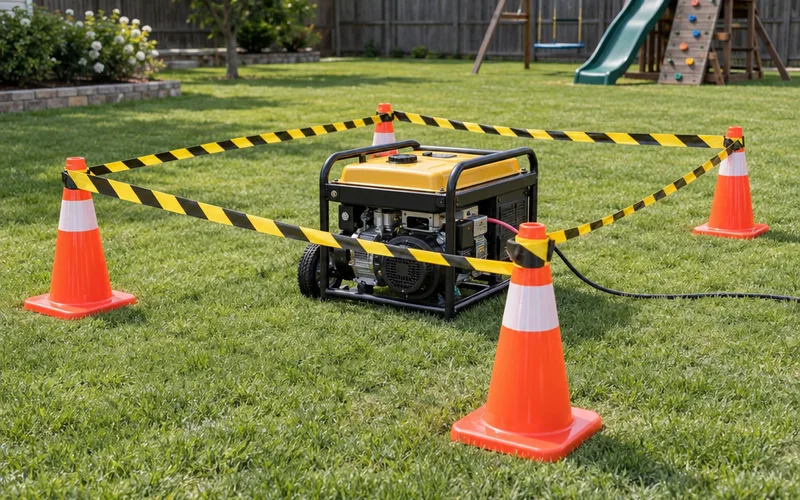
Tell everyone in the house where the generator sits and why it’s off limits. That includes guests, who may not know the rules, and older children, who may be curious about the noise.
A short talk before the storm is easier than a scare during it.
14. Know the warning signs and when to stop
Shut the generator down if something feels wrong. Smoke, sparks, a burning smell, a fuel leak or a loud new noise all mean it’s time to stop.
Flickering lights or an engine that surges can mean an overload or a fault. Unplug what you can, let the engine cool, then check the load and the manual.
Don’t bypass a low-oil shutoff or any carbon monoxide shutoff built into the unit. Taping over a switch or defeating a safety device may keep the generator running, but it also removes the protection you paid for.
Those features exist to protect you, and a unit that keeps tripping needs repair.
If you smell exhaust inside, or an alarm sounds, the rule changes. Get everyone outside first, then call 911 from fresh air.
If something catches fire, leave the area and call 911 rather than trying to fight a growing fire. You can always replace a generator, but you can’t replace a person.
Our maintenance section explains routine checks, and a qualified technician should handle electrical faults.
A generator that gets regular care is less likely to surprise you. Keep a simple log of what you’ve fixed, so you notice when the same problem returns.
15. Standby generators have their own rules
A permanently installed standby generator is safer to place in some ways, because it’s built for a fixed outdoor spot. But it connects to your home and gas line, so a licensed professional should install it, following your manual and local codes.
Standby units can start on their own, so turn one off before opening the cover or working near it. That includes yard work around the unit, since a sudden start while you’re close by is an easy way to get hurt.
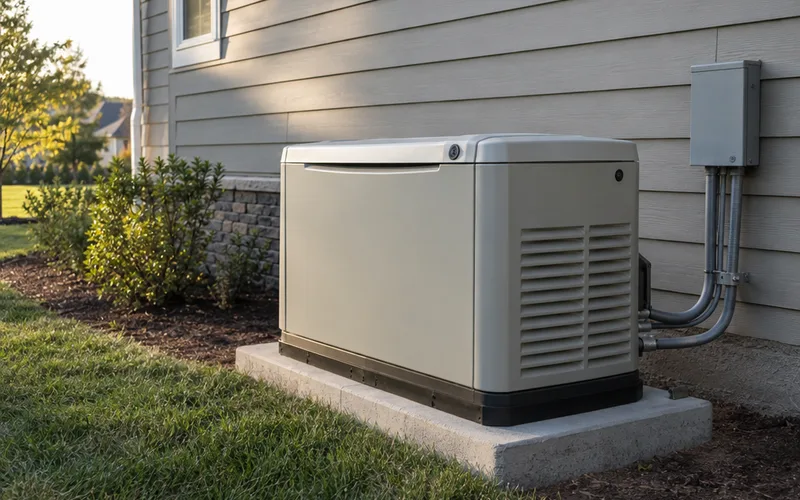
Keep vents clear of leaves and debris, and follow its clearance rules for walls, windows and fuel lines.
An enclosure can help with weather and noise, but it has to allow airflow. Look at our enclosure guides before you box a unit in.
If you’re unsure about a clearance, ask the installer or your local building office, and get the answer in writing.
16. Plan for medical devices and long outages
If someone in your home relies on a CPAP, an oxygen concentrator or another powered device, plan your power long before a storm. Write down how long the device runs on battery, and what your backup is.
Ask its maker or your doctor how long the device can safely go without power, so you know when to move to a plan B.
Our guides on running a CPAP without power and free generators for medical equipment cover options. Some programs also help seniors, as in free generators for the elderly.
Ask your utility whether it keeps a list of customers who depend on medical equipment. Some do, and being on it can mean faster updates.
That call is easier to make on a calm day than in the middle of an outage.
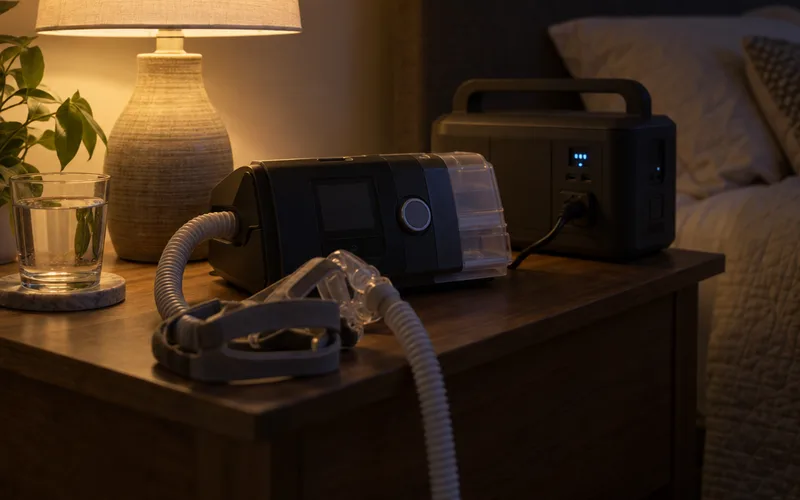
A winter outage adds heat and food concerns. Build a winter power outage survival kit now, so you aren’t relying on the generator alone.
17. Prepare before the outage hits
A written plan helps you act quickly. Note where the generator will sit, which loads it will run, how much fuel you keep and how you’ll rotate it.
Test the generator before you need it. Use your generator maintenance plan to check oil, fuel and the starting battery, and to catch faults early.
Keep a small kit with spare oil, a funnel, flashlights and a printed copy of your manual’s safety page. When the lights go out, you won’t want to search for any of it.
Practice the setup once in daylight, with the alarms tested and the cords laid out. That’s far easier than doing it in the dark with the lights out.
Here’s a short routine to follow each time you set up. Before you start:
- Read the label and the manual’s safety section.
- Test the alarms inside the house.
- Check the cords for cracks and worn spots.
- Make sure the fuel is in approved containers, away from the unit.
While it runs:
- Keep the generator outdoors, 20 feet from doors, windows and vents.
- Aim the exhaust away from every building.
- Use a dry, open canopy if the weather calls for one.
- Run an outdoor-rated cord straight to each appliance.
When you’re done:
- Turn off the appliances, then the generator.
- Let the engine cool before you touch it or add fuel.
- Store fuel and cords away from the house.
Run through the list once and it becomes a habit. The next outage will feel less like an emergency and more like a plan.