
Buying a standby generator is the easy part. Getting it installed means meeting a stack of rules most people never see until the quote arrives.
In this guide, I’ll walk you through the six generator installation requirements that decide where the unit goes and who can hook it up. Let’s dive right in.
Where Generator Installation Requirements Come From
Generator installation requirements come from three places, and they stack up:
- National standards. The National Fire Protection Association publishes NFPA 37, the source of most clearance rules, while electrical codes cover the wiring.
- The manufacturer’s manual. Each model lists its own clearances, pad and fuel specs.
- Your local authority. City, county and state building codes, plus any HOA rules.
Here’s the deal: the strictest rule wins. One installer’s placement guide notes that some areas require 10 feet from the house or 5 feet from property lines.
So treat every national number below as a starting point.
Requirement #1: Enough Clearance Around the Generator
Clearance is really several distances at once. Why does it matter so much?
A generator makes carbon monoxide, a gas you can’t see or smell. Its exhaust also gets hot enough to be a fire risk near wood siding or shrubs.
The 5-Foot Rule and the 18-Inch Exception
Under NFPA 37, the generator must sit at least 5 feet from any window that opens, door, air intake vent or window well. Measure from the edge of the unit to the edge of the opening, and keep 5 feet from combustible siding too.
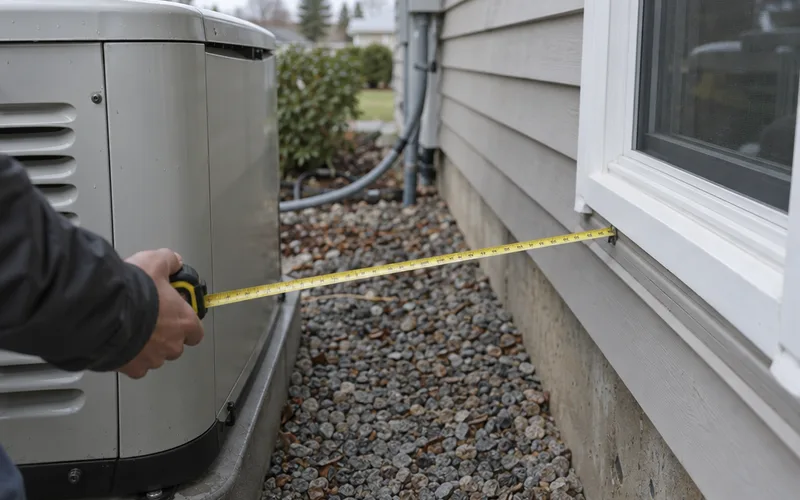
Some brands allow less space beside a brick or concrete wall. Installer guides report that Generac, after fire testing, lets some units sit as close as 18 inches.
The catch?
The 18-inch exception never overrides the 5-foot rule for openings. A brick wall with a window in it still needs 5 feet from that window.
Installers also check a few more distances around the yard:
- At least 3 feet from the gas meter and its regulator vent
- 3 feet of clear working space in front of the electric meter and electrical panel
- At least 3 feet from an air conditioning unit, for airflow
- 3 feet from shrubs, with nothing overhanging within 5 feet above
- Never under a deck, an overhang or in a partly enclosed space
Each distance has its own logic, and where a generator can safely sit usually depends on which one your yard hits first.
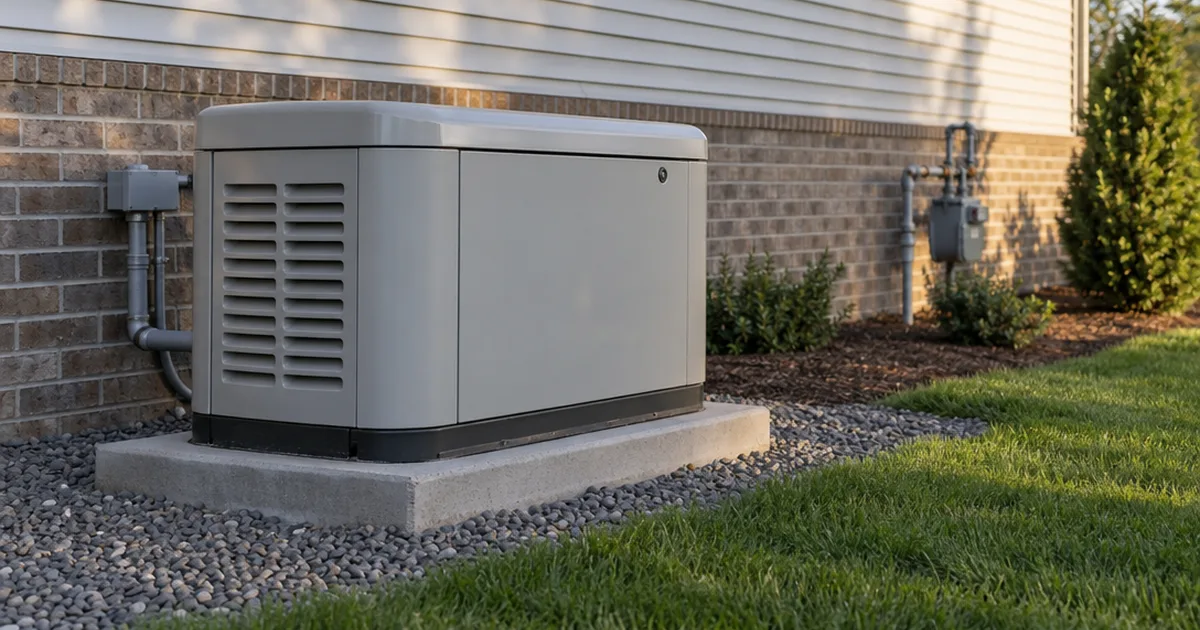
Requirement #2: A Level, Well-Drained Pad
A permanent unit needs a stable, level base. In most installs, that’s a pre-cast pad or poured concrete.
Skip low spots that flood, clear away plants and debris, and add drainage if the ground stays wet. Coastal homes may also need corrosion-resistant equipment.
Pad size and base prep vary by model, so check the generator pad requirements before anyone pours concrete.
Requirement #3: A Fuel Supply That Keeps Up
Most home standby units run on natural gas or propane. Natural gas units connect to utility lines, so you never refuel them, while propane units need an on-site tank that codes control.
Here’s what installers check on the fuel side:
- Meter size. You may need a bigger gas meter to feed the generator.
- Line size. Pipe that’s too small can’t deliver enough pressure and flow.
- Run length. Longer lines cost more and can affect fuel pressure.
That’s why the generator gas line size is a calculation, not a guess. A licensed plumber or gas fitter then handles the generator gas line installation so every joint meets code.
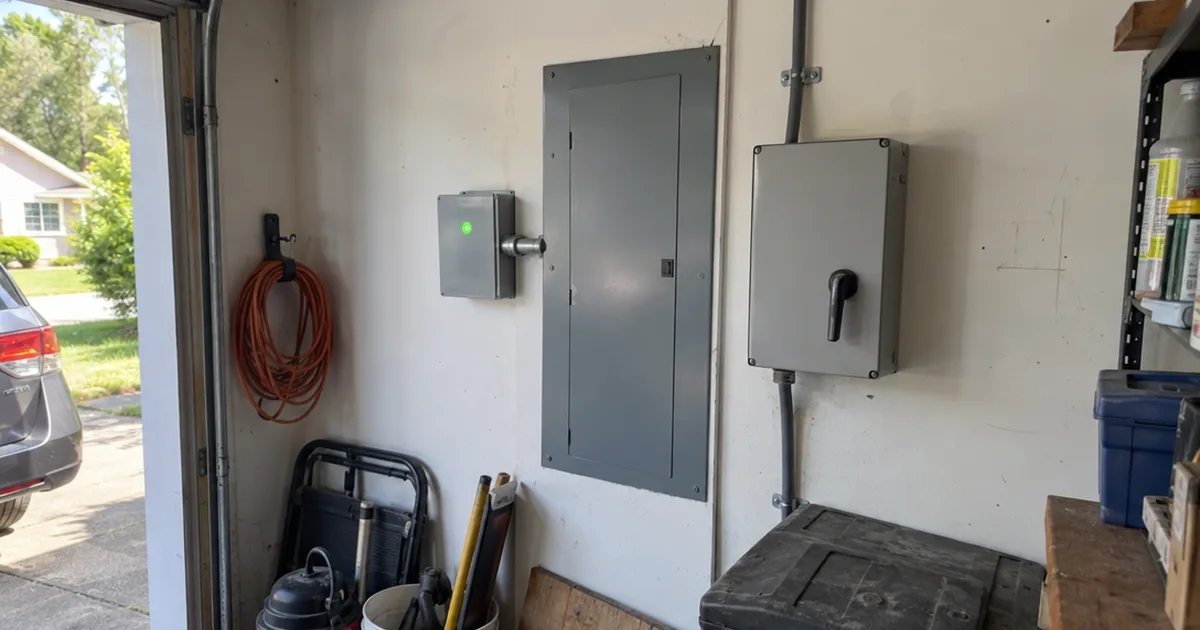
Requirement #4: A Panel Ready for a Transfer Switch
A whole-home generator needs a transfer switch. It moves your house from utility electricity to generator power during power outages.
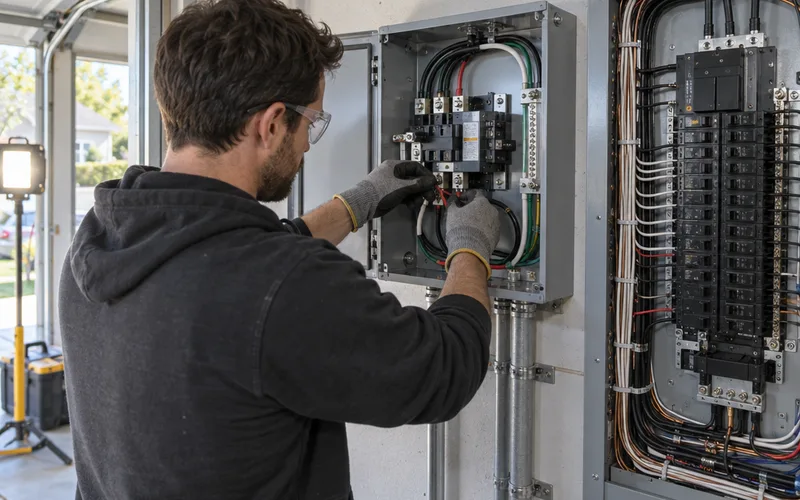
Before the switch goes in, an electrician checks three things:
- The panel. An older panel may not be built for a whole-home generator and may need replacing.
- The load. A load calculation sets the generator size and shows whether the panel can handle it.
- The wiring. The electrician fixes any code problem as part of the job.
The cable matters too. Generator feeder sizing depends on the unit’s output and the run length, and longer runs mean pricier wire and more voltage drop.
Not sure what size you need? Work out your generator size first, then compare transfer switch options and read up on generator grounding.
Requirement #5: Permits, Inspection and HOA Approval
A permanent install almost always needs a permit, because it involves big electrical and often gas work. An inspector then checks the electrician’s finished job against local code.
Permit rules change from one town to the next. That’s why Texas and California searches get different answers, and the switch may need its own permit too.
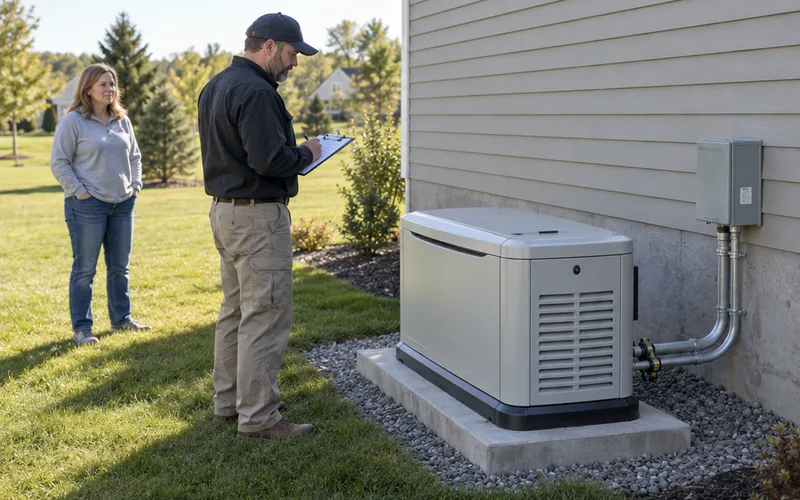
A homeowners’ association may also limit where the unit shows and how much noise it makes. Generac’s FAQ puts its standby units at 65 to 67 decibels, about like a central air conditioner.
So read the HOA generator rules before you pick a spot.
Requirement #6: The Right Home and the Right Installer
Generac’s FAQ treats its standby units as permanent installs on single-use property the owner approves, so renters need the owner’s okay. Apartments, multi-family buildings and mobile homes don’t qualify.
Can you do the work yourself? Generac says you could handle site prep or even the whole job, but it recommends a dealer or licensed contractor for safety and code.
Your installer choice can also affect your warranty. Generac’s FAQ says its 5-year warranty requires buying and installing through a local Generac dealer.
The steps for installing a Generac whole house generator differ from a Kohler generator setup, so work from your model’s manual. Generac says it operates in more than 150 countries, so match the manual to the model sold where you live.
Your Pre-Install Checklist
Run through this list before you ask for quotes:
- Download your model’s installation manual and note its clearances.
- Mark a spot at least 5 feet from every opening.
- Confirm the ground is level, dry and easy to reach.
- Check your gas meter or where a propane tank could go.
- Have an electrician look at your panel and load.
- Call the building department and read your HOA rules.
Leave room for a technician to reach the unit for maintenance like oil and filter changes. Generac’s international site sends U.S. and Canadian buyers to generac.com, so start there if you need a manual for a model sold here.
Get the Requirements Right Before You Buy
Most generator installation requirements come down to space, a solid base, fuel, a safe hookup and paperwork. Check them against your local code and the wider home generator installation process before the next power outage, not after.
Which requirement is the biggest question for your home right now?
Frequently Asked Questions
How far does a generator have to be from your house?
At least 5 feet from operable windows, doors and vents under NFPA 37. Some models allow 18 inches from a brick or concrete wall, but local code can require more.
What do you need to hook a generator up to a house?
You need a transfer switch, correctly sized wiring, a fuel connection and usually a permit. An electrician should check that your panel can handle the load first.
Can a homeowner install his own Generac generator?
Generac says you can do some or all of the work, but it recommends a dealer or licensed contractor. Only dealer installs qualify for its 5-year warranty.
What are the disadvantages of whole house generators?
Each one needs a permit, a pad, a fuel hookup and clear space, which adds cost. Generac also recommends service every 6 months.
How much is a generator for a 2000 sq ft house installed?
It depends on the loads you want to run, not square footage alone. Generac lists units from just over $2,000, plus dealer-priced installation.