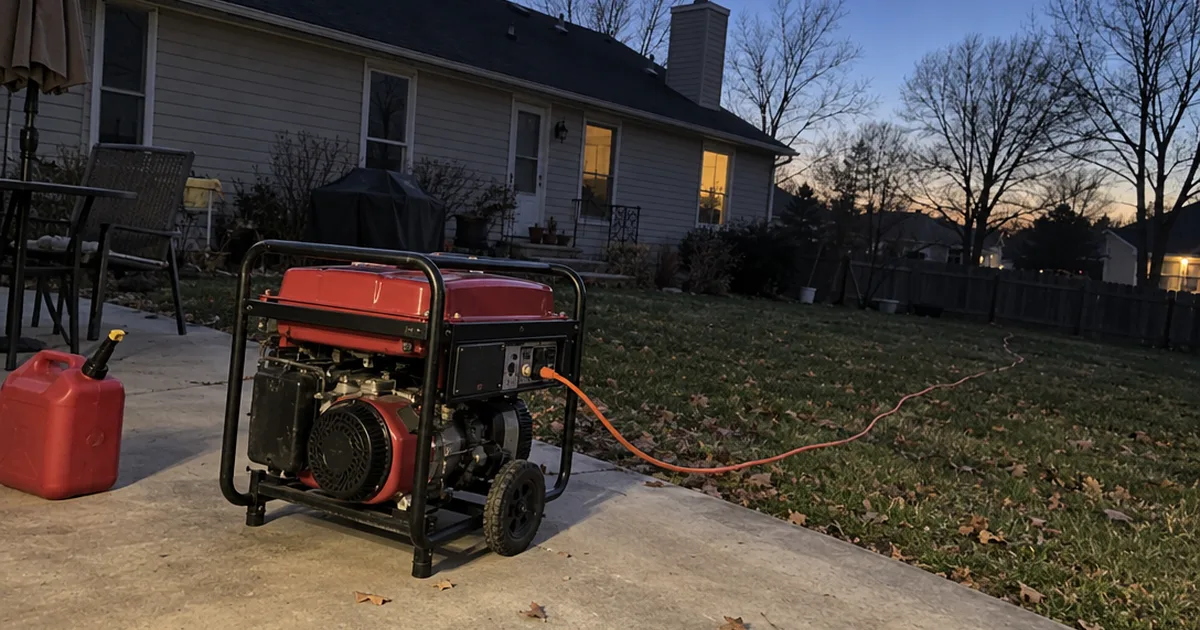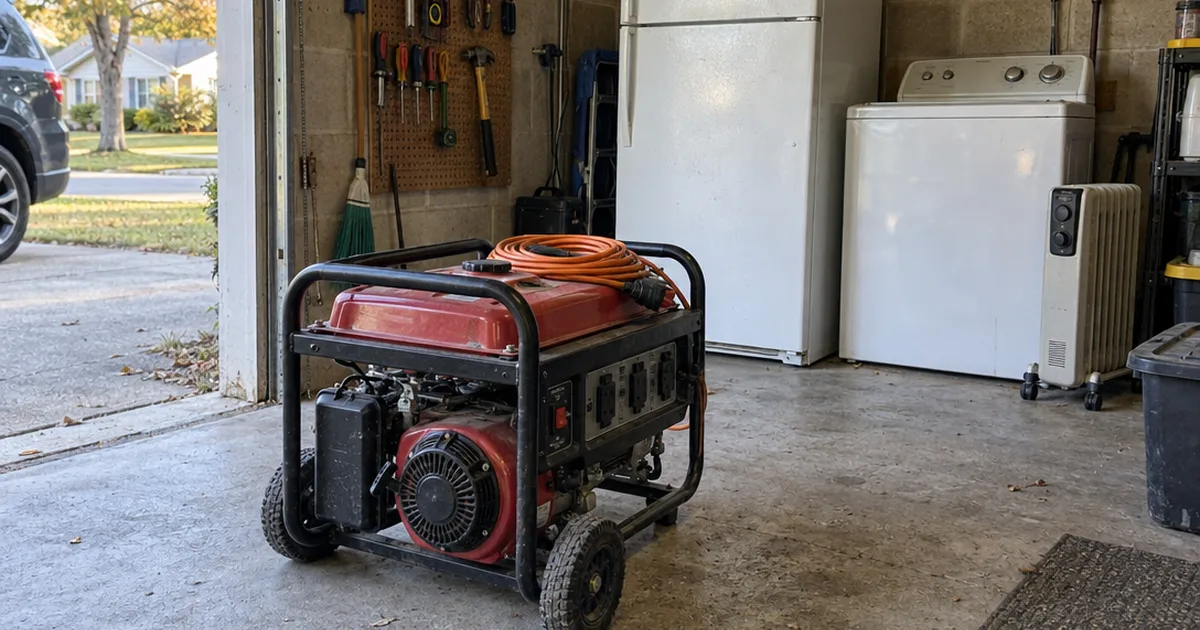

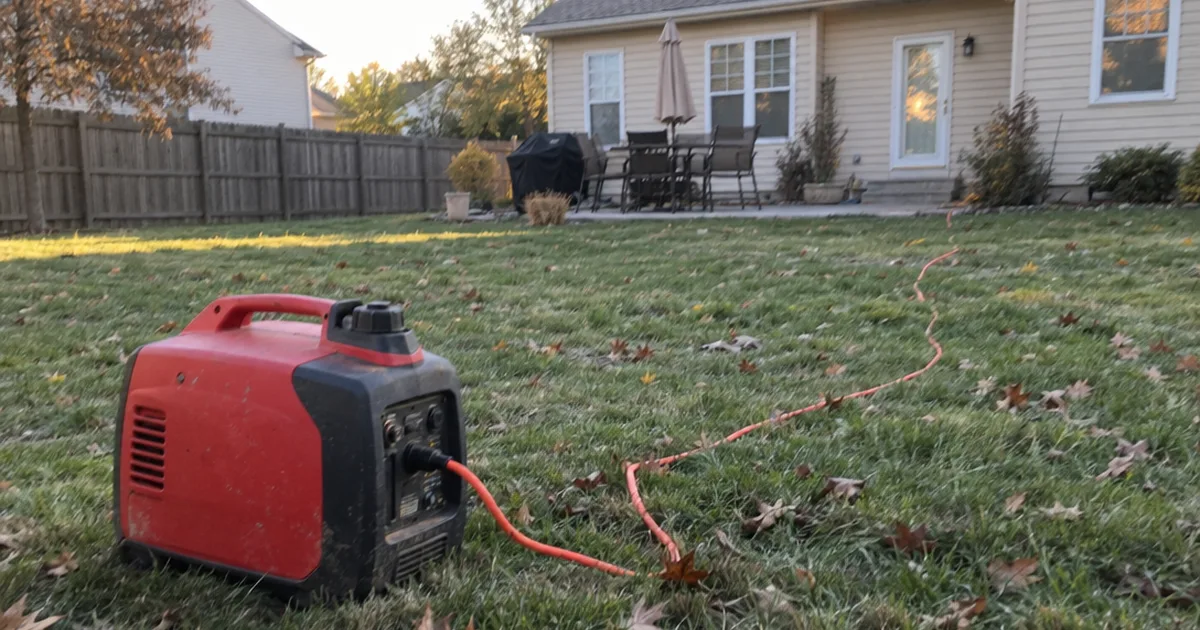
A generator sold as “2,400 watts” may hold only 1,800 watts steady.
That gap comes straight from ERAYAK’s own listing for its 2400P inverter, and it’s the number that decides whether your food stays cold.
Most answers to “what size generator to run refrigerator and freezer” hand you a watt range and stop there.
Below, you’ll get the 2 checks every fridge and freezer pair must pass, how to read your labels, and worked math you can copy.
What Size Generator Do You Need for a Refrigerator and Freezer?
A generator for a refrigerator and freezer has to pass 2 checks. Its running watts must cover both appliances’ running watts, and its peak watts must cover the bigger compressor’s start plus everything else on.
The right size is the smallest generator that clears both checks for your own appliances, with some headroom left over.
Why two checks instead of one? Because your refrigerator and freezer draw power in two very different ways, and a generator is rated in two different ways to match.
The running check protects the hours of normal cooling. The peak check protects the few seconds when a compressor kicks on, which is when an undersized generator trips its breaker or bogs down.
So before you shop, you need 4 numbers: each appliance’s running watts and each one’s starting watts. A label, a manual and a cheap meter will give you all of them.
How Many Watts Does a Refrigerator Use?
A refrigerator uses two amounts of power. It draws a steady running wattage while the compressor hums, and a brief, much higher starting surge when the compressor switches on.
That spike is called inrush current. The motor needs a hard shove to get moving, then settles down to a much lower draw.
The running number isn’t fixed all day either. A fridge also powers fans, lights, a defrost heater and sometimes an ice maker, and those parts can switch on at different times.
That’s why two fridges of the same size can need different generators. Older units, big side-by-side models and fridges in a hot garage tend to work harder.
Size from your own fridge’s label or meter reading, never from its cubic feet.
For a deeper look at the two ratings, this breakdown of running and starting watts covers which other appliances surge and why.
How Many Watts Does a Freezer Use on a Generator?
A chest or upright freezer runs on the same kind of compressor as a refrigerator. So it has its own running watts and its own starting surge, and both belong in your generator math.
Freezers usually skip the ice maker and extra fans, which keeps their running load simple. But the compressor start still counts in full.
A freezer sharing a generator with a fridge is what makes this job harder than sizing for one appliance. Two compressors can try to start at once, and that stacked surge is what trips small generators.
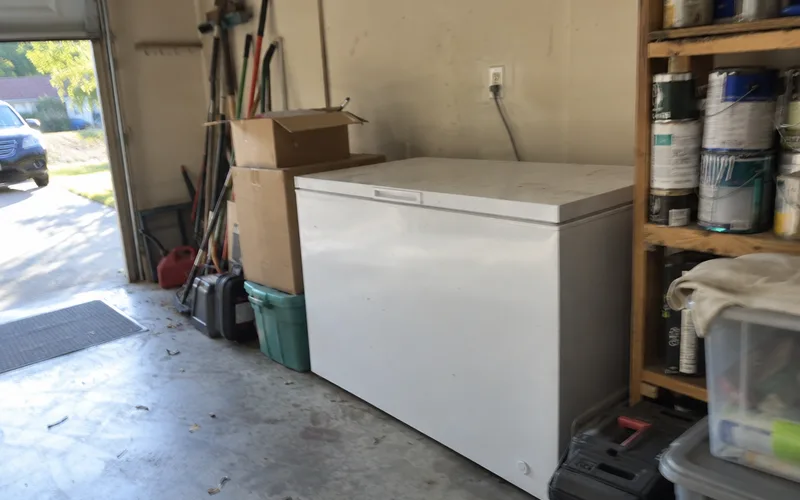
So treat the freezer as a second motor load from your very first sum, not as a small extra you tack on at the end.
How to Find Your Fridge and Freezer’s Real Wattage
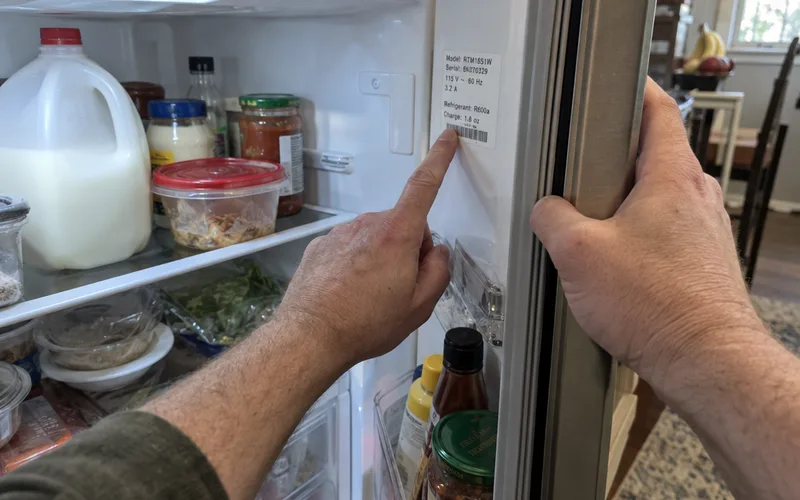
Your fridge and freezer’s real wattage comes from 3 places: the nameplate, the owner’s manual and a plug-in watt meter. The meter gives you the most honest number.
Check them in that order, since each step takes only a few minutes.
Read the Nameplate
Look for a sticker inside the fridge door, on an inside wall or on the back. On a chest freezer, check the back or side.
If it lists watts, write that down as running watts. If it lists only volts and amps, multiply them: volts × amps = watts.
Say your fridge’s sticker reads 115 volts and 6 amps (made-up numbers for this example). That’s 690 watts, a conservative running estimate, since label amps often run higher than the real draw.
Check the Manual for Starting Watts
The nameplate rarely lists the starting surge. The owner’s manual, the spec sheet on the maker’s website or the support line sometimes does.
Search your model number plus “starting watts” or “locked rotor amps.” If the manual lists only “additional starting watts,” that’s the extra on top of running watts, not the total.
Measure With a Plug-In Watt Meter
A plug-in watt meter sits between the outlet and the appliance and shows what it actually draws. Leave it plugged in over a full day to catch a defrost cycle and several compressor starts.
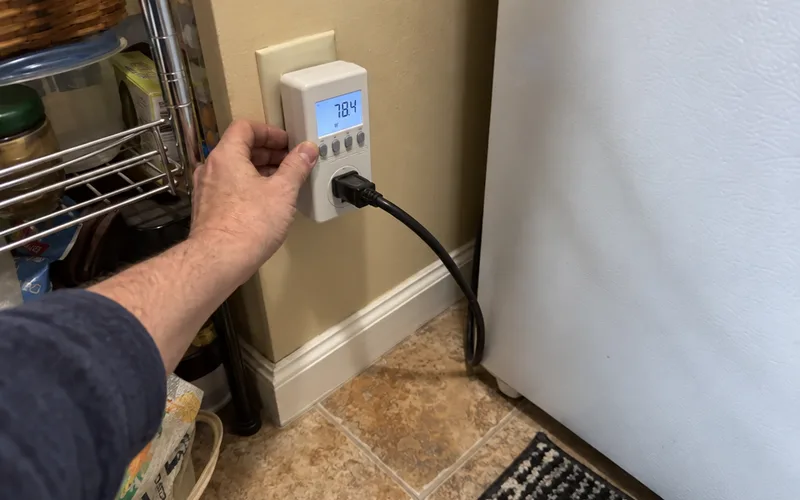
Pick a meter that records peak watts, because a basic one can miss a start that lasts only a second or two.
How to Calculate Generator Size for a Fridge and Freezer
Generator size for a fridge and freezer comes from 2 sums. Add all the running watts for the running check, then add the biggest single start to everyone else’s running watts for the peak check.
Here’s how it works, using made-up numbers you’d swap for your own:
- List what runs together. Fridge at 690 running watts, freezer at 460, and 100 watts of LED lights and a Wi-Fi router.
- Add the running watts. 690 + 460 + 100 = 1,250 running watts. Your generator’s running rating has to clear that with room to spare.
- Find the biggest start. Say the fridge’s manual lists 2,000 total starting watts and the freezer’s lists 1,400.
- Run the peak check. Biggest start plus everyone else’s running watts: 2,000 + 460 + 100 = 2,560 peak watts.
- Check the worst case. If both compressors could start together, add both starts: 2,000 + 1,400 + 100 = 3,500 peak watts.
So this made-up pair needs about 1,250 running watts. It needs 2,560 peak watts if you stagger the starts, or 3,500 if you can’t.
Some guides add a fridge’s running watts and starting watts together for the same appliance. That double counts the motor, because the starting figure already includes it.
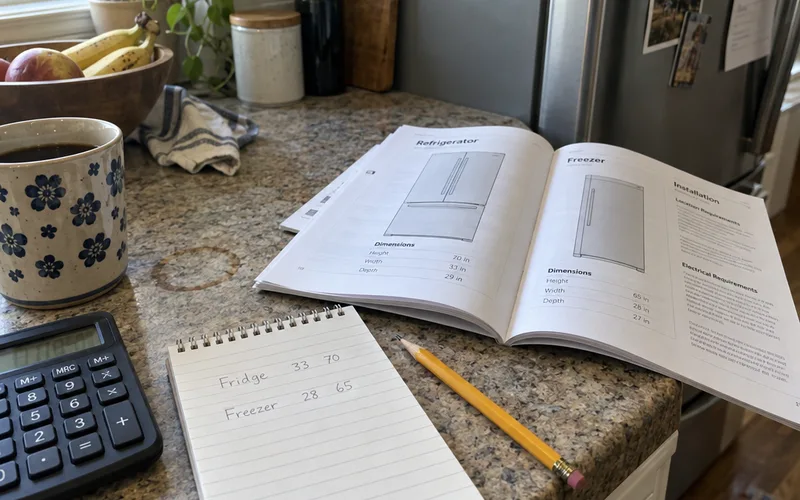
So if a manual gives total starting watts, use that number alone. If it lists additional starting watts, add it to the running total once.
For a whole-house load list beyond the kitchen, whole-home generator sizing uses the same two sums across every circuit you plan to back up.
How to Read a Generator’s Running and Peak Watts
A generator’s headline number is often its peak rating, not what it can hold all day. So read both figures on the spec sheet before you compare it with your fridge and freezer math.
Brand listings show how wide that gap gets. Here’s what ERAYAK and ALLPOWERS list for 4 of their own units:
| Model | Running watts | Peak watts | Notes |
|---|---|---|---|
| ERAYAK 2400P | 1,800 | 2,400 | Gas inverter |
| ERAYAK 4500PD Series | Not listed | 4,500 | Gas + propane |
| ERAYAK 6800PD / 6800PT | 5,000 on gasoline | 6,800 | 120V/240V |
| ALLPOWERS 2500W Solar Generator | 2,500 AC | 4,000 surge | 2,016Wh battery |
Check the hypothetical pair against those rows. The 2400P’s peak falls short of the 2,560 staggered peak, while the 6800 clears even the 3,500 worst case with plenty to spare.
The 4500PD shows the other trap: a card with only a peak number. Before you buy a model like that, find its running rating in the manual, and check it for the fuel you’ll actually burn.
Will a 2,000-Watt Generator Run a Refrigerator and Freezer?
A 2,000-watt generator runs a refrigerator and freezer only if both checks pass. The pair’s running watts must fit its running rating, and the bigger start plus the other appliance must fit its 2,000-watt peak.
Whether your pair passes depends on its labels, not on the number printed on the generator’s box.
First, check which 2,000 you’re buying. If 2,000 is the peak, the running rating sits lower, so the hypothetical 1,250-watt pair above would leave little room.
Second, run the peak check. In the made-up example, 2,560 staggered peak watts is already past 2,000, so that pair needs a bigger unit.
If your own numbers clear both ratings, a 2,000-watt unit can work with a strict start-up order. The 2,000-watt generator breakdown shows what else fits in that class.
Going even smaller? A 1,000-watt unit is usually a one-appliance tool, and only after you measure that appliance’s start.
How to Start a Fridge and Freezer Without Overloading the Generator
The way to start a fridge and freezer on one generator without tripping it is to stagger them. Plug in the appliance with the bigger start first, then add the second once its compressor settles.
That turns your worst-case peak into the smaller staggered peak. In the hypothetical example, it’s the difference between 3,500 and 2,560 watts.
Here’s the order that works:
- Start the generator with nothing plugged in and let it run steady.
- Plug in the appliance with the bigger start and wait until its compressor is humming.
- Plug in the second appliance.
- Add small loads, like lights and the router, last.
Staggering helps only at the first start. After that, the two thermostats call for cold on their own schedules, and sooner or later both compressors may restart close together.
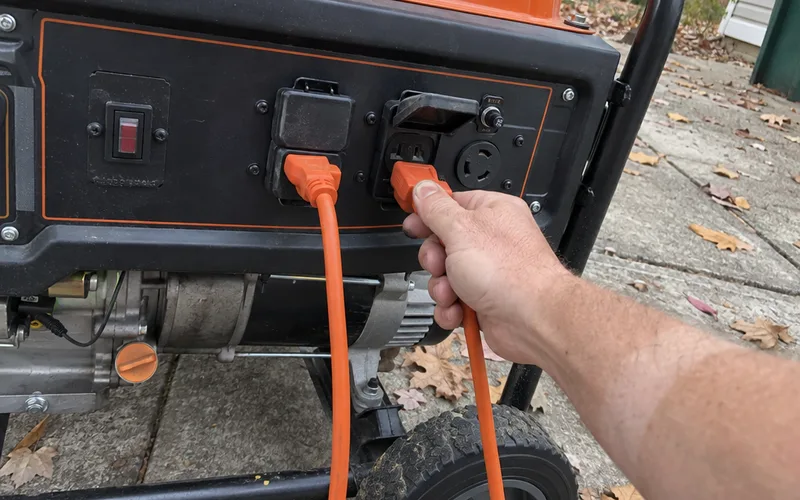
If your generator can’t cover the worst-case peak, you’re betting it never happens. So size up, or switch one appliance off while the other runs.
That on-off rotation is a form of load management, and it lets a smaller generator handle both appliances, one at a time.
Adding Lights, a TV or a Furnace to the Fridge and Freezer
Lights, a Wi-Fi router, a TV or a furnace blower each add their running watts to both checks. Any motor among them also adds its own starting surge, so recalculate before you plug them in.
Small electronics barely move the peak. Motors do.
For example, a furnace blower, a sump pump or a window AC can become the new biggest start in your peak check. Run that sum again with the new motor at the front.
Sizing for heat in winter? The furnace and refrigerator pairing gets its own math, because the blower can outweigh both cold appliances.
To see how far a mid-size unit stretches, check what a 3,000-watt generator can carry. Once the list grows past refrigeration, 6800-class units start to make sense.
Ready to compare models? This roundup of the best generator for a refrigerator sorts them by the same two ratings.
Can a Portable Power Station Run a Fridge and Freezer?
A portable power station can run a fridge and freezer if 2 numbers check out. Its output must cover the bigger compressor’s start, and its watt-hours must cover the hours you need.
Output watts work like a generator’s ratings. Watt-hours are the size of the fuel tank.
For example, the ALLPOWERS store listing shows its 2500W Solar Generator at $1,100.00, down from $1,799.00. The table above has its output, surge and battery figures.
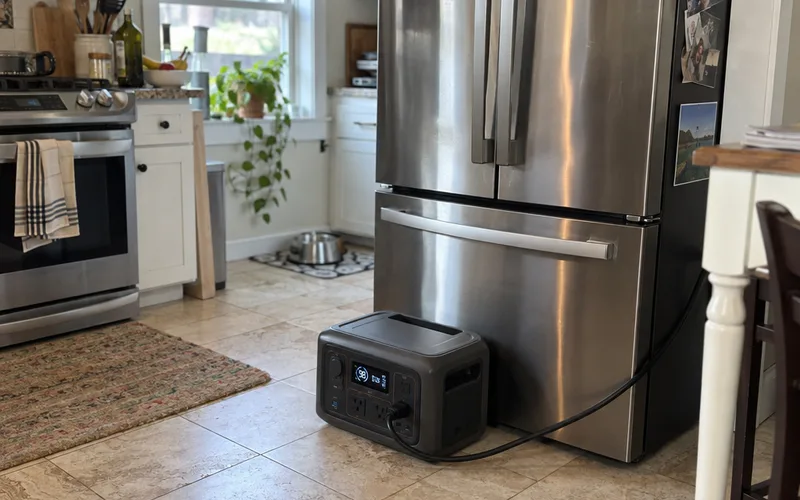
Here’s the rough runtime math: usable watt-hours ÷ average watts = hours.
Say your pair averages 200 watts over a day, since compressors cycle on and off (a made-up figure). A 2,016Wh battery would then last about 10 hours before conversion losses.
That covers a night, but a multi-day outage means recharging from solar panels, a car or a generator.
Planning around solar? The solar generator sizing breakdown covers panel and battery math, and this list of solar generators for a refrigerator compares units.
Still choosing between the two kinds? Weigh a power station vs a generator on runtime, noise and indoor use.
How to Connect a Fridge and Freezer to a Generator Safely
The safe way to connect a fridge and freezer to a portable generator is a heavy-duty outdoor extension cord, with the generator outside and away from the house. For a kitchen circuit, use a transfer switch an electrician installs.
A gas or propane portable engine-generator makes carbon monoxide. Never run one in the house, garage, basement, shed or on a covered porch, even with the doors open.
Put working CO alarms on every level of the house before the next outage.
Where it sits matters as much as its size, and this guide to carbon monoxide and placement shows where to aim the exhaust.
For the cords, pick one rated for the combined load and the distance, since an undersized cord runs hot and starves the compressor. This list of generator extension cords explains the gauge to look for.
Never plug the generator into a wall outlet to power the house. That backfeeds the wiring and can hurt a line worker.
If you’d rather keep the fridge on its own kitchen circuit, the transfer switch options are the code-friendly route.
Worried about the compressor or control board? Learn whether a generator can damage a refrigerator and how to avoid it.
Size for the Start, Then Add the Rest
The biggest compressor start, not the running total, usually decides your generator size.
This week, read both nameplates, run the 2 sums, and write your running and peak numbers on a card taped to the generator.
Frequently Asked Questions
Will a 1000W generator run a refrigerator?
A 1,000-watt generator runs a refrigerator only if the fridge’s starting surge fits under the generator’s peak rating and its running watts fit under the running rating. Measure the fridge’s start with a peak-reading watt meter first.
What will a 3000 watt generator run in a house?
A 3,000-watt generator runs any mix of appliances whose running watts add up to less than its running rating and whose biggest single start, plus everything else on, stays under its peak rating. Run the 2 sums with your own labels to confirm what fits.
Can I plug a refrigerator directly into a generator?
You can plug a refrigerator directly into a portable generator with a heavy-duty, outdoor-rated extension cord sized for the load, as long as the generator stays outside. Never plug the generator into a wall outlet to feed the house, because that backfeeds the wiring.
Can a solar generator run a freezer?
A solar generator can run a freezer when its AC output and surge ratings cover the freezer’s start and its battery watt-hours cover the hours you need. Divide its watt-hours by the freezer’s average draw for a rough runtime.