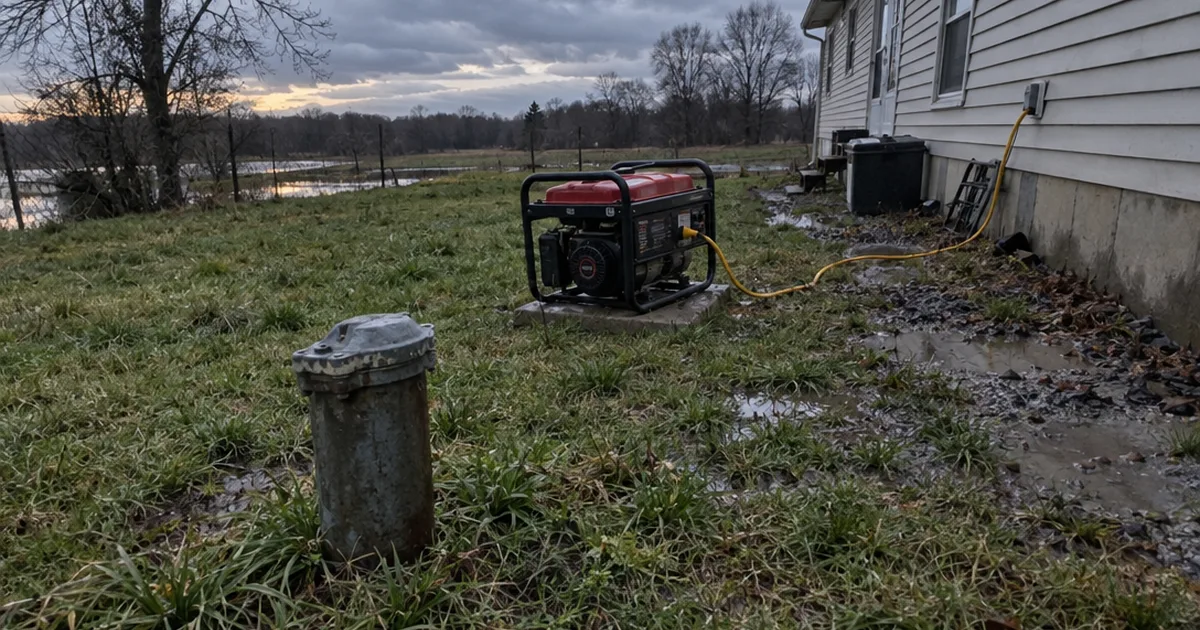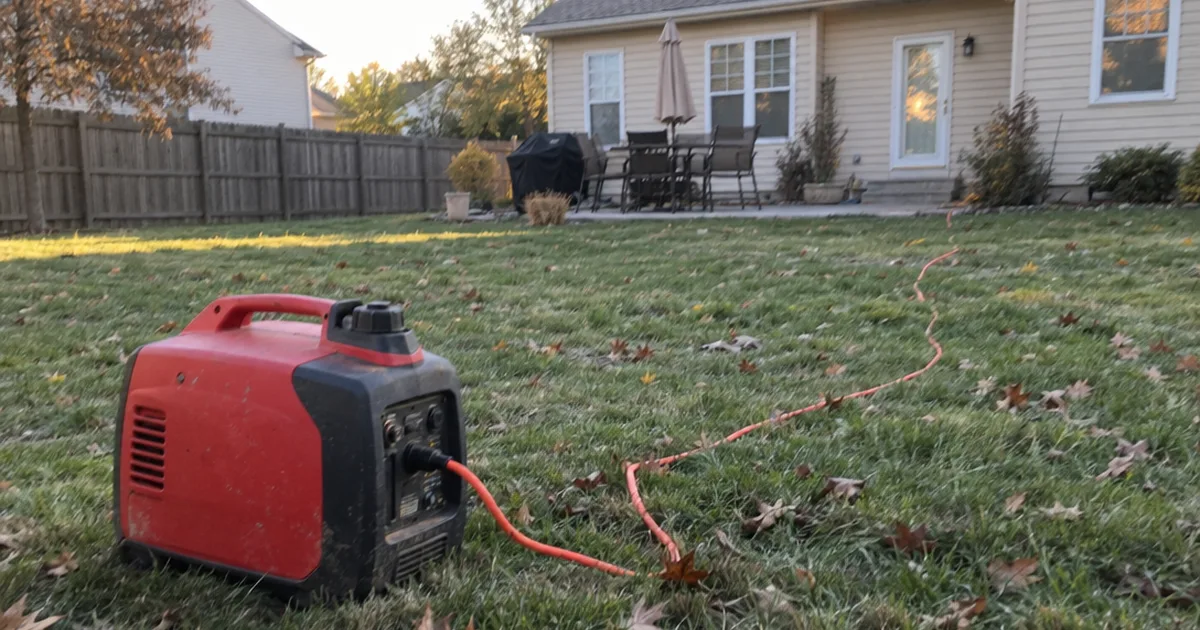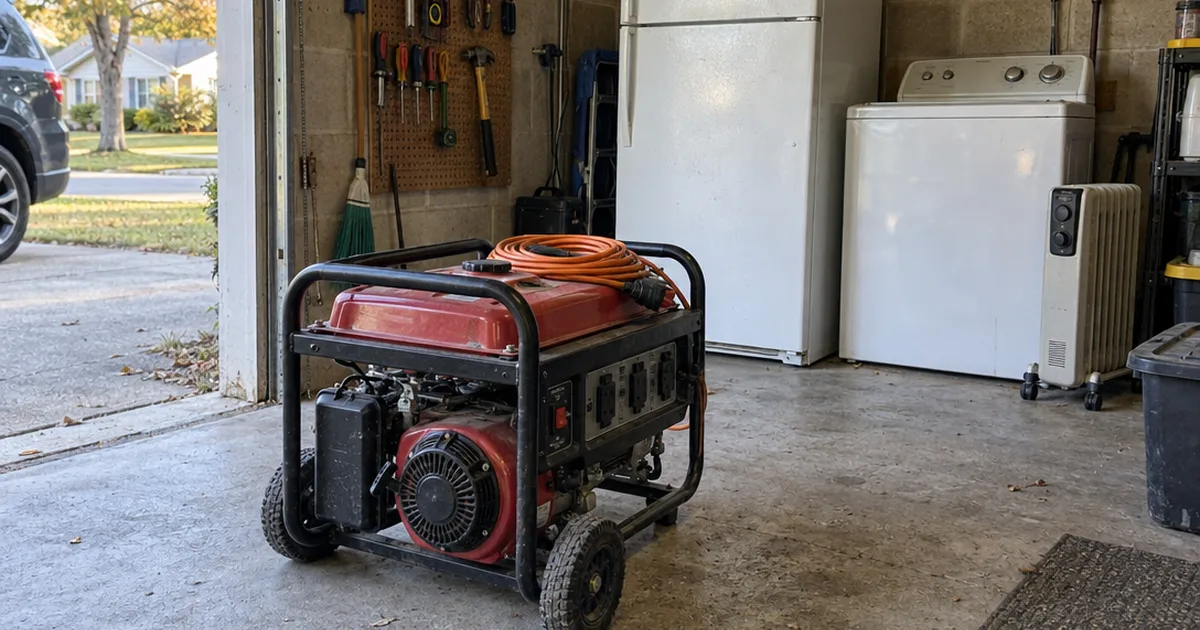

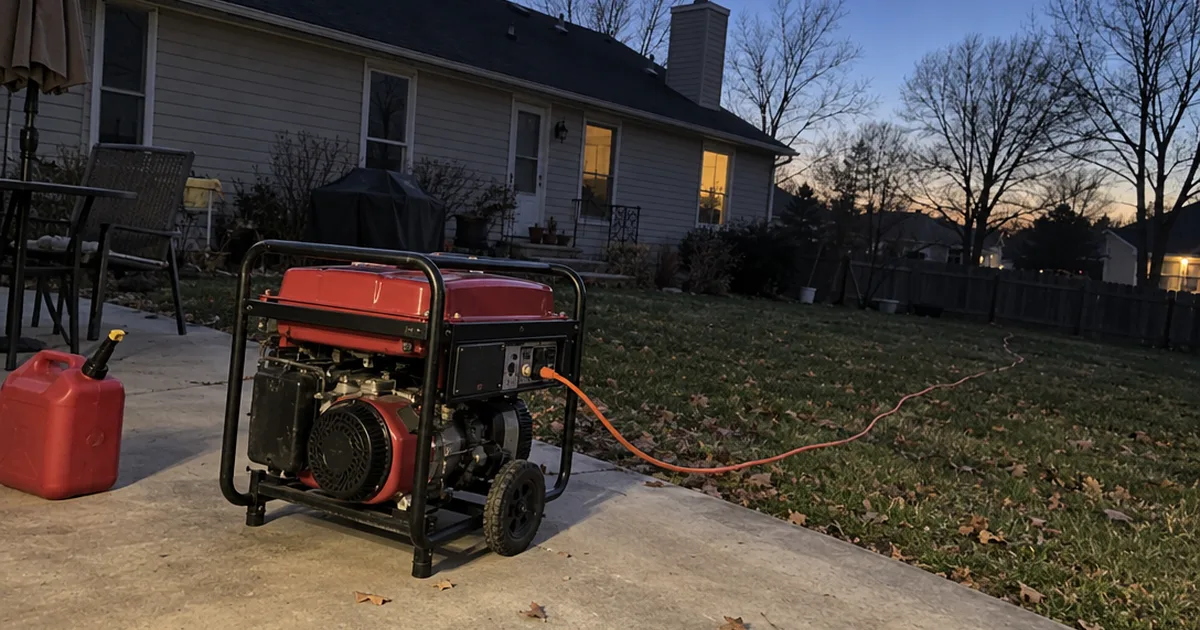
Two identical generators can run very different hours on the same full tank.
The reason is the load you plug in. The runtime printed on the box was measured at one specific load, and yours is probably different.
So the honest answer to how long can a generator run starts with 3 limits. You’ll see how each generator type hits them, then a 3-step way to turn your manual’s numbers into your own hours.
How Long Can a Generator Run? The 3 Limits That Decide It
How long a generator can run depends on 3 limits: how long its fuel lasts at your load, how long its engine can go before a stop for refuelling or oil, and any continuous-run limit in its manual. Whichever limit you hit first sets your runtime.
Here’s how each one works:
- Fuel at your load: a tank, cylinder or gas line feeds the engine, and a heavier load burns it faster.
- Engine stops: a portable must shut off to refuel, and every long run needs oil checks.
- Manual limits: the maker’s service schedule for long runs, which matters most on standby units.
Most home units are an engine-generator, a fuel-burning engine turning an alternator. That engine is why oil, heat and fuel all set limits, while a battery power station only runs out of stored energy.
Fuel is usually the first limit you hit, and it’s the one you control most through load. If you haven’t sized the generator to your loads yet, do that first, because an undersized unit works harder and burns fuel faster at the same job.
How Long Can a Portable Generator Run Continuously?
A portable generator can run continuously only as long as one tank of gasoline lasts at your load, because you must shut it off to refuel. Its spec sheet lists that runtime, measured at one stated load such as a quarter or half load.
That stated load is the catch. A spec sheet figure at a quarter load won’t hold if you run a fridge, a sump pump and a space heater at once.
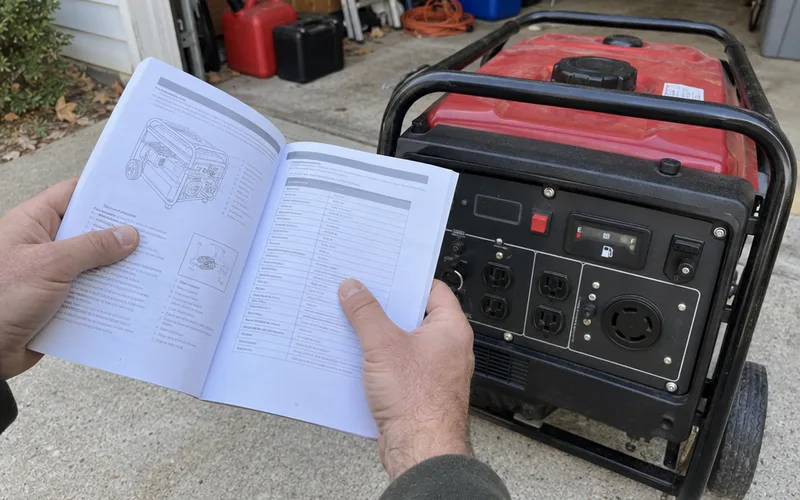
So read the runtime line closely. It usually names the load in small print, and that tells you whether the number fits your outage plan.
Inverter Generators and Eco Mode
An inverter generator can stretch a tank further at light loads, because its eco mode slows the engine to match what you plug in. A conventional portable holds its engine speed steady whether you run one lamp or 6 appliances.
That’s why inverter spec sheets often show long runtimes at a quarter load. The figure is real, but only at that light load, and the throttling engine inside an inverter is where the savings come from.
Dual-Fuel Portables on Propane
A dual-fuel portable on propane runs as long as its cylinder lasts, and you can swap a fresh cylinder in without pouring fuel near a hot engine. Bigger cylinders or a manifold of several tanks stretch the run further.
The trade-off is output, since many dual-fuel models list a lower rating on propane. Cylinder size changes the hours too, so check propane runtime by tank size before you buy tanks.
How Long Can a Whole House Generator Run Continuously?
A whole house generator can run continuously for days on a natural gas line or a large propane tank, because it never needs hand refuelling. Its owner’s manual still sets service stops for oil and inspection during a long outage.
A standby generator is installed permanently outside your home. An automatic transfer switch starts it when the grid fails and hands the house back when power returns.
Natural Gas Standby Units
A natural gas standby generator runs as long as the utility keeps gas flowing to your meter. There’s no tank to empty, so the limit becomes the manual’s service schedule, not fuel.
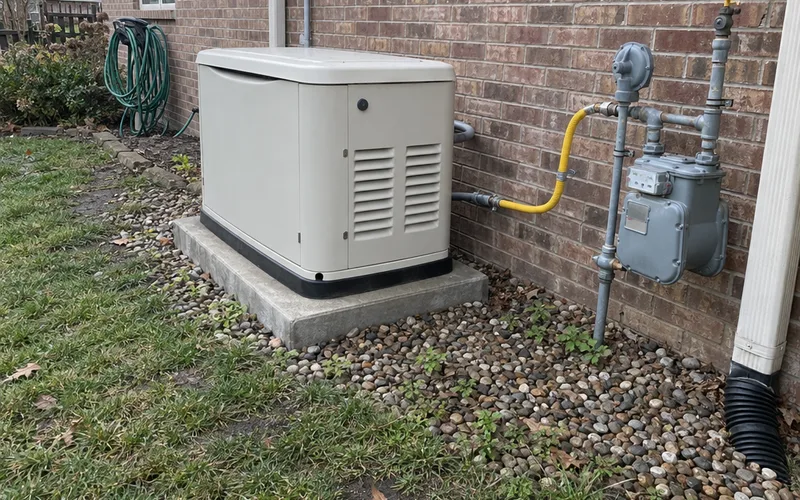
Running costs add up over a long outage, though, so price natural gas per kWh before one hits.
Propane Standby Units
A propane standby generator runs until its tank drops too low to feed the engine, so tank size and your load decide the days. A larger tank or a planned refill delivery keeps it going.
Book that delivery early in a long outage, before the tank gauge gets low.
Air-Cooled vs Liquid-Cooled Engines
Air-cooled and liquid-cooled standby engines carry different continuous-run guidance in their manuals. Liquid-cooled units are usually the larger, heavier-duty models found on bigger homes.
If you expect long outages where you live, see how the 2 cooling types compare before you buy.
How Long Can a Diesel Generator Run Continuously?
A diesel generator runs continuously as long as its fuel tank and the oil interval in its manual allow. Diesel units are often paired with large or external tanks, so the service schedule usually ends a run before fuel does.
Diesel also stores well with treatment, which suits a home planning for long outages. The trade-off is upfront cost and the need to keep the stored fuel clean.
For any diesel, the manual’s oil interval in running hours is the number to plan around. Note when the run started, and schedule your first check before you reach that interval.
Which Generator Type Runs the Longest?
A standby generator on a natural gas line runs the longest without refuelling, because the gas keeps flowing while the utility supply is up. A conventional portable runs the shortest, one tank at a time.
The table compares each type on what feeds it and what ends a run:
| Generator type | Fuel supply | What usually ends a run |
|---|---|---|
| Portable (gasoline) | Onboard tank | Empty tank, refuel stop |
| Inverter portable | Onboard tank | Empty tank, slower at light load |
| Dual-fuel on propane | Swappable cylinder | Empty cylinder |
| Standby, natural gas | Utility gas line | Service checks |
| Standby, propane | Fixed tank | Low tank, service checks |
| Diesel | Large tank | Oil interval, tank level |
| Battery power station | Stored watt-hours | Drained battery |
Read across your row before an outage. That tells you which stop to plan for first: a refill, a delivery or a service check.
How to Calculate How Long Your Generator Will Run
You can calculate how long your generator will run by dividing the fuel you have by the gallons per hour it burns at your load. The burn rate comes from the runtime figure in its manual.
Here’s how to do it in 3 steps:
- Find the runtime line. Look for something like “runtime at 50% load” and note the tank size beside it.
- Turn it into gallons per hour. Divide the tank size by the hours listed.
- Multiply out your supply. Divide the fuel you plan to have by that burn rate.
Say your manual lists 9 hours at half load on a 4.5-gallon tank (made-up numbers). That’s 0.5 gallons per hour, so 20 gallons of stored gas covers about 40 hours of half-load running.
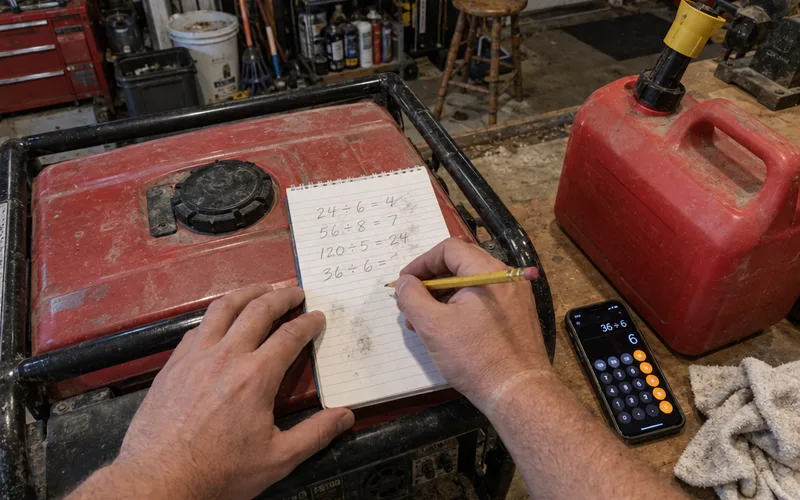
Fuel burn rises with load, but not in a straight line, so treat a scaled estimate as rough. Fuel use at different loads varies from engine to engine.
That’s why the surest number is your own: run your outage loads for an hour, then measure how much fuel you added back.
How Long Will a Generator Run on 5 Gallons of Gas?
A generator runs on 5 gallons of gas for 5 divided by its gallons per hour at your load. At a made-up burn rate of 0.6 gallons per hour, that’s a little over 8 hours.
The wattage on the label won’t answer this alone. A 3,500-watt and a 7,500-watt unit can both be asked the 5-gallon question, and only each one’s spec sheet at your load gives the hours.
How Long Will 2 Gallons of Gas Last in a Generator?
Two gallons of gas last 2 divided by your generator’s gallons per hour at your load. At the same made-up 0.6 gallons per hour, that’s just over 3 hours.
So if your portable’s tank is small, check the tank size beside its runtime figure before you count on it overnight.
How Long Will a Portable Power Station Run?
A portable power station runs for its battery’s watt-hours divided by the watts you draw, minus a little for the power it uses itself. A made-up 1,000-watt-hour station running a 100-watt load lasts a bit under 10 hours.
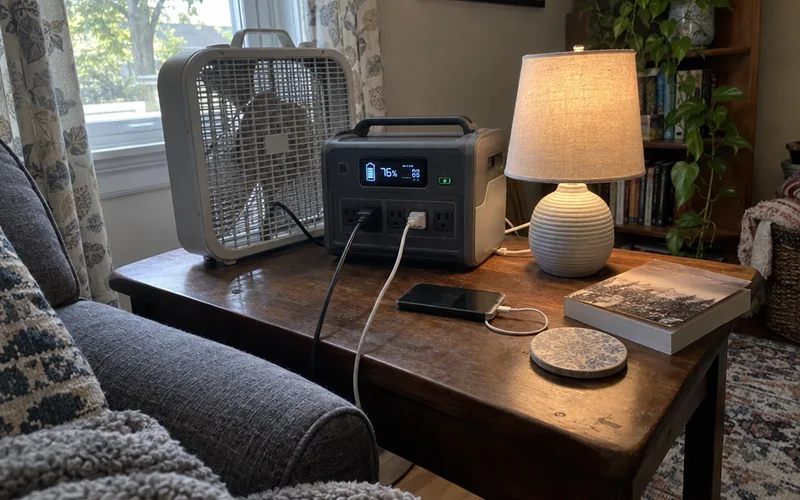
That math is how you size one for a single device, as in running a CPAP on a Jackery 1000. For whole-home use, weigh how a power station compares with a fuel generator first.
Can You Run a Generator 24 Hours a Day?
Yes, a generator can run 24 hours a day if it’s built for long runs and you stop it on the manual’s schedule to refuel, check oil and look it over. A portable needs those stops far more often than a standby unit.
For a portable, every refill is a forced stop. Shut it off, let the engine cool, then refuel, because gasoline spilled on a hot engine can catch fire.
Use that same stop to check the oil. Long runs add hours fast, and the oil change steps show what to do when the manual’s interval comes up mid-outage.
Note: Don’t let a tank run completely dry to squeeze out more hours. Running out of fuel can drop your loads suddenly and leave you restarting in the dark.
How Long Should You Run a Generator Before Giving It a Break?
A generator needs a break whenever its manual says to stop for refuelling, oil checks or inspection. A portable gets that break at every refill, because you must shut the engine off and let it cool before adding gasoline.
So you rarely need a separate rest stop on a portable. The refuel routine is the break.
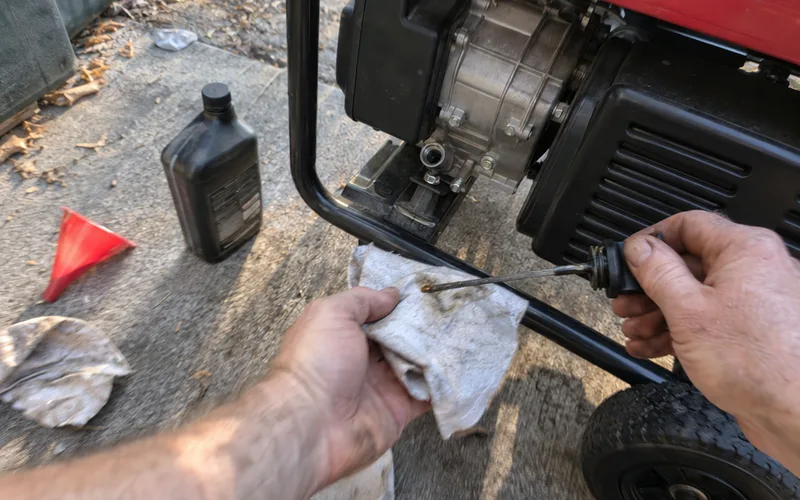
Standby units are different, since nothing forces them to stop. Mark the start time and plan a short shutdown when the manual’s extended-run check comes due.
Pro Tip: Keep a notepad by the generator. Write the time of each start, refill and oil check, so you know exactly where you are on the manual’s schedule.
What Is the 80% Rule for Generators?
The 80% rule for generators is a planning rule of thumb: keep the load you run for hours at or below about 80% of the generator’s rated running watts. That leaves headroom for motors that kick on and keeps the engine from working flat out all day.
It’s a habit, not a manufacturer spec. Your manual’s own limits still come first.
Here’s an example: say a made-up generator is rated at 5,000 running watts. Under the 80% rule, you’d plan your all-day loads to stay around 4,000 watts.
Load matters for runtime too, since a lighter load burns fuel more slowly. Staggering big appliances with load management helps on both counts.
Is It Safe to Run a Generator Overnight?
Running a generator overnight is safe only when it sits outdoors, well away from doors, windows and vents, with working carbon monoxide alarms inside. Exhaust fumes can build up while you sleep, and you can’t smell them.
Carbon monoxide poisoning is the main danger of long runs. Never run a generator indoors, in a garage or under an open window, even for a few minutes.
Before bed, top up the tank while there’s still light. That way you’re not refuelling a hot engine in the dark.
Placement matters more than runtime on any overnight run. Set it up using safe generator placement before the first night of an outage.
Is It Cheaper to Run a Generator on Propane or Gas?
Whether propane or gasoline is cheaper depends on your local fuel prices and your generator’s burn rate on each fuel. Compare cost per hour for each: gallons per hour times price per gallon.
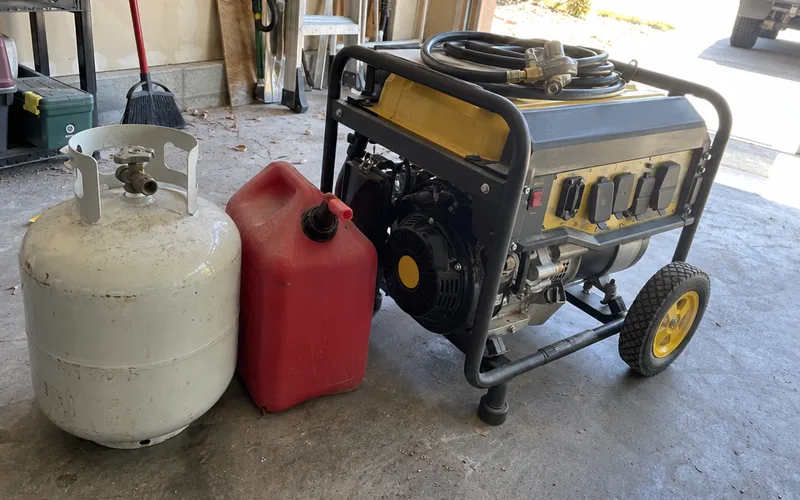
A dual-fuel unit often burns more propane by volume than gasoline for the same job. So a cheaper price per gallon doesn’t always mean a cheaper hour.
Propane does store much longer without going stale, which counts on a long outage. Weigh how gas and propane compare on storage, output and cost.
How to Make Your Generator Run Longer in an Outage
You can make a generator run longer by cutting the load to essentials, staggering big appliances and keeping fresh fuel on hand. On an inverter model, eco mode stretches each tank too.
Here’s the short checklist:
- Run only what you need, such as the fridge, a few lights and phone chargers.
- Start big loads one at a time, and turn them off when you’re done.
- Store fresh fuel with stabilizer, and rotate it before it goes stale.
- Keep the air filter clean and the oil topped up.
Fuel is the part most people run short on, so store enough fresh fuel before storm season.
Key Takeaway: Every watt you switch off buys more runtime from the same tank.
Plan Your Outage Runtime This Week
Your generator’s runtime is whichever comes first: the fuel, the next stop or the manual’s limit.
Find the runtime line in your manual today, and do the 3-step math for the loads you’ll really run.
If you’re wondering how many total years the machine itself will give you, that’s generator lifespan, a separate question.
Frequently Asked Questions
How many hours can a generator run without stopping?
A generator can run without stopping for as long as one fill of fuel lasts at your load, unless its manual calls for an earlier stop. A standby unit on a natural gas line has no tank to empty, so its manual’s service checks set when it pauses.
How long can a generator run before adding oil?
A generator can run until its next scheduled oil check, which its owner’s manual sets in hours of running time. Check the dipstick at every refuel stop on a long outage, and top up before the level reaches the low mark.
How long can I run my Generac generator continuously?
A Generac home standby generator can run continuously for as long as its natural gas or propane supply holds, with stops for the oil and inspection checks in its owner’s manual. Look up your model’s manual on Generac’s support site for its exact service interval during extended runs.
How long will a 10,000 watt generator run on 5 gallons of gas?
A 10,000 watt generator runs on 5 gallons of gas for 5 divided by its gallons per hour at your load, a figure on its spec sheet. The wattage is the maximum output, not the burn rate, so 2 units with the same rating can run for different hours.
What's the minimum and maximum hours a generator should run daily?
A generator has no daily minimum or maximum during an outage; it runs as long as you need power, within its fuel supply and the manual’s stops. Between outages, follow the manual’s exercise schedule so the engine starts when you need it.
How long do generators normally last?
Generators normally last for a set number of total running hours that depends on the engine type and care, which is a different question from how long one runs per outage. Portable engines usually wear out sooner than liquid-cooled standby engines.