
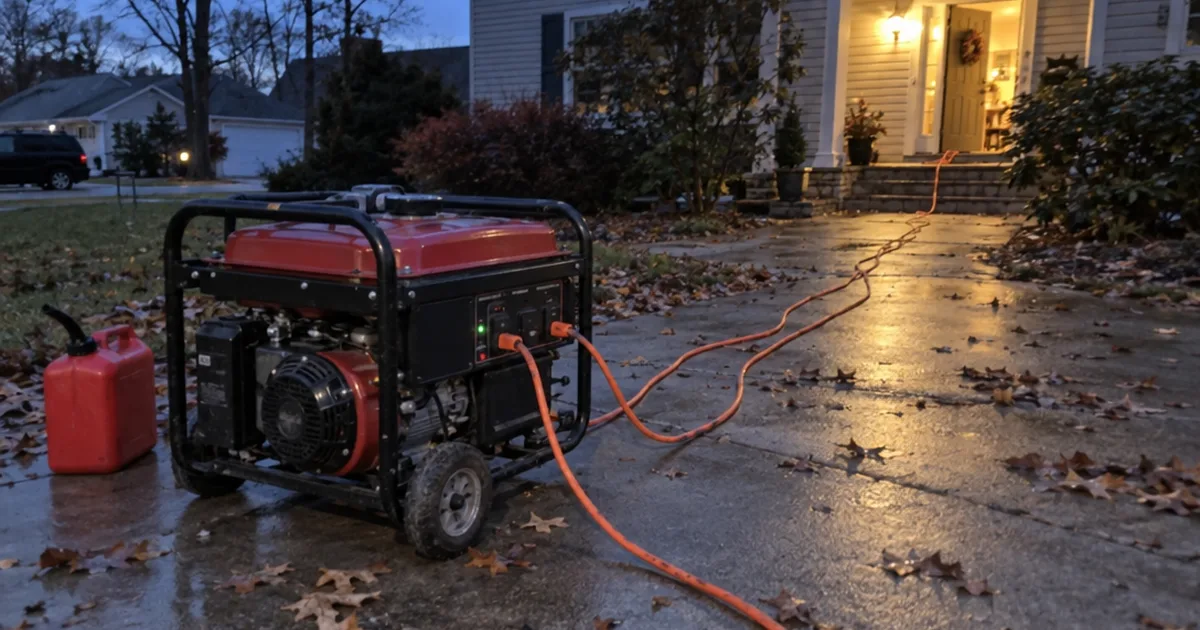
Even an 8,500-watt generator can’t run your furnace through an extension cord.
The problem isn’t power. It’s the wire: some loads plug in, and some are wired straight into your house.
So what appliances a generator can run comes down to 2 questions: enough watts, and a way to connect.
The 2 checks below answer both, and the size guides show what your exact generator runs.
What Appliances Can a Generator Run?
A generator can run lights, electronics, refrigerators, freezers, a window air conditioner and space heaters through its outlets, as long as their running watts and the biggest starting surge fit its ratings. Hardwired appliances like a furnace or well pump can run too, but only through a transfer switch.
Most household loads fall into 4 groups:
- Small loads: lights, phone chargers, a TV, a router and fans.
- Compressor and motor loads: refrigerators, freezers, a window air conditioner and a sump pump. These spike each time they start.
- Heat loads: a space heater, a microwave, a coffee maker and a hair dryer. Heating and cooking draw a lot of power the whole time.
- Hardwired and 240-volt loads: a furnace, central air conditioning, a well pump, an electric water heater, an electric dryer and a range.
Sort your own list into these 4 groups first, because the group tells you whether to check watts, wiring or both.
How to Check Any Appliance Against Your Generator
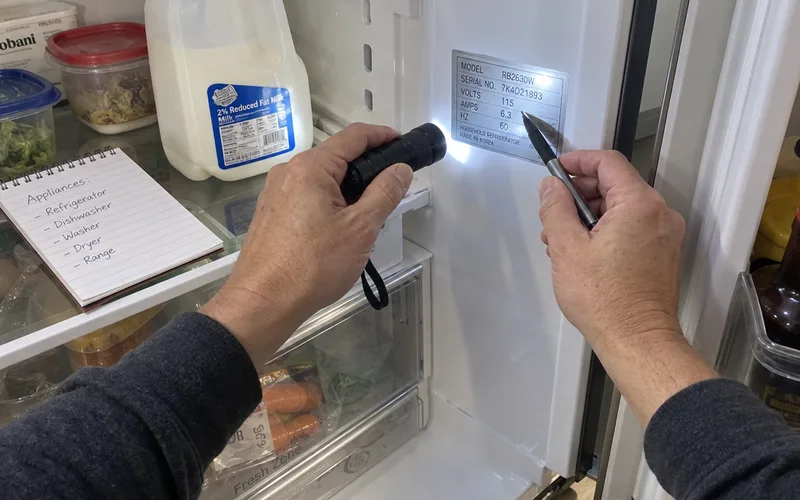
You can check whether a generator can run an appliance by comparing 2 numbers from the appliance’s rating plate or a plug-in watt meter: its running watts and its starting watts.
Here’s how to find them:
- Read the rating plate. It’s the sticker with the model and serial number.
- Convert amps to watts. If the plate lists amps, multiply amps by the voltage. A 120-volt device rated at 5 amps uses about 600 watts.
- Measure when in doubt. A peak-reading plug-in watt meter shows the real draw and the start.
Then run the 2 checks:
Check 1: Add up the running watts of everything you want on at once, and keep that total under the generator’s running rating.
Check 2: Take the biggest starting surge, add the running watts of everything else, and keep that sum under the peak rating.
Say, as a made-up example, your generator is rated 3,000 running watts and your list adds up to 2,200. You pass check 1 with 800 watts to spare.
Running Watts vs Starting Watts
Running watts are what a device draws once it’s on. Starting watts are the quick extra jolt a motor needs to get going.
Your generator has to cover that jolt every single time.
Refrigerators are the classic example, because their compressors cycle on and off all day. Consumer Reports notes that fridges turn on and off and can cause short surges, so you have to account for that peak demand.
The full math is in running vs starting watts, and the fridge and freezer sizing checks cover both compressors.
Which Appliances Plug Straight Into a Portable Generator?
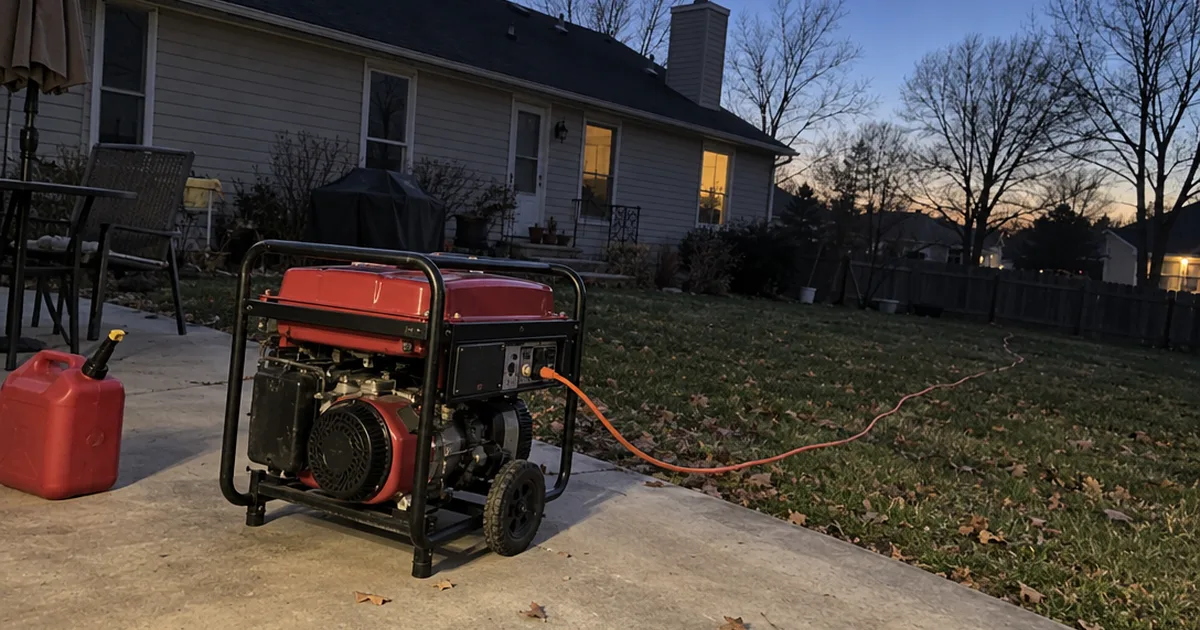
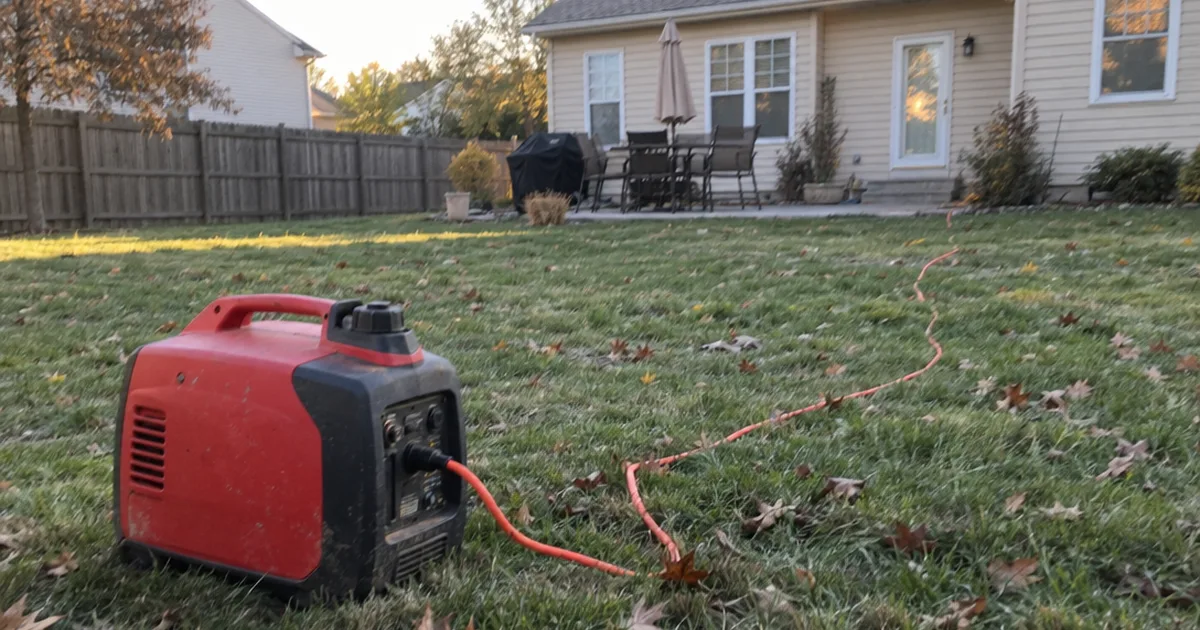
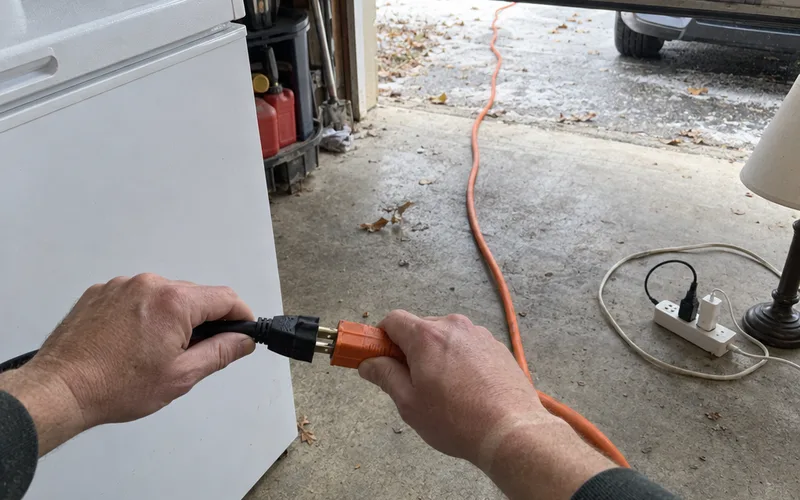
Any appliance with an ordinary 120-volt plug can run straight from a portable generator’s outlets through an outdoor-rated extension cord. That covers lights, a TV, a fridge, a freezer, a window AC unit, a microwave and a space heater.
How you plug them in matters.
Dave Trezza runs generator tests at Consumer Reports. He suggests one cord and one outlet for large appliances like a refrigerator or window air conditioner.
In other words, give each big load its own cord, and let a lamp and a phone charger share one.
Which Appliances Need a Transfer Switch?
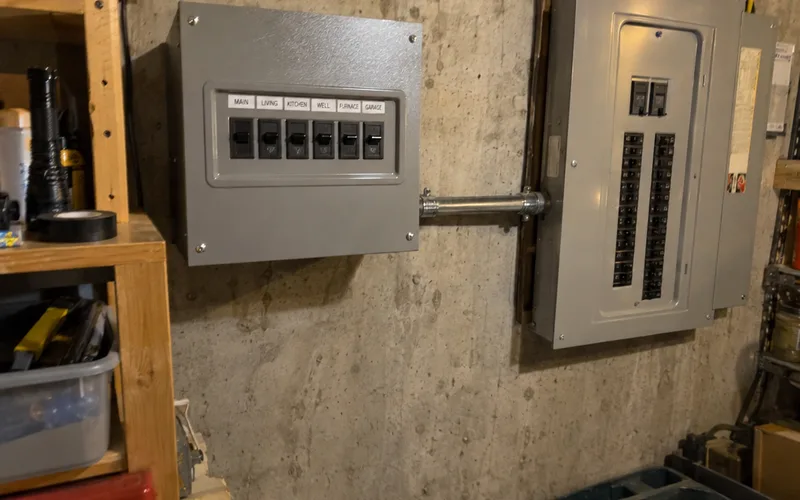
Hardwired appliances need a transfer switch, because they have no plug to put on an extension cord. Consumer Reports says that without one, you can’t power hardwired appliances such as a furnace, central air conditioner or well pump.
A transfer switch connects the generator to chosen circuits in your panel and isolates it from the utility lines. Every standby generator works this way, which is how it runs central air conditioning without cords.
So for hardwired loads, the question is wiring first and watts second. Here’s where to go next:
- Furnace blower on a small unit: running a furnace on 2,000 watts
- Well pump: well pump backup options
- Water heater: sizing for a water heater
- Electric dryer: running a dryer on a generator
Before you buy the switch, read the installation requirements for your home, because a transfer switch means work inside your panel, usually by electricians.
How Many Appliances Can a Generator Run at Once?
A generator can run as many appliances at once as their combined running watts allow, plus room for the biggest start. The count doesn’t matter; the total electrical load does.
That’s why 10 phone chargers are easy, and 2 space heaters can be too much.
The trick is timing. If 2 compressors start together, their surges stack and can trip the circuit breaker, so start the biggest motor first.
That habit is called load management. Standby systems use automatic load shedding, and the load management steps show how to do it by hand.
Start big loads one at a time, and you’ll fit more on the same generator.
Can a Generator Power Your Whole House?
A generator can power a whole house only if it’s connected through a transfer switch and sized for everything you’d run at once. Most portable units cover essentials instead: the fridge, some lights, the furnace blower and your devices.
Whole-home backup power still has a limit. Even a large standby generator may not run central air conditioning, an electric range and a dryer at once.
See what a 5,000-watt generator for a house covers, or whether a 50-amp generator runs a house. The generator sizing guide builds your full list.
How Long Can a Generator Keep Your Appliances Running?
A portable generator runs your appliances only as long as its fuel lasts, and big loads burn it fast. Consumer Reports’ top-rated Generac XT8500EFI, an 8,500-watt model, has an 8-gallon tank and runs 9 to 15 hours on it.
Running it for 2 days straight can take more than 40 gallons of gasoline.
So cut the load to what you need, and you’ll stretch every tank. The runtime guide shows how to estimate your own hours.
What Can Your Generator Run, by Size?
A generator’s running-watt rating sets which appliances it can run, so the fastest answer starts with your exact size. Each guide below lists what fits:
- 2,000-watt generator
- 2,500-watt generator
- 3,000-watt generator
- 3,500-watt generator
- 4,000-watt generator
- 4,500-watt generator
- 5,000-watt generator
- 9,000-watt generator
Heaters get their own guides. See a generator for a space heater, a space heater on 1,000 watts and a 1,500-watt heater on 2,000 watts.
Other loads have guides too. See sizing for an oxygen concentrator, an RV air conditioner on 2,200 watts, a generator for a sump pump and charging an electric car with solar. Two common questions get their own answers too: how many watts a CPAP machine uses and how many watts a washing machine uses.
What Should You Never Plug Into a Generator?
Never connect a generator to your house through a wall outlet, and never plug in more appliances than its running and starting watts can handle. A wall-outlet hookup, often made with a male-to-male cord, sends power backward through your wiring.
Consumer Reports, citing the CPSC, warns that this backfeed can cause a fire. It also skips your panel’s safety features and can shock utility workers on the lines.
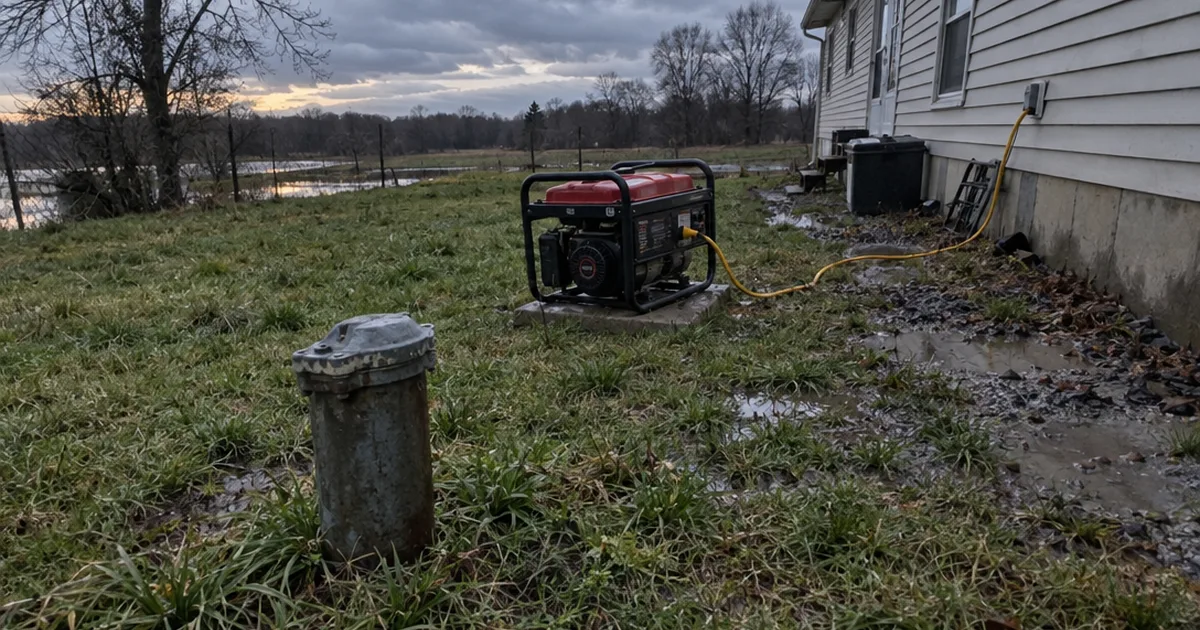
Placement matters too, because of carbon monoxide. The only safe spot is outdoors, at least 20 feet from your house.
In other words, keep the generator outside and bring power in through cords or a transfer switch.
Make Your Appliance List Before the Next Outage
The biggest takeaway: watts decide how much you can run, and wiring decides what you can run.
This week, write down the running and starting watts of the 5 things you’d miss most, then run the 2 checks against your generator.
Frequently Asked Questions
Can I run my dryer off my generator?
You can run an electric clothes dryer off a generator only if the generator has a 240-volt outlet or a transfer switch and enough running watts for the dryer’s heating element. Check the dryer’s rating plate first.
Can a generator run a refrigerator and freezer?
A generator can run a refrigerator and freezer when its running rating covers both appliances’ running watts and its peak rating covers the bigger compressor’s start plus everything else on. Consumer Reports suggests giving each large appliance its own extension cord and outlet.
How many appliances will a 3000 watt generator run?
A 3,000-watt generator runs as many appliances as fit under 3,000 running watts in total, with room left for the biggest starting surge. Add up your own appliance labels to see what fits.
What appliances will a 1000 watt generator run?
A 1,000-watt generator runs small loads such as lights, phone chargers, a fan, a TV or a modem, as long as their running watts total less than 1,000. Heating appliances need more.