A generator that won’t start in an outage often has a weak starting battery, not a bad engine. That small battery is cheap, easy to check and easy to forget.
The good news is that you can look after it yourself with a few basic tools. Most of the work is looking, cleaning and testing, and none of it needs special skills.
This page is part of our wider generator maintenance plan. It walks you through one complete battery routine, then points you to deeper guides for specific questions.
How to Maintain a Generator Battery Step by Step
Here’s the whole routine in eight steps. Do them in order, and set aside about an hour the first time.
Step 1: Find Your Battery and Read the Manual
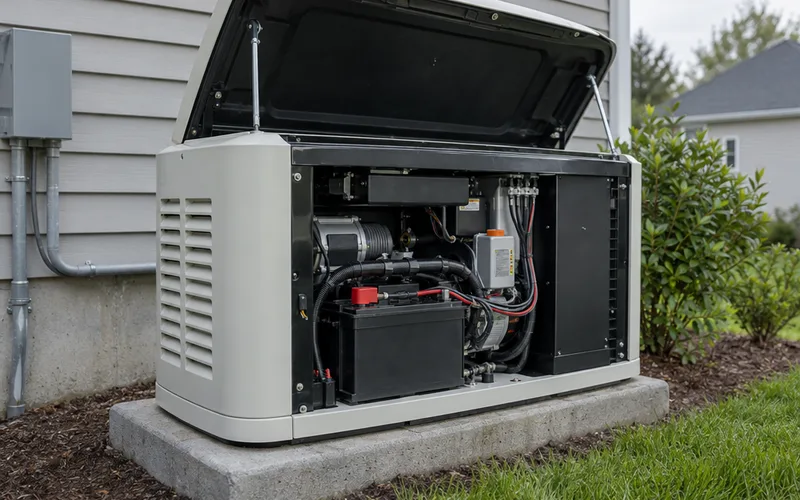
Start by locating the battery. On a portable generator it usually sits in a tray near the electric starter, and on a standby unit it’s inside the enclosure.
Then open your owner’s manual to the battery section. It tells you the battery type, how to disconnect it and how to charge it, and those instructions override anything general you read online.
Write down the battery’s size and type from the label while you’re there. You’ll want that information later if you need a charger or a replacement.
Step 2: Switch the Generator Off and Get Ready
Turn the generator off and let it cool. A standby generator can start on its own, so follow your manual’s steps to keep it from starting while you work.
Wear safety glasses and gloves, and take off rings and watches. A lead-acid battery can give off flammable gas, so keep flames and sparks away and work in a ventilated spot.
If the battery sits in a tight compartment, take a photo of how the cables are routed before you disconnect anything. That picture saves guesswork when you put everything back.
Step 3: Inspect the Battery and Cables
Look over the battery case for cracks, bulges and leaks. A swollen or leaking battery is done, so don’t try to charge it.
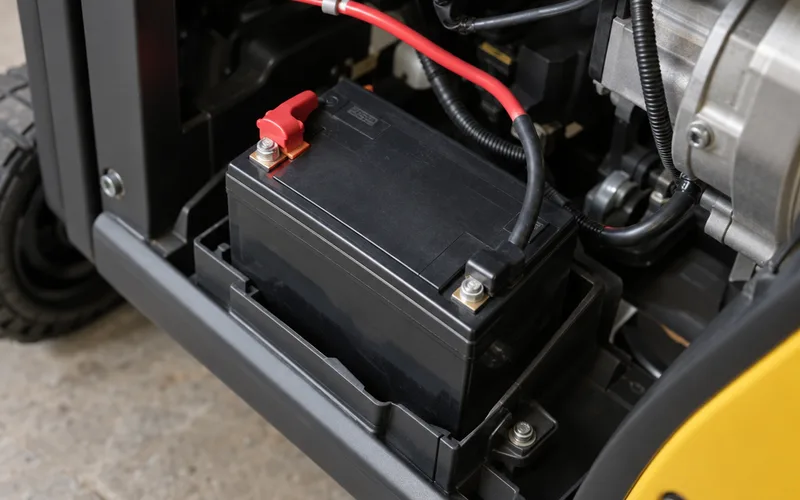
Next, check that the cables are snug and the insulation isn’t cracked. Wiggle each terminal clamp gently, and tighten anything that moves.
Also look at the tray or bracket that holds the battery in place. A battery that can shift around can rub through a cable or crack its own case.
Step 4: Clean the Terminals
White, blue or green crust on the terminals is corrosion, and it can block the current the starter needs. Disconnect the cables in the order your manual gives, which is usually the negative cable first.
Mix baking soda with water, scrub the terminals and clamps with a brush, and wipe them dry. Keep the mixture out of any open cells.
Once everything is dry, add a thin coat of dielectric grease or terminal protector.
If the crust returns within a few weeks, that’s a clue. That can point to a leaking or aging battery.
Step 5: Check the Voltage
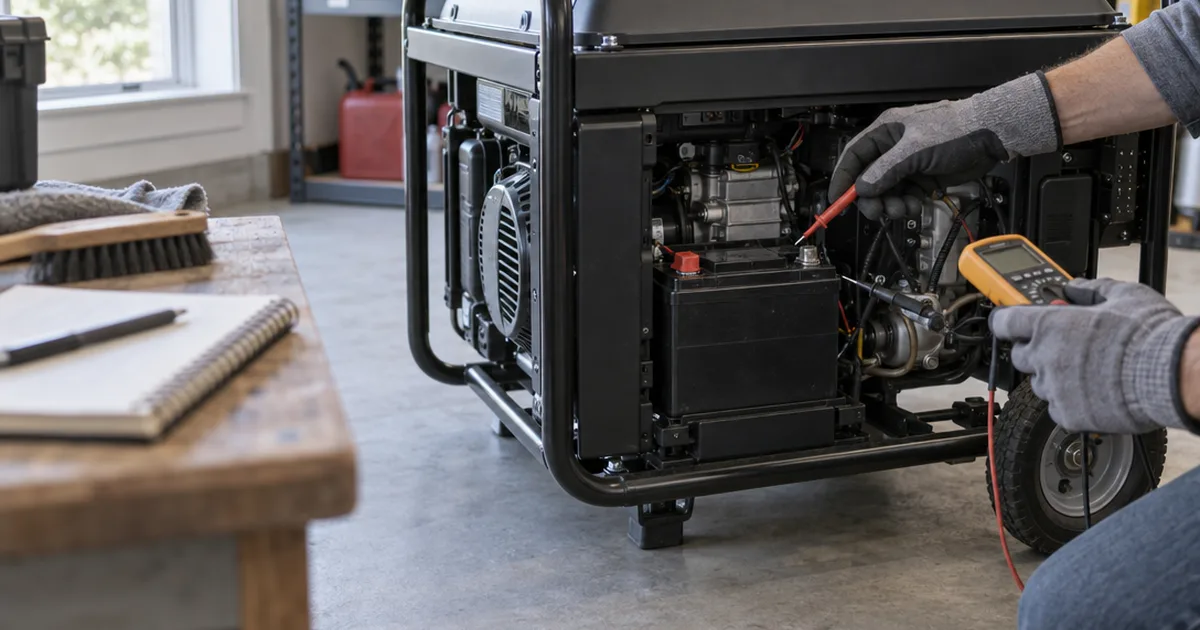
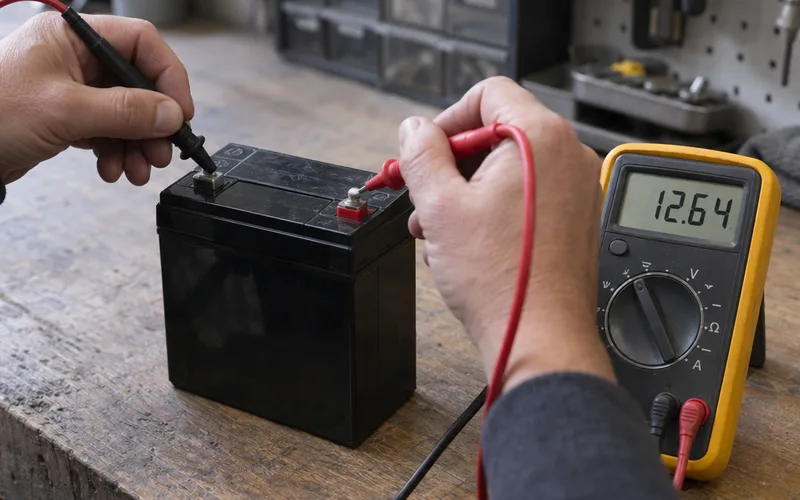
Set a digital multimeter to DC volts and touch its probes to the battery posts. This resting reading shows how charged the battery is when nothing is drawing power.
Your manual or the battery label lists the healthy range. A low reading means the battery needs charging, and a very low one can mean it has been discharged too far.
For example, imagine you measure the battery after a month in the garage and it reads lower than it did in spring. That slow drop tells you something is draining it, or that it isn’t being recharged between uses.
Step 6: Run a Load Test
A good voltage reading doesn’t prove the battery is healthy. A battery can look fine with the engine off and still sag the moment the starter pulls current.
A load test checks exactly that, and many auto parts stores and service shops will do one. If the battery fails, replace it rather than charging it again and hoping.
Test the battery after charging it, not before. A low battery can fail a load test simply because it’s empty, and you won’t know whether it’s really worn out until it’s full.
Step 7: Charge the Battery Correctly
Use a battery charger or maintainer that matches your battery type. A charger made for lead-acid batteries is not right for a lithium-ion one, so check the label first.
A slow charge is usually gentler on a battery than a fast one. Keep the battery in an open area while it charges, and unplug the charger before you touch the clamps.
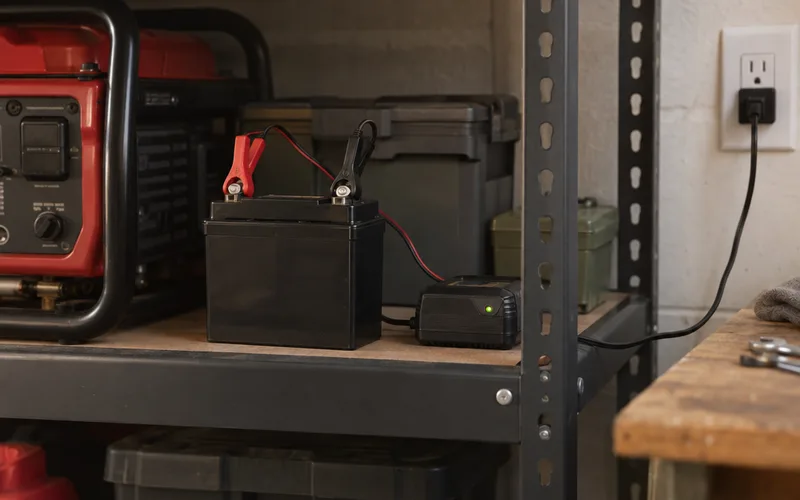
A maintainer, sometimes called a trickle charger, adds a small amount of charge over a long time. It suits a generator that sits for weeks, because it keeps the battery topped up without overcharging it when the charger is designed well.
Step 8: Reconnect, Start and Write It Down
Reconnect the cables in the order your manual gives, and tighten the clamps. Make sure nothing touches metal it shouldn’t.
Then take the generator outdoors to a safe spot and start it.
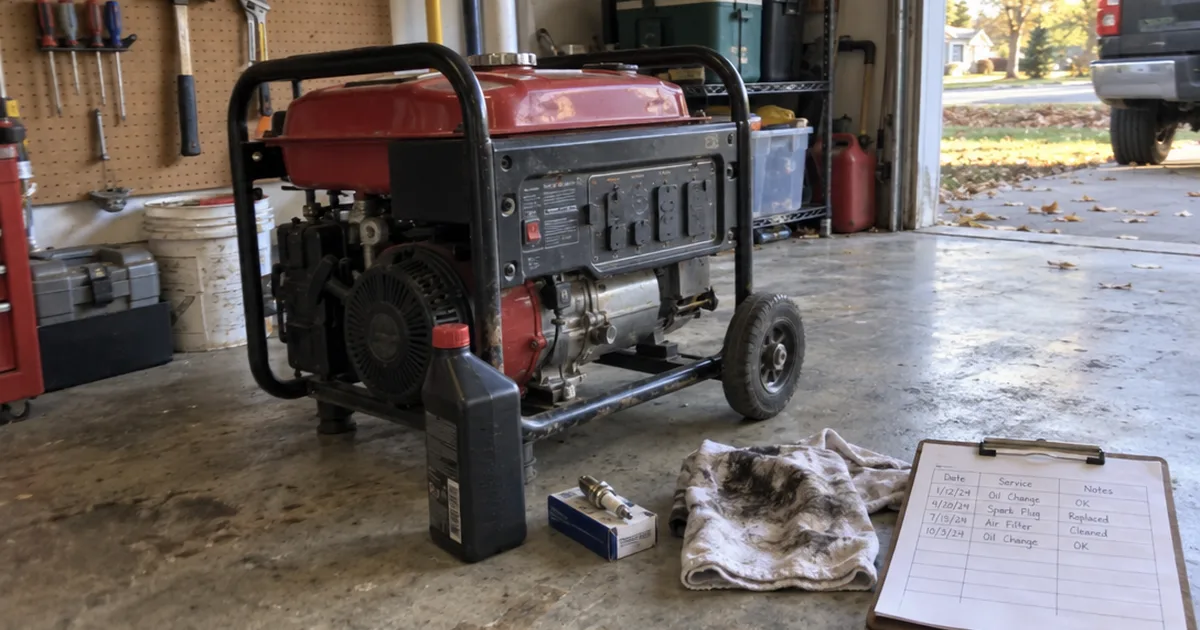
Record the date, the voltage and the test result in a notebook. A short log tells you at a glance when the next check is due, and it makes a failing battery easier to spot.
If the generator cranks slowly or won’t start after all this work, shut it down and recheck your cable connections first. A loose clamp is a more common cause than a new problem with the battery.
Lead-Acid vs. Lithium Generator Batteries
Your charger, your storage plan and even your safety steps depend on which battery you own, so it’s worth knowing the difference. The label on the battery case names the type, and your manual repeats it.
A lead-acid battery is the traditional choice. It’s heavy, it’s affordable, and it’s sensitive to being left discharged, which is why it needs regular charging.
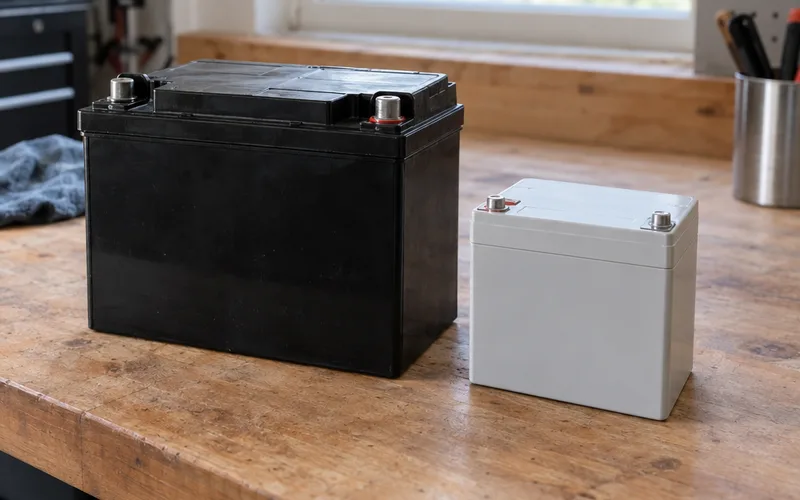
Lithium-ion and lithium iron phosphate batteries are lighter and often tolerate deep discharges better. They also need chargers built for them, and a charger made for lead-acid batteries can damage one.
If you aren’t sure what you have, don’t guess. Check the label, check your manual, and ask the manufacturer or a dealer when the two don’t agree.
A Quick Battery Check Before a Storm
When a storm is in the forecast, you won’t want to start a full service. A shorter version of your routine takes about ten minutes and catches the problems most likely to leave you stuck.
Look at the terminals, make sure the clamps are tight, and confirm the battery is charged. If you have a standby generator, check that it shows no battery warnings on its panel.
Then keep your log and your manual somewhere you can reach them in the dark. If the battery fails the check, you’ll be glad to know now rather than after the lights go out.
What You Need to Maintain a Generator Battery
You don’t need a workshop for this job. The tools and supplies listed on this page cover it, and most of the items cost very little.
A multimeter is the one tool worth owning, because it also helps with other generator and household checks. If you skip the load tester, a shop can handle that step in a few minutes.
How a Generator Battery Works
A generator’s starting battery has one job. It powers the electric starter long enough to spin the engine until the engine runs on its own.
Once the engine is running, the generator’s charging system tops the battery up again. That’s why a battery that rarely gets recharged, such as one in a unit that sits for months, slowly loses strength.
Most starting batteries are lead-acid.
Some newer or specialty units use lithium-ion or lithium iron phosphate batteries. Those need chargers designed for that chemistry.
Two ideas help explain why batteries wear out.
Each full discharge and recharge counts as one of the battery’s charge cycles. A deeper depth of discharge puts more stress on a battery than a shallow one.
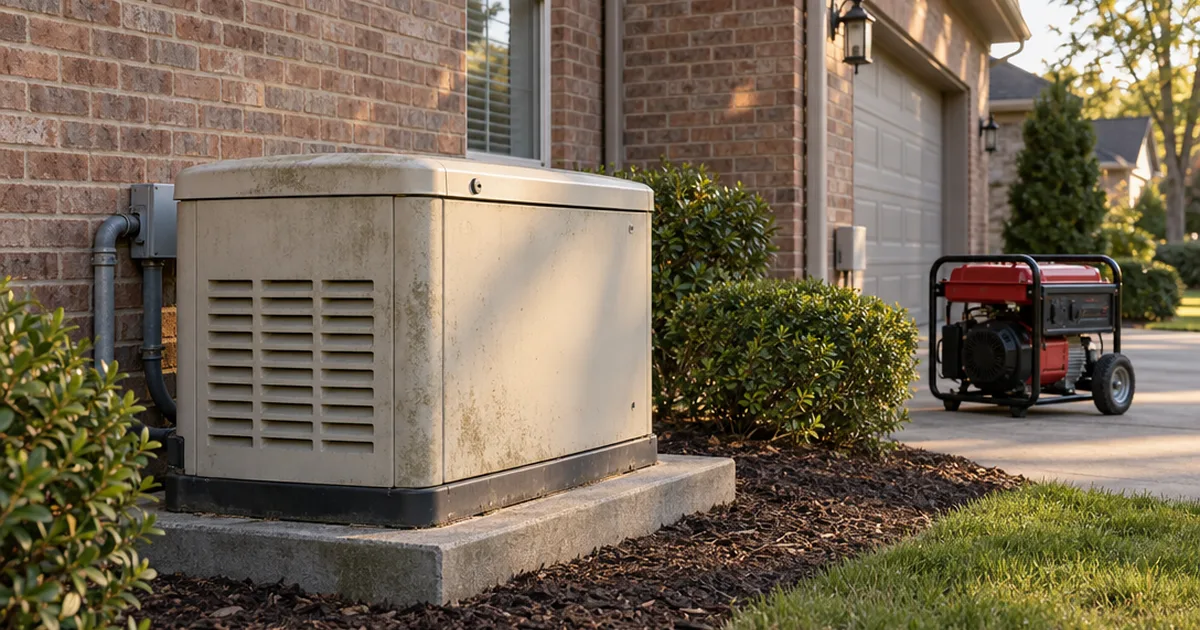
Portable vs. Standby Generator Battery Care
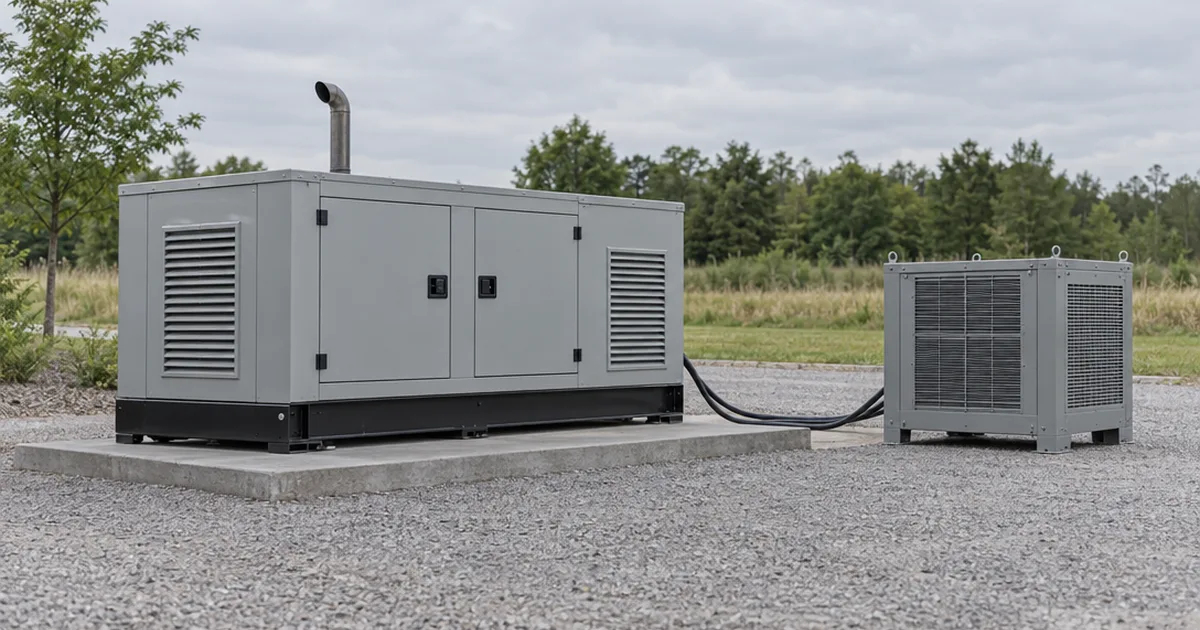
Generators share the same basic battery, but the day-to-day care differs.
On a standby generator, the system usually keeps its own battery charged. Your job is to confirm the charger is working, check the terminals and watch for battery warnings.
A portable generator is different. Many models only charge the battery while the engine runs, so a unit that sits in a garage may need a plug-in maintainer.
The rest of that routine lives in portable generator maintenance, which covers oil, fuel and the other jobs these units need.
If your portable unit has only a pull cord, you may not have a battery at all. Check your manual before you buy anything.
How Often to Check and Replace the Battery
Many owners check the battery whenever they run a test cycle, and again before storm season. Fit those checks into the same routine as your maintenance checklist so they don’t get skipped.
There’s no single replacement date that fits every generator. Heat, deep discharges, long idle stretches, charge cycles and charging habits all change how long a battery lasts, so test results beat the calendar.
If you want a closer look at lifespan, read up on how long a generator battery lasts. Generac owners get model-specific steps in standby battery replacement.
Signs the Battery Is Failing
Slow cranking is the classic warning. The starter turns the engine more slowly than it used to, or it clicks without turning at all.
Other signs include a battery warning on the control panel, a swollen case and corrosion that returns soon after cleaning. A battery that won’t hold a charge is another.
Any one of them is a reason to test the battery now.
Storing a Generator Battery
If the generator will sit for a while, the battery needs a plan too. Follow your manual’s storage steps, which may include disconnecting the battery or connecting a maintainer.
A battery left to drain slowly can lose capacity for good. Plan its care alongside the rest of storing a generator.
Cold makes a weak battery fail first. If you rely on your generator in winter, review running a generator in cold weather before the first freeze.
What to Do When the Generator Won’t Crank
Start with the easy checks. Make sure the generator has fuel, the switch is in the right position and any emergency stop is released.
Then listen to what the starter does.
Rapid clicking usually points to a weak battery or loose connections. A single click, or silence, can mean a dead battery, a bad cable or a starter problem.
Clean and tighten the terminals, charge the battery and try again. If the engine still won’t turn over, test the battery under load before you replace anything else.
Don’t keep cranking a starter that is barely turning. That heats the starter and drains whatever charge is left, and a technician can sort the cause out faster than repeated attempts.
What Generator Battery Maintenance Costs
The routine is inexpensive. Most of what you need is a multimeter, a few cleaning supplies and a charger or maintainer.
Prices for batteries and chargers vary a lot by size, type and brand, so compare current listings for your exact model. A replacement battery is a bigger purchase than the supplies, but it costs much less than a service call during an outage.
A dealer visit makes sense when you aren’t comfortable working near a battery. Ask what the visit includes, so you know whether it covers a load test or only a visual check.
Battery Care Across Generator Brands
Honda, Generac, Champion, Westinghouse and other makers all build their generators a little differently. Their battery locations, charging systems and warning messages are not the same.
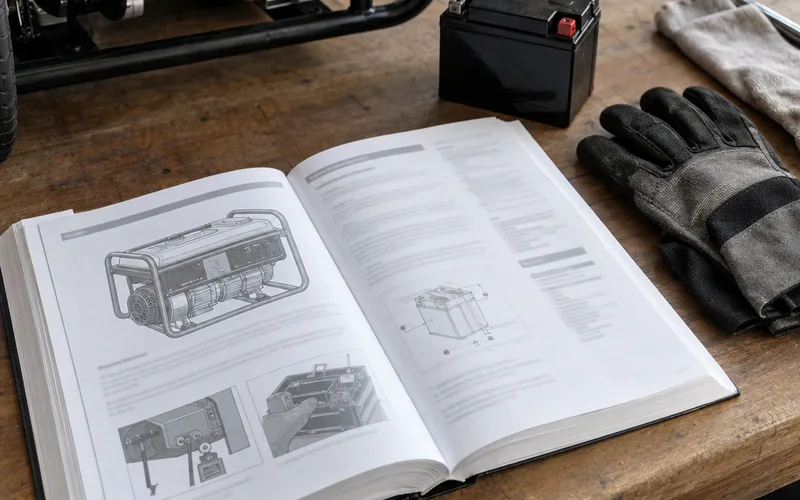
That’s why the manual comes first in every step above. If a brand’s instructions disagree with this routine, follow the brand.
Common Generator Battery Mistakes
Most battery trouble comes from a few habits that are easy to fix.
- Skipping the load test. A battery that reads fine can still fail when the starter pulls hard.
- Using the wrong charger. A charger must match your battery’s chemistry and size.
- Leaving the battery uncharged in storage. Slow drain damages a battery over time, and repeated deep recoveries use up its charge cycles.
- Ignoring corrosion. Crust on the terminals can stop the current even when the battery is good.
- Mixing up the cable order. Follow your manual when you disconnect and reconnect.
Choosing a Replacement Battery
When it’s time to replace the battery, match what your manual lists. Size, terminal layout and battery type all matter, and a battery that fits poorly can cause trouble later.
Generac owners can shortlist fitting options by reading about the best battery for Generac generators, then checking each against their own model before they buy.
Clearing a Generator Battery Warning
Some standby generators show a battery warning or a maintenance message. The message may clear after you inspect or charge the battery, but sometimes it comes back because the battery is weak.
Don’t clear a warning just to make it go away. First, learn how to inspect a Generac battery and what to look for.
Safety Notes for Battery Work
Battery acid can burn skin and eyes, so keep eye protection on and rinse any splash with plenty of water. Keep metal tools away from both terminals at once.
Run the generator outdoors only, well away from the house. Review the carbon monoxide safety rules before you start the engine for a test.
Swelling, leaking or a hot battery is a reason to stop. Call a qualified technician instead of working on it yourself.
Frequently Asked Questions
How often should you change the battery in your generator?
There is no single number, because age, climate, charging habits and how often the generator runs all change the answer. Test the battery on a schedule, replace it when it fails a load test, and follow any replacement interval your manual lists.
How long should a 12v generator battery last?
A 12 volt starting battery can serve for years when it stays charged, but heat, deep discharges and long idle periods shorten that life. Treat test results as a better guide than the calendar alone.
How can I keep my generator battery charged?
A standby generator usually has a built-in charger, so confirm that it is working. A portable generator often does not, so connect a charger or maintainer made for your battery type when the unit sits unused.
How to clear battery maintenance on generac generator?
Inspect the battery, check its charge and replace it if it fails a test, then follow your manual’s steps to clear the message. The exact steps depend on your model and its manual.
Final Thoughts
Generator battery maintenance comes down to a short routine you repeat. Look at the battery, clean the terminals, test it under load, charge it correctly and write down what you found.
That routine matters because a generator with a weak battery can fail at the moment you need it most. A few minutes of care before storm season costs far less than a dead battery in the middle of an outage.
Your manual has the final say on battery type, charging and replacement. If you see swelling, leaks or repeated warnings, stop and call a qualified service technician.