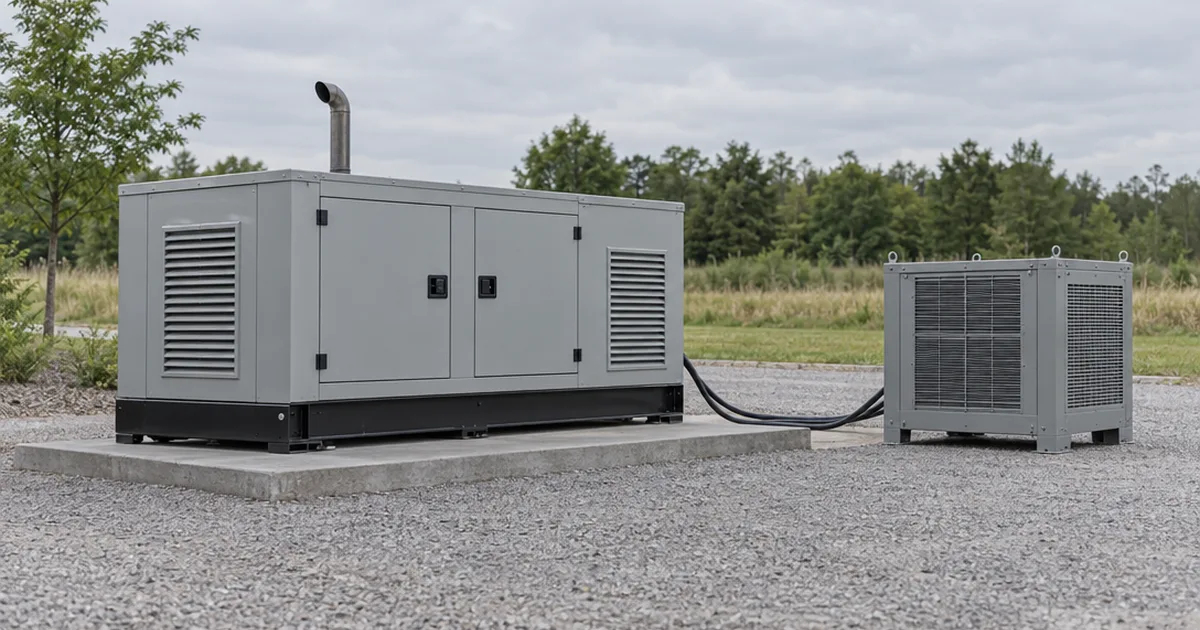

A full monthly generator check takes about 15 to 20 minutes.
That’s Miratag’s estimate for its free 27-item checklist template, plus load test time.
Below is the generator maintenance checklist I’d tape inside the garage door: 10 tasks, grouped by when they come due.
- A hurricane or ice storm is in the forecast and the unit hasn’t run since spring: tasks #1, #3 and #4 come first.
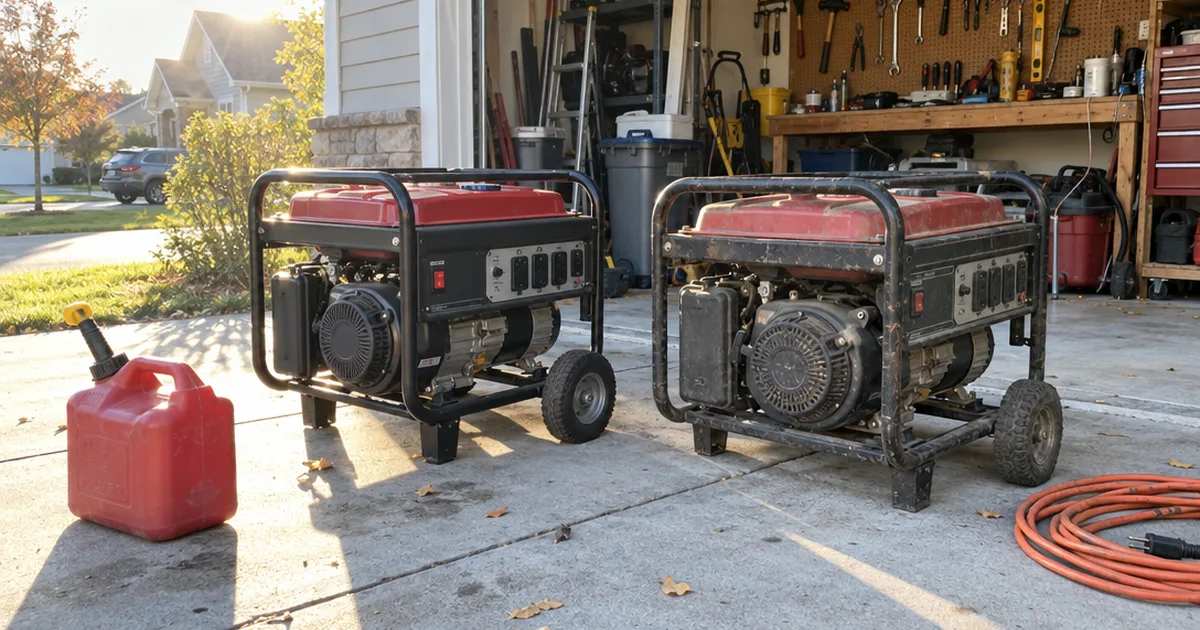
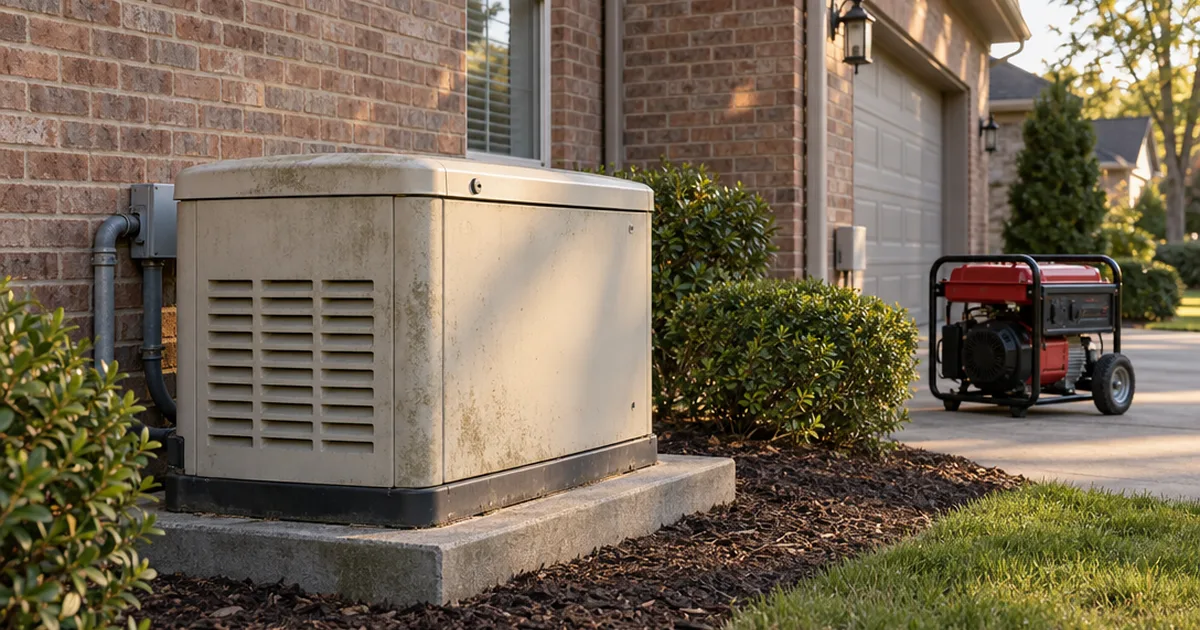
- On a home standby unit, #5 and #10 are the jobs its exercise cycle can’t do.
- Storing a portable for the off-season calls for #4 and #7.
Best for: anyone who owns a portable or home standby generator. Skip it if a technician services your unit on a contract.
Cost: Free, apart from oil, filters and plugs.
Payoff: Problems found on a calm Saturday instead of during a power outage.
Time: Same day.
First step: Find the maintenance chart in your owner’s manual and copy its intervals into the schedule table below.
How This Generator Maintenance Checklist Is Ordered
A generator maintenance checklist runs from the check you do most often to the one you do least: every start, monthly, on your manual’s hour schedule, then once a year. Each task protects one of the 3 systems generator maintenance covers: engine, fuel and electrical.
Your owner’s manual sets the intervals, oil grade and parts for your engine, so its chart is the boss and this list is the reminder. Many intervals come with 2 limits, running hours and months, and a job is due when either one arrives.
Portable generators get more hands-on checks before each start, which portable generator maintenance covers in depth. Standby generators add the battery charger and transfer switch work.
The 10 Generator Maintenance Tasks
Each heading says when its task comes due.
1. Check the Oil Before Every Start
Running an engine low on oil can wreck it, so check the level before every start.
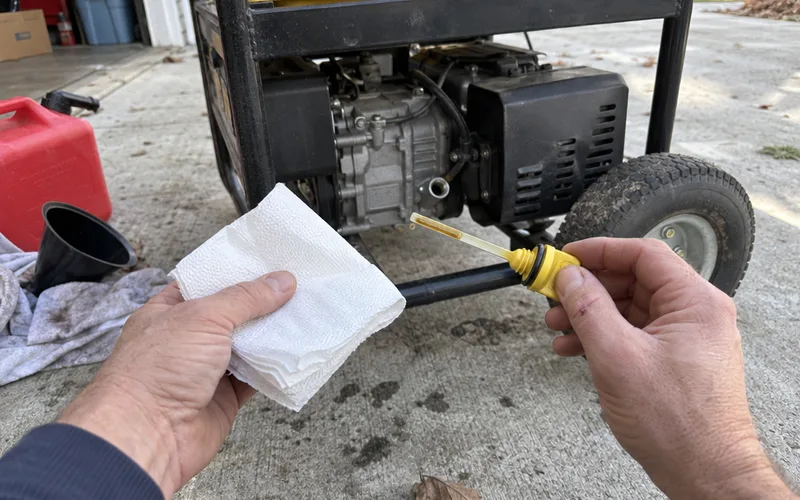
Here’s the routine:
- Park the generator on level ground with the engine off and cool.
- Pull the dipstick, wipe it, put it back and read the level.
- Top up a little at a time with the motor oil your manual lists.
Some brands publish their own grade, like the Champion generator oil type chart. For other engines, generator oil explains how to pick a grade.
In other words, the dipstick comes out before the pull cord does.
2. Walk Around for Leaks, Debris and Pests
A quick visual inspection catches problems you can see before you hear them. Do it before each start, and weekly on a standby unit.
- Look under and around the machine for fluid drips: oil, fuel or coolant.
- Clear leaves, nests and debris from the air intake and housing vents so airflow stays open.
- Check the exhaust and muffler for damage, rust or loose parts, since tight parts also make a generator quieter.
- On a standby unit, confirm the controller shows Auto, the breaker is on and no warning lights are lit.
A fuel smell or wet spot means stop: don’t start the engine until you find the leak.
3. Run It Once a Month
A monthly run proves the engine starts and gives you weeks, not hours, to fix it if it doesn’t. Miratag’s checklist listing calls for running the generator under load for 30 minutes each month.
Standby units run an automatic exercise cycle on a timer, often with little or no load. That proves the engine starts, not that it can carry your house.
A load bank test does that by putting a steady, measured load on the generator. A technician runs it, and load bank testing explains the results.
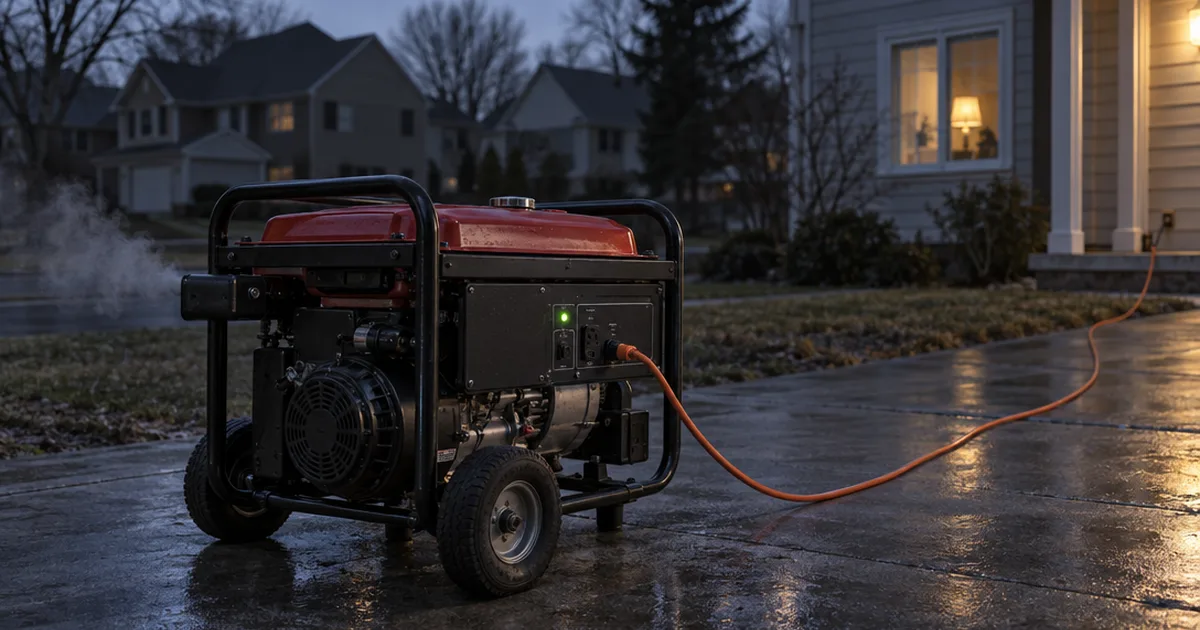
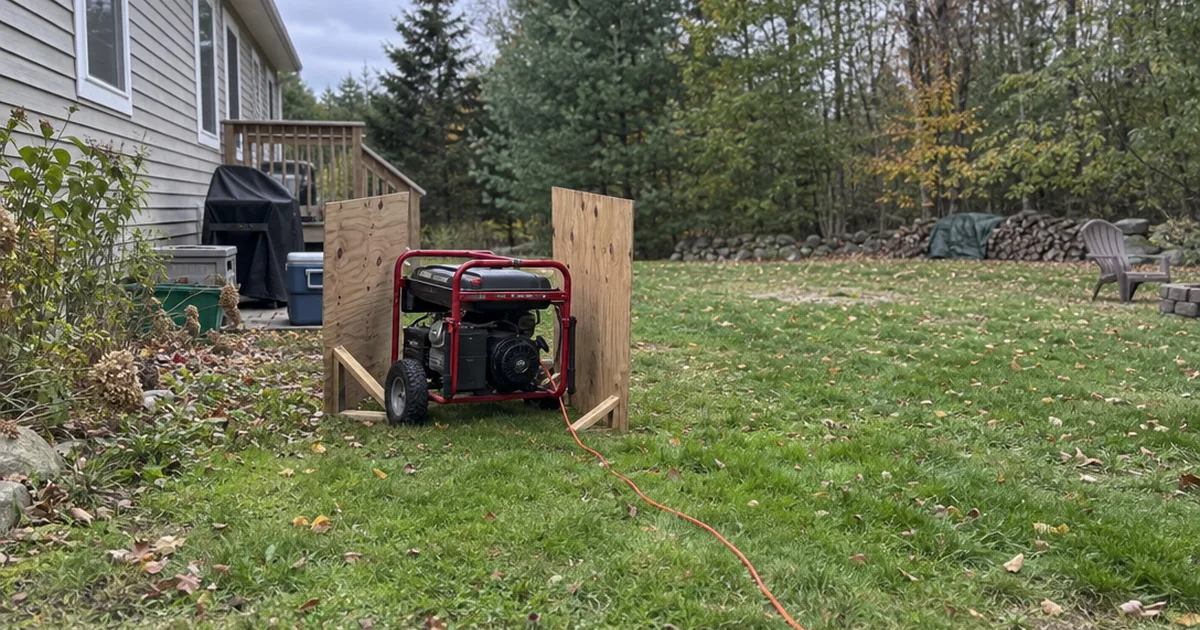
Run portables outdoors with open ventilation, away from doors, windows and vents, following the same carbon monoxide rules as in a storm. Plug in a real electrical load, like a work light on an extension cord, and listen for surging, stalling or any new noise.
4. Keep the Fuel Fresh
Gasoline breaks down while it sits, and stale gas leaves gum and sediment in a carburetor.
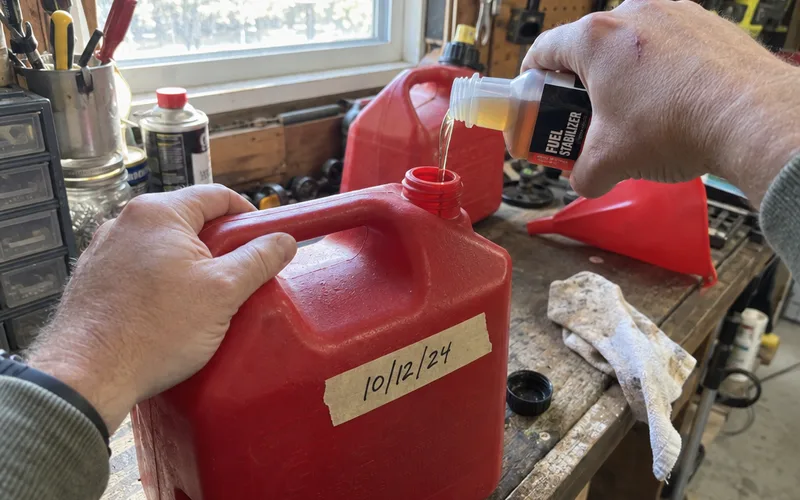
- Add stabilizer when you fill the can.
- Write the fill date on every can and use the oldest fuel first.
- Before long storage, follow your manual: run the carburetor dry or drain the fuel tank.
Get the dose right with these steps for adding fuel stabilizer, and keep cans where generator fuel storage says they belong.
Running on propane? Its fuel checks differ, so use propane generator maintenance instead.
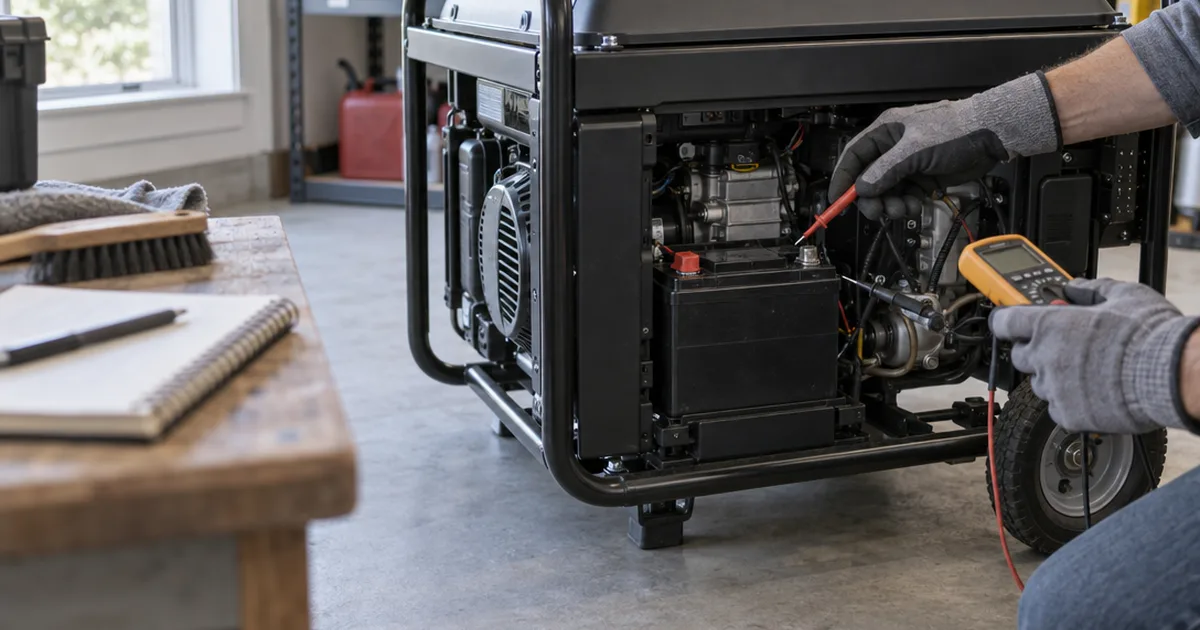
5. Test the Battery and Charger Monthly
Electric-start portables and every standby unit need a battery, and a weak one won’t crank the engine.
- Look at the terminals for white or green corrosion and clean it off with a baking soda and water mix.
- Make sure both cables are tight and the case isn’t cracked or swollen.
- Check that the battery charger’s light or display shows it’s charging.
A multimeter voltage reading tells you more. Generator battery maintenance shows how to take one and when to replace the battery.
Key Takeaway: A clean, charged battery is the difference between an automatic start and a dead click.
6. Clean or Replace the Air Filter
The air filter keeps dust and grit out of the engine’s intake, and a clogged one makes it run rough.
Say you ran a portable for 3 days beside a gravel driveway. Check that filter before the next start, even if the manual’s interval hasn’t arrived.
Foam filters can usually be washed, and paper ones get replaced. The air filter cleaning steps cover both types.
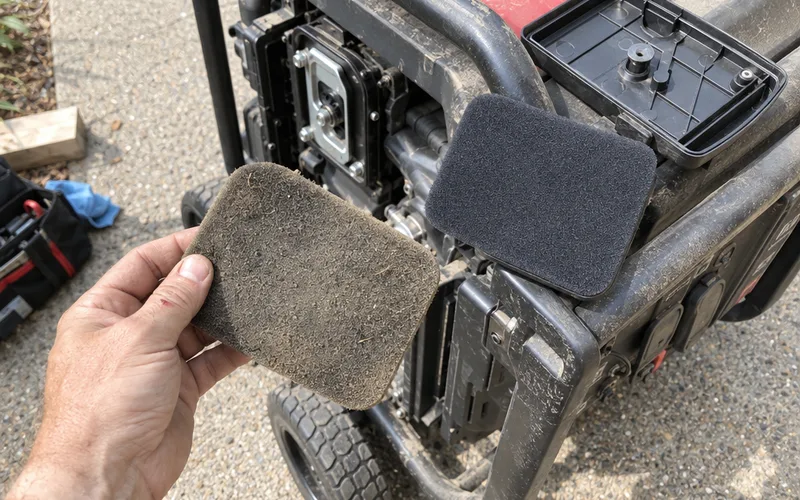
Never run the engine with the filter off, even for a quick test, since unfiltered dust goes straight to the cylinder.
7. Change the Oil and Oil Filter on the Manual’s Schedule
Oil is the engine’s lubricant, and it wears out with running hours, so this job follows the hour meter more than the calendar. Many new engines also need an early first change, which the break-in procedure explains.
Here’s an example with made-up numbers: say your manual says every 100 hours or once a year. A 4-day outage running around the clock adds 96 hours, so you’d be due as soon as the power returns.
The generator oil change steps cover draining the oil pan, refilling and disposing of old oil. Drain plugs and capacities differ by brand, so check the Honda generator oil change or Champion oil change for those models.
8. Replace the Spark Plug
A worn spark plug causes hard starts and rough running. Replace it on your manual’s schedule, and sooner if the engine starts badly.
Start with general spark plug replacement, then use the guide for your model:
- Honda EU2000i: the right EU2000i spark plug and gap.
- Honda EU3000is: where the plug sits under the covers.
- Predator 3500: the Predator 3500 plug part numbers.
- Champion: the Champion plug replacement steps.
Keep a spare plug and the right socket with the generator, so a fouled plug during an outage is a quick fix.
9. Clean the Spark Arrestor
The spark arrestor is a small muffler screen that stops hot carbon from leaving the exhaust. When carbon clogs it, the engine loses power.
- Let the engine cool completely.
- Remove the screws or clip that hold the screen in the muffler.
- Brush the carbon off with a wire brush, then refit the screen.
Replace a torn or rusted screen, and use the spark arrestor walkthrough to find it on common models.
10. Book a Yearly Pro Service for a Standby Unit
A home standby generator has jobs a homeowner shouldn’t do alone, starting with the transfer switch. It moves your house from grid power to the generator, so a failure there leaves you dark with a running engine.
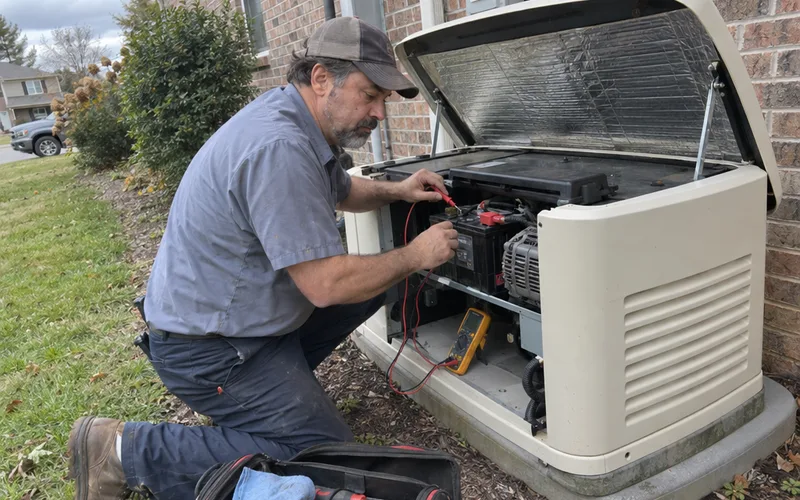
Book a yearly visit that includes automatic transfer switch maintenance. Miratag’s listing ties pro service to the maker’s intervals, and your warranty may add its own terms.
Here’s what to say when you call:
“I have a home standby generator that’s due for its yearly service. Can you include an oil and filter change, a battery test, a transfer switch test and a load test, and send a written quote that lists each item?”
Generac owners can check the visit against Generac generator maintenance. The price depends on what the visit covers, which generator maintenance cost breaks down.
Generator Maintenance Schedule (Printable Table)
Here’s the whole checklist on one page. Add your manual’s limits beside each “Manual” row before you print it:
| Task | When | Who |
|---|---|---|
| 1. Check oil | Every start | You |
| 2. Walk-around | Every start; weekly for standby | You |
| 3. Test run | Monthly | You |
| 4. Fresh fuel | Every fill and before storage | You |
| 5. Battery and charger | Monthly | You |
| 6. Air filter | Manual, sooner in dust | You |
| 7. Oil and filter change | Manual hours or months | You |
| 8. Spark plug | Manual | You |
| 9. Spark arrestor | Manual | You |
| 10. Pro service and switch test | Yearly, standby | Licensed pro |
Tape it where you store the generator, so the next due date is the first thing you see.
Which Jobs to Leave to a Pro
Generator jobs that touch house wiring, such as the transfer switch and its wiring, belong to a licensed electrician or dealer, and so do standby fuel lines and full load tests. Permits can apply to the electrical work.
For example, Fairfax County, Virginia, requires a residential electrical permit for new electrical equipment and for replacing electrical equipment or fixtures. The county lets owners pull permits in their own name but strongly recommends a licensed contractor pull them as the responsible party.
Rules differ by county, so call your permit office before any electrical wiring work.
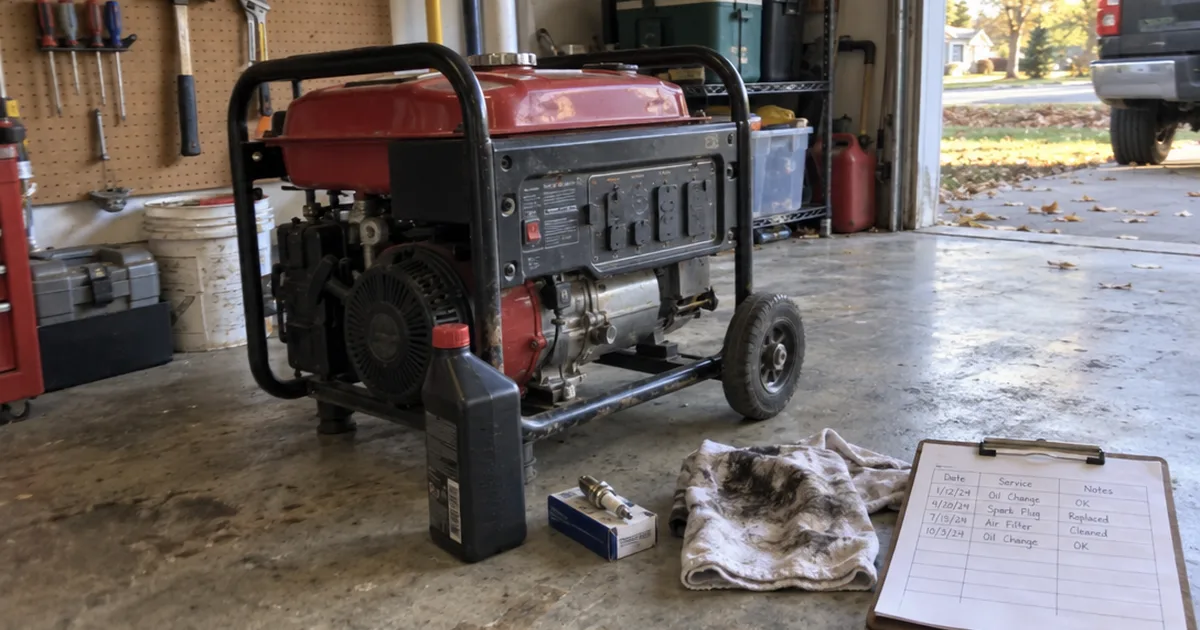
How to Keep a Generator Maintenance Log
A generator maintenance log is a dated record of every check, service and test run, and it tells you when the next job is due. Miratag’s checklist listing tells owners to keep a running log of all maintenance and test runs.
Write down these 5 things every time:
- The date
- The hour-meter reading
- The task you did
- The parts and oil you used
- Anything odd you saw, heard or smelled
Prefer a template? Miratag’s 27-item checklist is a free PDF.
Its listing says the template isn’t tailored to any specific country, region or jurisdiction, so add your manual’s intervals and local rules.
Frequently Asked Questions
What maintenance is required on a generator?
A generator needs oil checks before every start, oil changes on the manual’s schedule, fresh fuel, a clean air filter, a good spark plug and battery, and a monthly test run. Home standby units also need a yearly service with a transfer switch test.
How often should you service a generator?
Service a generator with quick checks before every start and once a month, and follow your owner’s manual for oil, filter and plug changes. Book a professional service for a home standby generator once a year.
What is the most common problem with generators?
A generator that won’t start when the power fails is what a checklist prevents. Miratag’s checklist listing says monthly inspections and regular load testing catch fuel degradation, dead batteries, failed heaters and control faults before they matter.
What are the recommended preventive maintenance steps for a diesel generator?
A diesel generator follows the same routine: oil, filters, battery, fuel and regular test runs. Add the coolant, radiator hose and fuel filter checks its manual lists.
Is there a printable generator maintenance checklist?
Yes, Miratag offers a free 27-item generator maintenance checklist as a PDF, and the schedule table in this article prints on one page once you add your manual’s intervals.
Final Thoughts
Every task on this list exists for one reason: backup power that starts the moment the lights go out.
Put your first monthly test run on the calendar this week, and log it when it’s done.