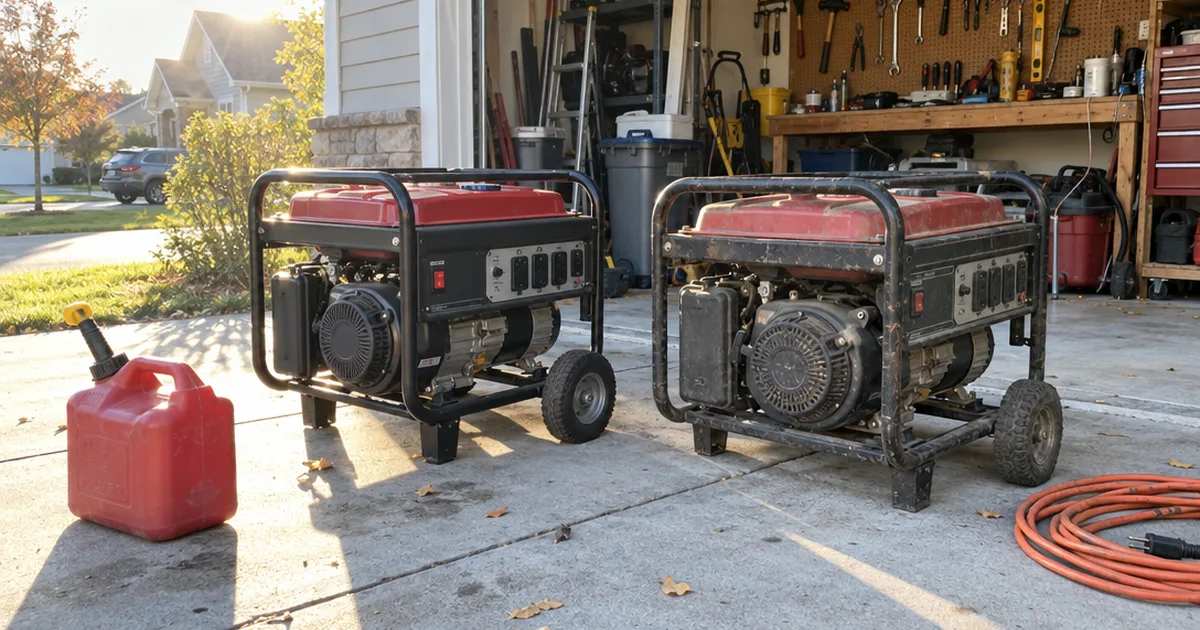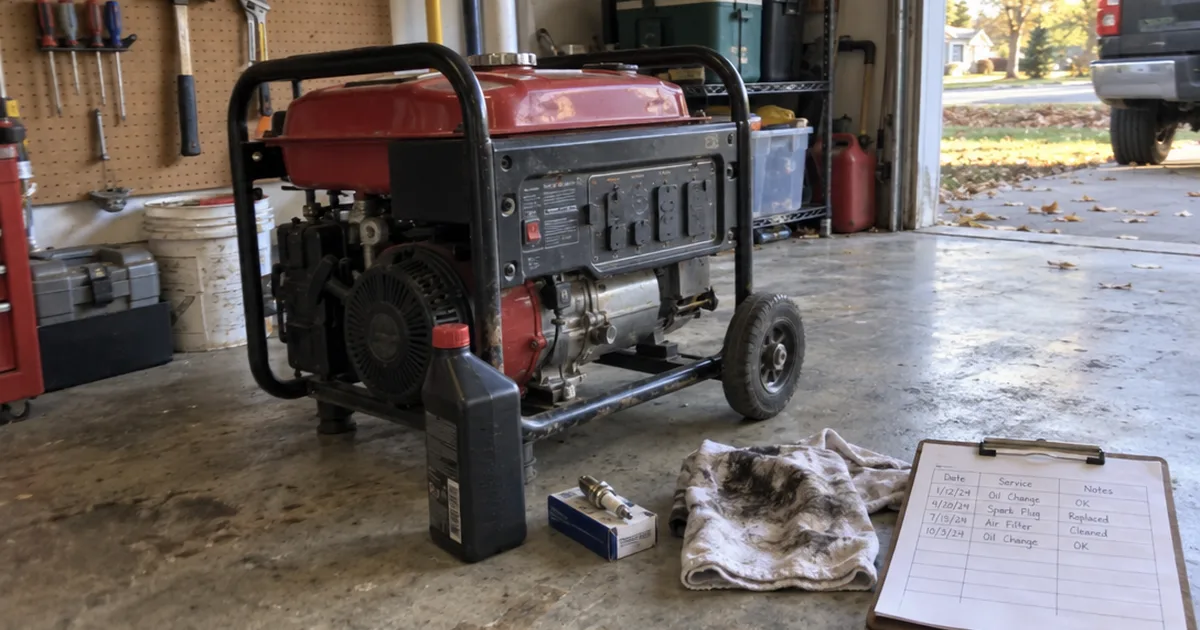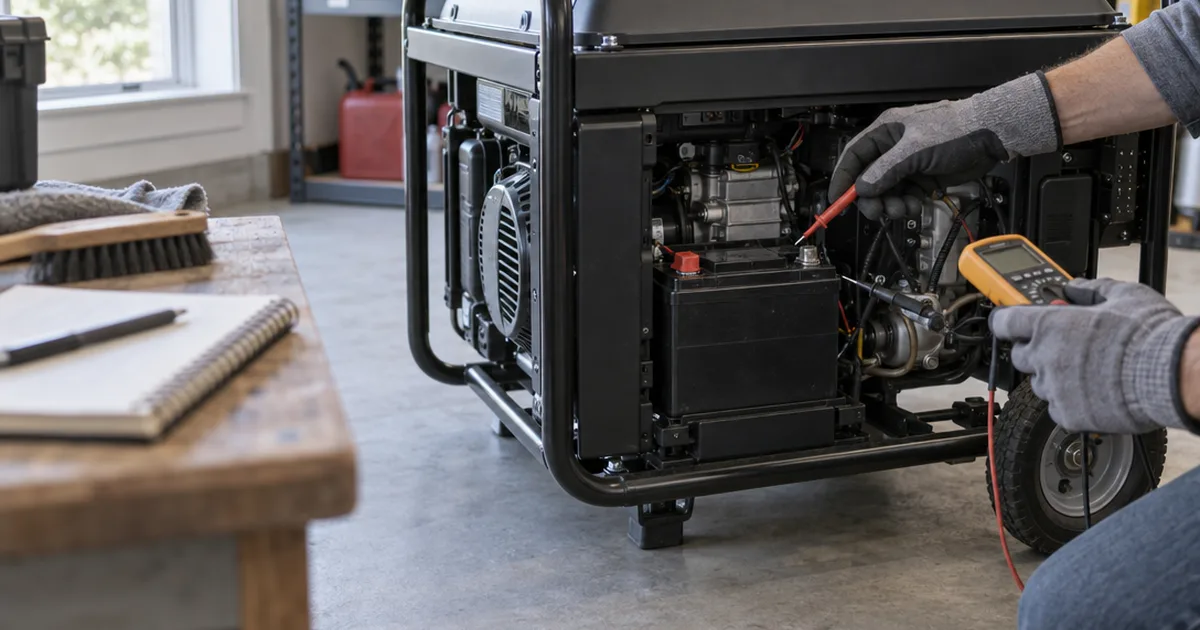

One owner couldn’t hold a conversation beside a 9,500/7,500-watt portable generator.
That complaint opened a 2015 Grassroots Motorsports forum thread, and the owners who replied had real fixes to trade.
Here’s how to make a generator quieter in 7 steps, ordered from free to the most work.
Stop as soon as the sound stops bothering you.
- Best for: portable generator owners with close neighbors or a shared campsite. Skip it if you own a home standby unit, which has its own section.
- Cost: Free for Steps 1 to 4 if you own an outdoor cord, then the price of your materials.
- Payoff: One forum owner with a 9500/7500 unit says they can barely hear it indoors.
- Time: Same day for Steps 1 to 4.
- First step: Get a free sound meter app and take a reading where the noise bothers you.
How to Make a Generator Quieter Step by Step
To make a generator quieter, find the loudest source, add distance, soften the ground, aim the exhaust, block the sound, upgrade the muffler and, last, add a vented box. The first 4 steps are free if you own a long outdoor cord, so try them before you buy anything.
Step 1: Find Where the Noise Comes From
Start with the source, because each kind of noise has its own fix.
Take a phone reading in decibels from the spot you care about, then repeat it from that spot after each step. A phone meter isn’t a lab tool, but the before and after shows what’s working.
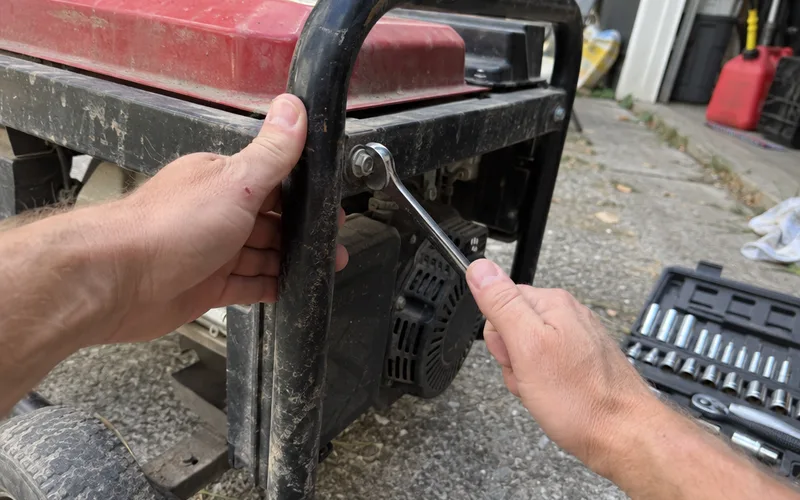
Next, walk around the running generator and listen from each side:
- Rattling or buzzing: loose panels or bolts. Shut it off, let it cool, then tighten them.
- Deep exhaust roar: Steps 4 and 6.
- Steady engine and fan drone: Steps 2, 5 and 7.
- Humming through a floor or deck: vibrations, so Step 3.
A sudden change in sound is a different problem, so run the generator troubleshooting checks before you add anything.
Step 2: Move the Generator Farther From People
Distance is the cheapest sound-proofing you’ll ever get, because noise fades as it travels.
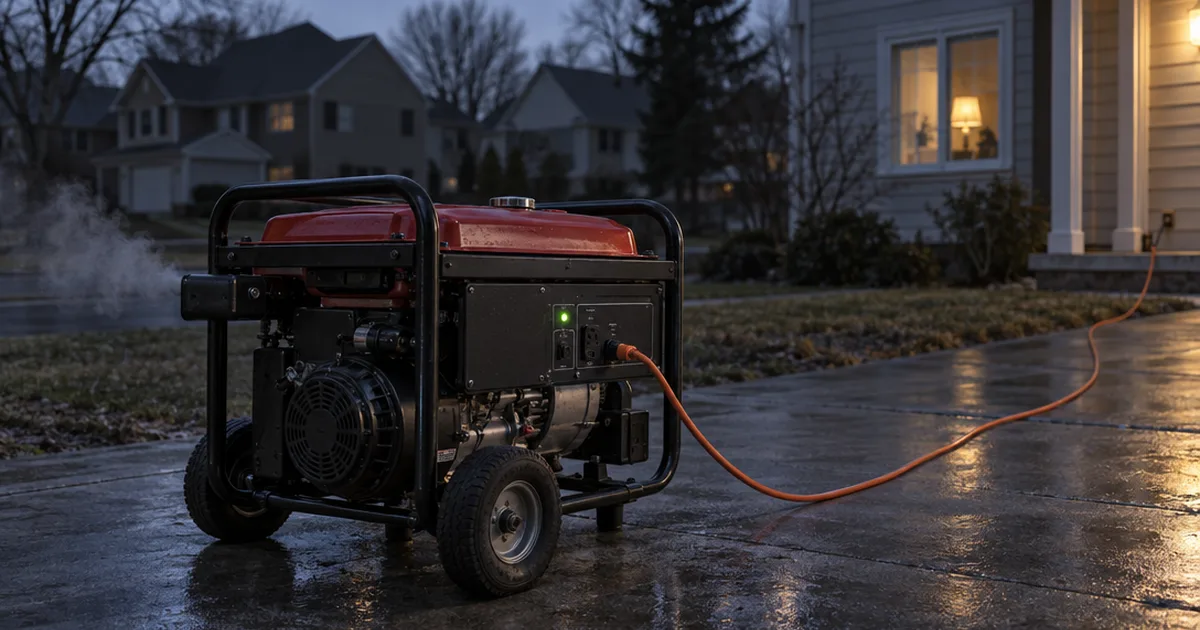
Pick the spot farthest from bedrooms and patios, without moving the sound to a neighbor’s window. A heavy-duty outdoor extension cord rated for your load keeps the electricity flowing over the longer run.
Note: Exhaust carries carbon monoxide, so distance is a safety rule too. The generator safety rules and the guide to how far from the house give the distances to follow.
Step 3: Set It on Grass or a Rubber Mat
Hard ground makes a generator louder, because concrete, asphalt and wooden decks pick up vibrations and bounce sound back at you.
So roll it onto firm, level grass or dirt.
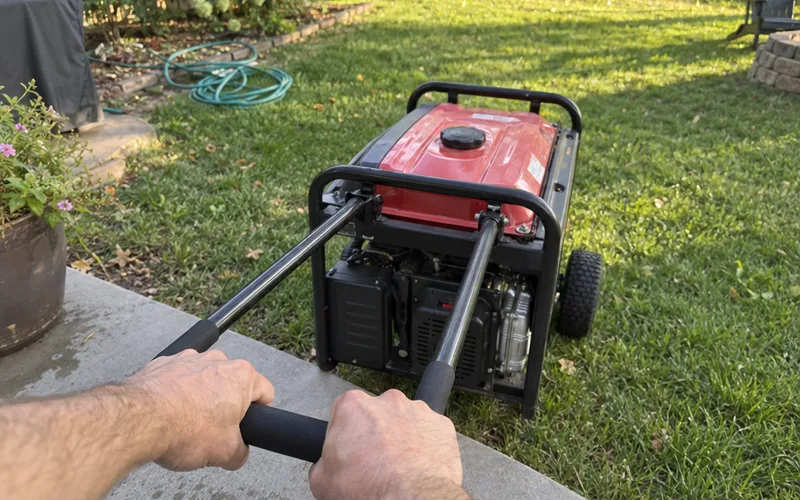
If you only have pavement, slide a rubber anti-vibration mat or pads under the feet. Keep the rubber clear of the hot muffler, and make sure the generator sits level.
Step 4: Point the Exhaust Away From You
Turning the exhaust away from you is free and takes a minute with the generator off.
One owner of a big 9500/7500 unit in that Grassroots Motorsports thread wrote: “I park it outside and face the exhaust into the woods.” That owner says they can barely hear it inside.
So aim the exhaust pipe at open space, away from doors, windows and vents. A wall only throws the sound back.
Step 5: Put a Solid Barrier in the Sound’s Path
A solid barrier works because sound heads straight for you, and something heavy in the way sends much of it elsewhere.
The fastest version comes from a forum poster: flip a folding table on its side between you and the generator.
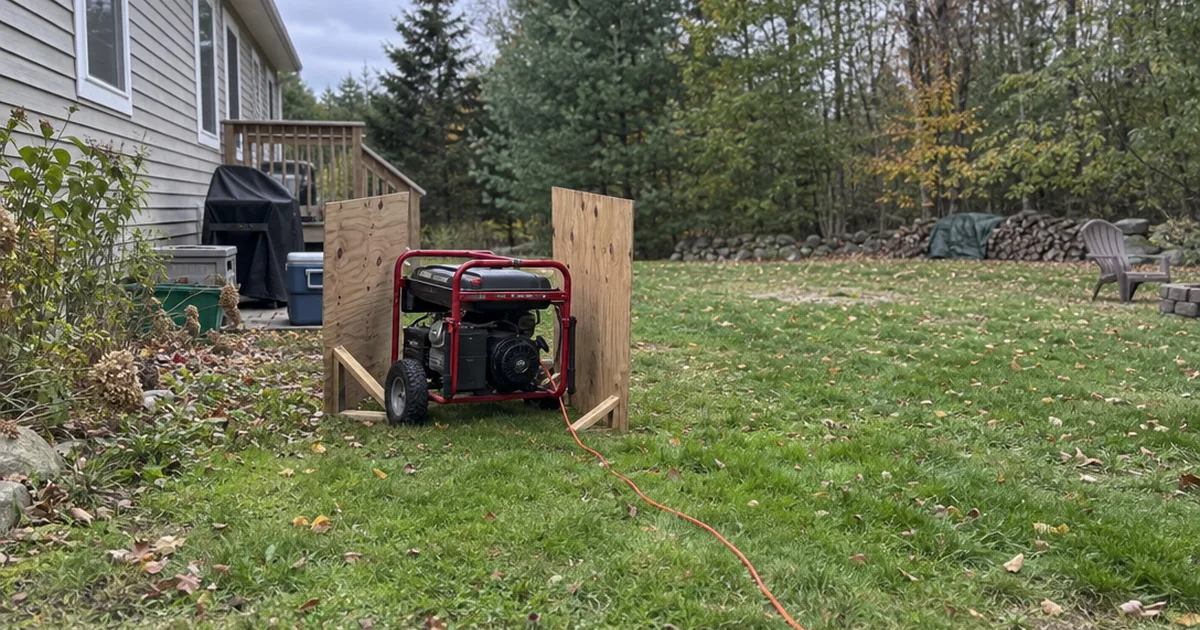
For a stronger barrier, use plywood panels, a solid fence or an acoustic fence. Another poster in that thread says “plywood walls braced up around it” help some, as long as you keep plenty of air space.
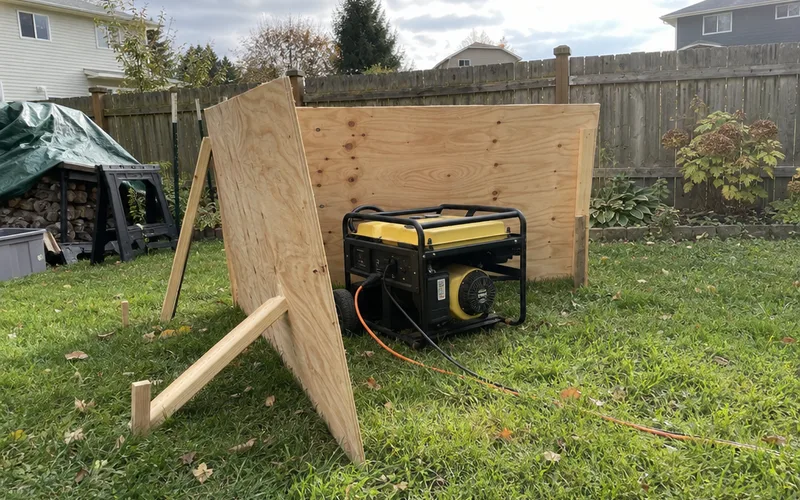
Brace each panel so it can’t fall onto the hot engine, and leave the top open.
Step 6: Upgrade the Muffler
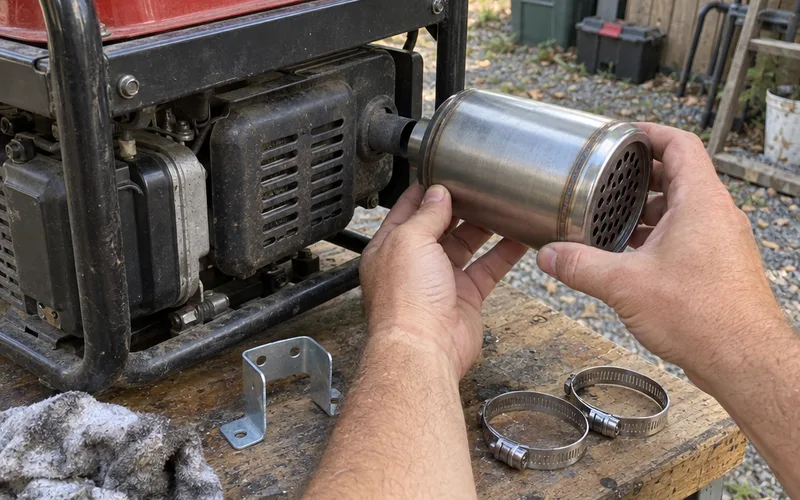
A bigger or second muffler quiets the exhaust system, and it’s the first step that costs real money.
On the Grassroots Motorsports forum, one owner adapted an old muffler to a two-stroke generator and said it “Made a HUGE difference.” That’s one owner’s report, not a measurement.
Another poster points to Tractor Supply mufflers for old Ford tractors, which have small inlets and outlets.
Here’s the catch: a heavy muffler can’t hang from the engine alone.
The same thread warns to make sure it’s “held by something besides” the small die-cast cylinder head. So brace it, and check your owner’s manual first, since exhaust changes can affect the engine and your warranty.
The generator exhaust extension and homemade exhaust silencer guides cover those builds.
Step 7: Add a Vented Quiet Box
A quiet box comes last because it’s the one step that can hurt the engine if you get it wrong.
Done right, it helps. One owner in the same forum thread built a plywood box with 2 layers of foam inside, plus an exhaust pipe with a car muffler, and says it “helped a lot.”
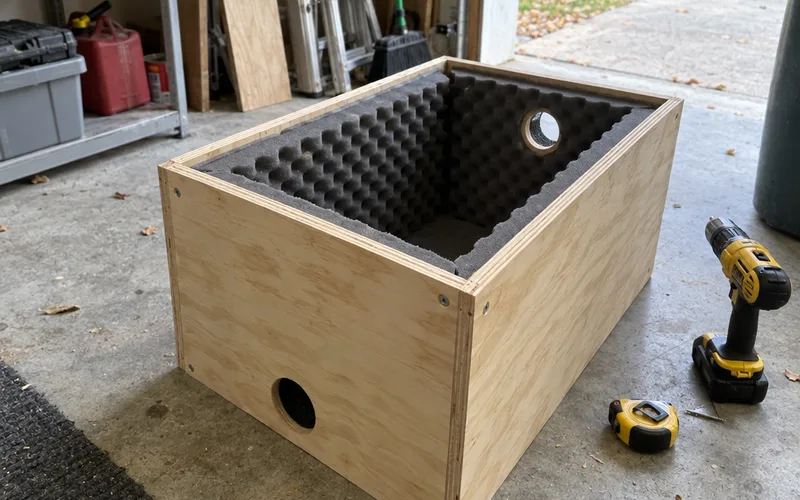
That owner adds one warning: you’ll probably need a fan to draw in cooling air.
Read your manual on enclosures first, then follow the quiet box build steps or compare ready-made quiet boxes.
What You Need to Quiet a Generator
Quieting a generator takes only a phone, a wrench set and an outdoor cord for the first 4 steps. Add a mat, plywood or a muffler only if your Step 1 reading points to them.
Why Is My Generator Running So Loud?
A generator runs loud because its air-cooled engine, exhaust, cooling fan and intake all make noise at once. Bigger engines and heavier loads usually make it worse.
One forum poster also notes the intake can be noisy too.
Size counts as well. The owner who started that thread said a 7500/6000 unit would have done the job, so an oversized generator can mean noise you don’t need.
Lighter loads help too, so turn on eco mode if yours has one.
Do Generator Silencers Work?
Generator silencers work on exhaust noise only, so they help most when the exhaust is your loudest source. Owners on the Grassroots Motorsports forum report a real drop, though none of them measured it.
Engine and fan noise stay the same, which is why one poster there doubted it’s “all exhaust noise” on a big portable.
Attenuators are a separate category: sound traps for large setups such as a diesel generator at a business, not a bolt-on for a home portable.
So treat any decibel promise on a listing as the seller’s claim, and check it with your own readings.
Is It Safe to Put a Box Around a Running Generator?
A sealed box around a running generator isn’t safe, because it traps heat and exhaust. A safe enclosure is built for running, with cooling air moving through and exhaust leaving the box.
The exhaust is the danger you can’t see, since it causes carbon monoxide poisoning. Sound-proofing foam packed near a hot engine and its fuel adds a fire risk.
So put a battery-powered alarm inside your home and learn the carbon monoxide rules. The generator enclosure types show which designs can run and which are for storage.
How to Make a Generator Quiet for Camping
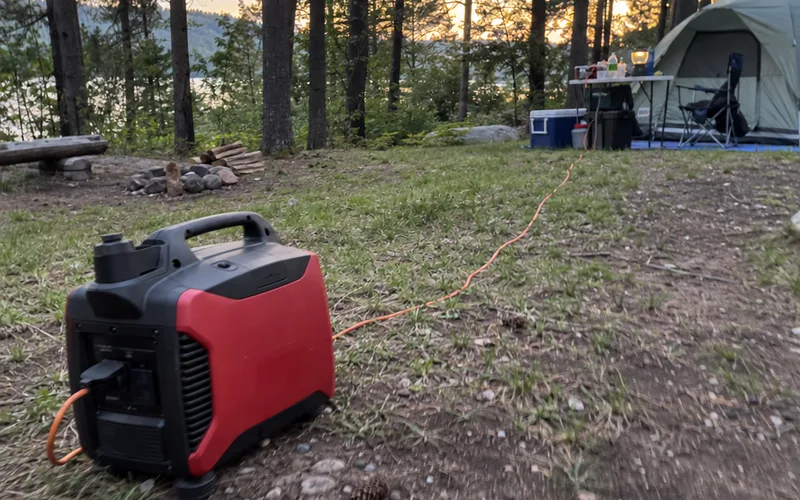
A camping generator gets quieter when you park it at the far end of your cord, set it on grass or dirt and aim the exhaust away from every tent and RV.
One poster on the Grassroots Motorsports forum saw a camper who boxed most of a unit in wood. That camper also bent the exhaust into a long S with a muffler on the end, and the poster reports “very little noise.”
For an RV, another poster says RV dealers sell an extension kit with a car-type muffler.
Read your campground’s quiet hours before you unpack.
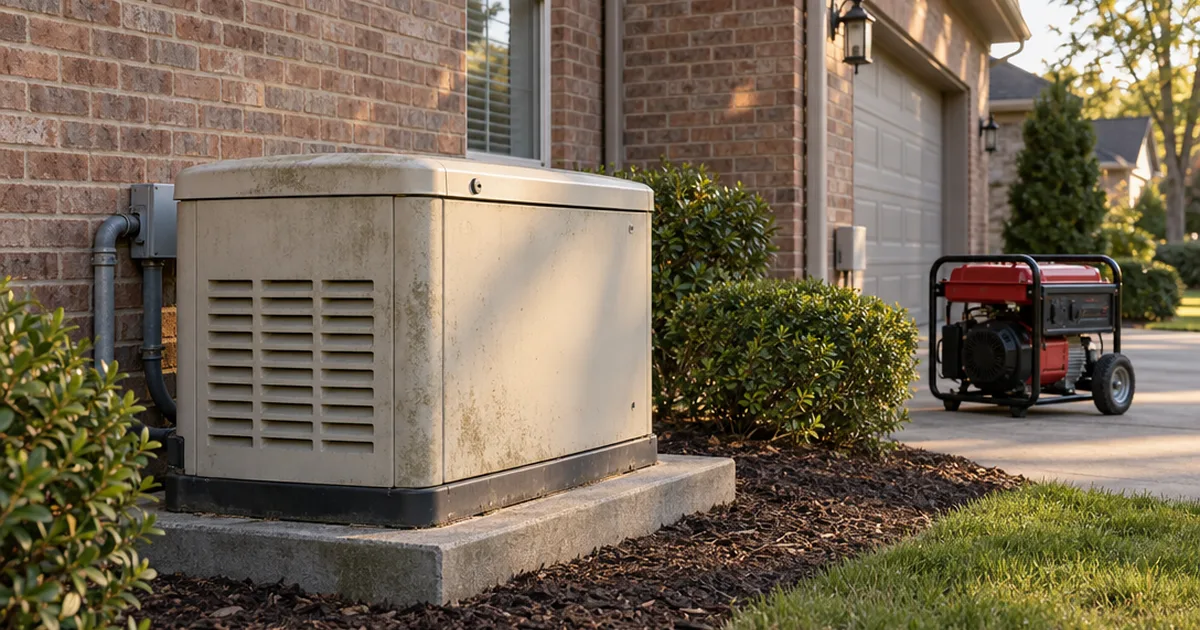
How to Quiet a Whole House Generator
A whole house generator gets quieter through better placement and barriers, not by changing its factory housing, because that housing is part of how the engine cools.
Standby units run on propane or natural gas, so ask your dealer to check for loose panels and worn mounts. If it’s still too loud, ask what fence or wall fits the manual’s clearances, then check your HOA generator rules.
What Is the Quietest Type of Generator to Buy?
An inverter generator in a closed case is the quietest fuel-powered type to buy. A battery power station is quieter still because it has no engine.
Forum owners lean the same way. One poster in that thread bought a Yamaha they call quiet, and the original poster considered a “used Honda or similarly smaller and quieter unit.”
Compare noise ratings at the same load and distance, then see these quiet generators for home or how inverter generators work.
Common Mistakes When Quieting a Generator
The most common mistakes when quieting a generator are sealing it in, blocking its air and moving the noise onto someone else:
- Wrapping it in blankets or foam. Soft layers block cooling air and can catch fire.
- Blocking the exhaust. Anything that restricts it can hurt the engine.
- Moving the noise next door. Noise pollution is still your problem, and a generator under a neighbor’s window starts a real dispute fast.
- Skipping service. Worn, loose parts rattle, so stay on the generator maintenance schedule.
Frequently Asked Questions
How do you muffle the sound of a generator?
You muffle the sound of a generator with a better exhaust muffler, plus a barrier between you and the machine. A muffler only quiets the exhaust, so engine and fan noise need the barrier.
Can I make a homemade silencer for my generator?
Yes, you can make a homemade silencer for a generator, and owners on the Grassroots Motorsports forum report adapting old mufflers. Brace the weight so it doesn’t hang from the engine, and check your manual first.
Does running generator exhaust through water make it quieter?
Running generator exhaust through water is a trick to skip, because water can back up toward the engine and the hose restricts exhaust flow. Use a muffler that fits your generator instead.
Final Thoughts
The biggest drop usually comes from the free steps, so start there.
This week, take one phone reading, move the generator and point the exhaust at open space.
Then let the next reading tell you whether you need a barrier, a muffler or nothing else.