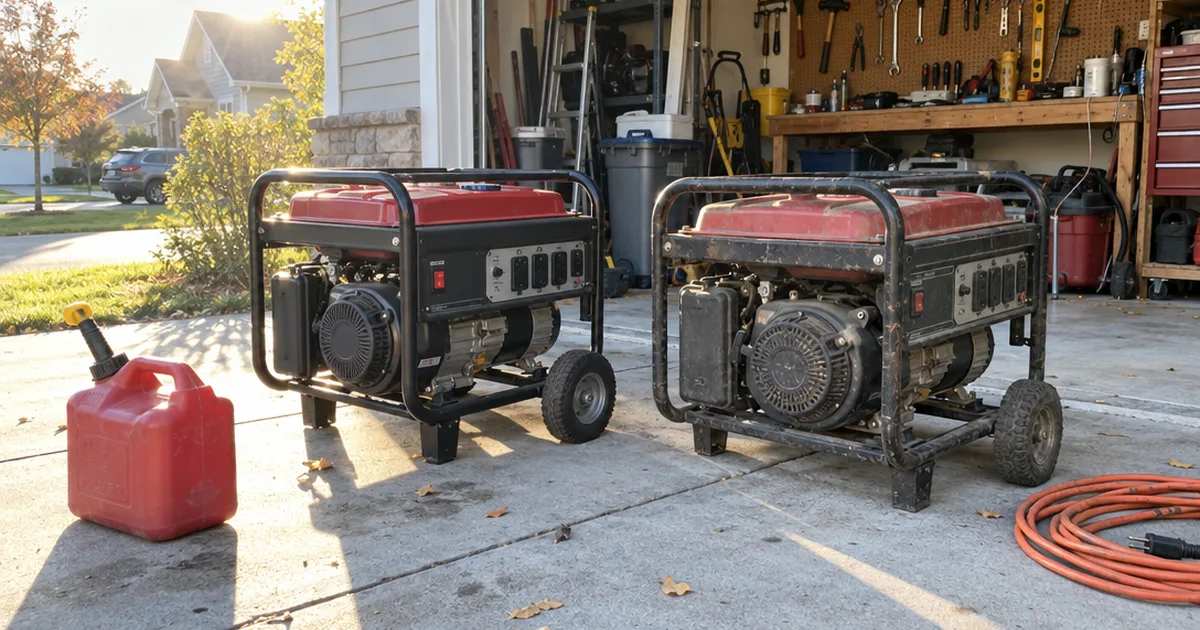
One state separates an EPA generator from a CARB generator.
An EPA-only model can be sold new in 49 states, and the CARB version of the same model can go to all 50, California included.
That gap explains why so many listings show 2 versions of one machine, sometimes at the same price.
Below, I’ll compare the EPA vs CARB generator choice on 7 points: where it’s legal, emissions, parts, price, power, upkeep and labels. Then I’ll tell you which one to buy.
Here’s the fast version:
- Shipping to a California address? Only a CARB-certified model will ship, so jump to the label checks below.
- Same price on both listings means the CARB version costs you nothing extra.
- A cheaper EPA unit in Texas, Ohio or Florida is a fine buy, and you can keep the savings.
- Moving to California soon? Buy CARB now and skip the guesswork later.

EPA vs CARB Generator at a Glance
A CARB generator wins on where it can be sold and how clean it runs, while an EPA generator wins on price and simplicity. Here’s how the 2 compare on the points a buyer acts on:
| Category | CARB Generator | EPA Generator | Winner |
|---|---|---|---|
| Who certifies it | CARB and EPA | EPA only | CARB |
| Where it's sold new | All 50 states | 49 states | CARB |
| Emission limits | Stricter | Federal baseline | CARB |
| Fuel-vapor parts | Canister, sealed lines | Basic | EPA (simpler) |
| Price | Same or a bit more | Often lower | EPA |
| Availability outside CA | Good | Wider | EPA |
| Rated wattage | Often the same | Often the same | Tie |
| Moving or resale | Fits any state | Questions in CA | CARB |
| Overall | Best when prices match | Best when cheaper | CARB |
Most of those rows come down to one fact. CARB is a stricter test, and the same engine design can often pass it with a few extra parts.
So if the 2 versions cost the same, the CARB model is the safer pick. If the EPA model is clearly cheaper and you live outside California, take the savings.
What Is an EPA Generator?
An EPA generator has an engine certified to the federal emission standards of the Environmental Protection Agency, which cover engines sold across the United States. Every new portable generator sold in the U.S. has to meet them, so “EPA compliant” on a listing is the minimum, not a bonus.
That’s the part most shoppers miss.
When a listing says “EPA” and nothing else, it’s telling you the generator meets the federal baseline and stops there. It says nothing about whether the generator is certified for California.
Large diesel generators follow separate EPA Tier rules, which this comparison doesn’t cover.
How EPA Certification Works
EPA certification happens before a generator reaches the store shelf. The maker certifies an engine family, a group of engines with the same design and emissions setup, and each unit built on it gets a label saying so.
In other words, you don’t do anything to make a generator “EPA approved.”
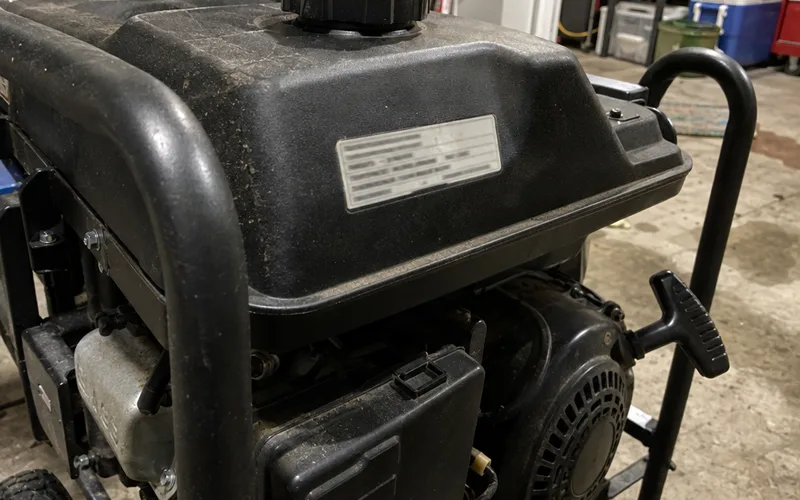
It arrives that way, and your job is to keep it that way with the parts and settings the maker lists. The emissions parts sit on the same engine that turns fuel into power, and the walkthrough of how a portable generator works shows where each piece fits.
What “49-State” Means on a Listing
A 49-state generator is an EPA-only model that can be sold new in every state except California. Retailers and makers use the label to warn California shoppers before they check out.
If you see “49-state,” “EPA only” or “not for sale in California” on a listing, treat them as the same warning.
The generator itself isn’t unsafe or low quality. It just hasn’t been certified to California’s rules, so a California order for it usually won’t ship.
What Is a CARB Generator?
A CARB generator is certified by the California Air Resources Board, the state agency whose emission standards are stricter than federal EPA rules. Because it meets both sets of rules, a CARB-compliant generator can be sold new in all 50 states.
That’s why you’ll see it marked “50-state,” “CARB compliant” or “California compliant.”
Why California Sets Its Own Rules
California sets its own engine rules because CARB regulates the small engines in lawn mowers, chainsaws and portable generators. These are called small off-road engines, or SORE, and nearly every portable generator falls in that group.
California has fought smog for decades, and CARB’s small-engine regulations are one of its tools.
So a maker that wants to sell a model in California has 2 choices. It can certify the engine to CARB’s stricter rules, or it can skip California for that model.
That’s why so many popular models come in both versions.
The Extra Parts on a CARB Model
CARB models usually add parts that cut fuel vapor and lock in a clean fuel mixture. The most common ones are:
- A carbon canister, sometimes called a charcoal canister, that traps gasoline vapor from the tank.
- Fuel lines and a tank built to let less vapor escape.
- A sealed or tamper-resistant carburetor with no mixture screw to adjust.
- Extra vent hoses that route vapor to the canister instead of the open air.
None of this changes how you start or run the generator.
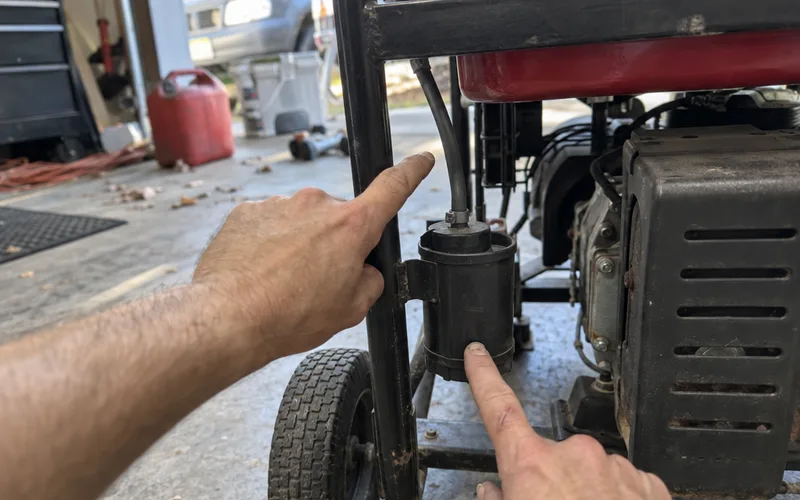
It does add a few small parts to look at during service, which the maintenance section below covers.
CARB vs Carb: The Naming Mix-Up
CARB with capital letters means the California Air Resources Board, while “carb” in lowercase is shop slang for carburetor. The 2 have nothing to do with each other, but they collide in generator listings and forum threads all the time.
For example, a Reddit thread titled “Predator 5000 carb vs EFI” compares a carburetor with fuel injection. It has nothing to do with California.
So when you read a listing or a review, check the context. A mention of California, emissions or a certificate means the agency.
Emissions: What Each Standard Limits
EPA and CARB standards both limit 2 things: the exhaust from a generator’s engine and the fuel vapor that leaks from its tank and lines. CARB’s limits on both are stricter.
That’s the whole difference in one line: the same 2 kinds of pollution, held to a tighter number in California.
Exhaust is what combustion leaves behind, and it comes out of the muffler when the engine runs.
It carries unburned fuel (hydrocarbons), nitrogen oxides (NOx) that help form smog, and carbon monoxide. Burning fuel also releases carbon dioxide, a greenhouse gas linked to climate change, and fine particulate matter.
Fuel vapor is the gas that escapes from the tank and lines, even when the generator is off. Rules call it evaporative emissions, and it’s why CARB models add the carbon canister and lower-vapor fuel parts.
Why Exhaust Rules Matter for Your Health
Exhaust rules exist because the gases from burning fuel are bad to breathe. Take sulfur dioxide, one of those gases: the U.S. EPA notes that short-term exposure can harm the human respiratory system and make breathing difficult.
The same agency says people with asthma, particularly children, are sensitive to those effects.
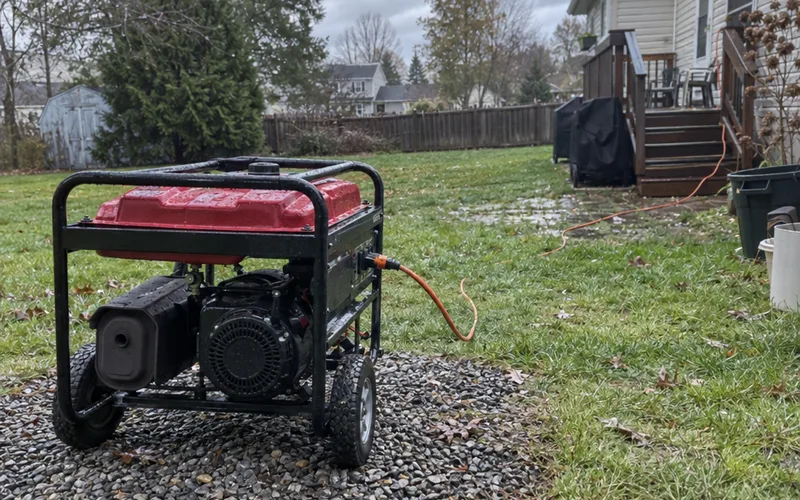
Neither label makes exhaust safe to breathe, so the placement rules don’t change with the sticker. Carbon monoxide is toxic, so run every generator outside, well away from doors, windows and vents, and follow the carbon monoxide safety basics no matter which version you own.
Is a CARB Generator Better for the Environment?
A CARB generator is the cleaner choice, because its engine and fuel system are certified to stricter limits on both exhaust and fuel vapor. That means less smog-forming pollution for each hour it runs.
Those cuts add up to a public health gain across every small engine in a state, not in one backyard. For your own household, where you put the generator still matters more than its label.
Where Each One Is Legal
A CARB generator can be sold new in all 50 states, while an EPA-only generator can be sold new in 49 states but not in California. Outside California, both versions are legal to buy and run.
That’s the rule that drives almost every other difference in this comparison.
Can You Buy an EPA Generator in California?
You can’t buy a new EPA-only generator for delivery in California, because CARB certification is required to sell those small engines new in the state. Most makers and retailers won’t release a 49-state unit to a California address.
Some online stores still let you add one to your cart.
That isn’t a green light. It usually means the store hasn’t blocked the order yet, and you’ll find out at shipping.
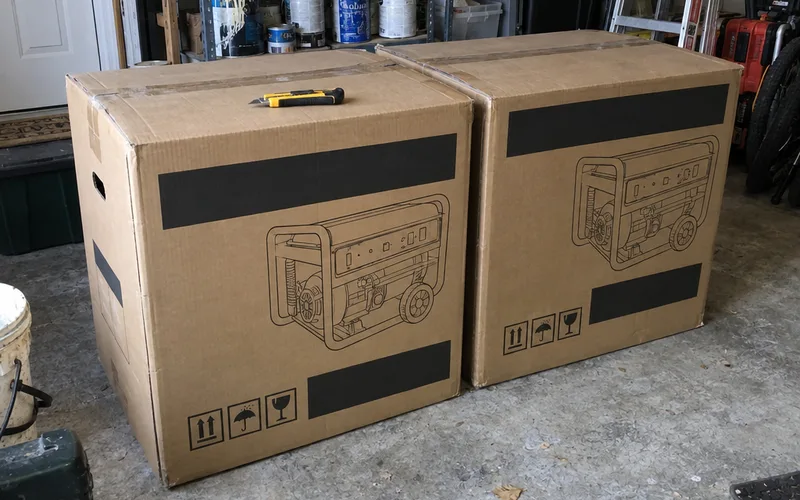
So check the model number against the maker’s CARB list before you pay.
Which States Require CARB-Compliant Generators?
California is the state where a portable generator must be CARB certified to be sold new. Some other states follow CARB rules for other equipment, so the safe move outside California is to check before you buy.
Here’s how to check in a few minutes:
- Read the ship-to notice on the retailer’s product page, which usually names any state it won’t ship to.
- Look at the maker’s spec page for a “CARB” or “50-state” note on that exact model number.
- Search your state air agency’s site for “small off-road engine” rules if you’re still unsure.
If all 3 come back clear, either version is fine where you live.
Moving to California With a 49-State Generator
The California sales rule covers new generators sold there, not every machine you already own. If you’re moving there with a 49-state generator, that’s a separate question to confirm with CARB directly.
Don’t take a forum post or a seller’s word for it.
Call or email CARB with your generator’s model number and the engine family code from the label, and keep the answer in writing.
Here’s what to send:
I’m moving to California with a portable generator, model [model number], engine family code [EF code from the label]. It’s certified to EPA standards only. Can I keep using it at my new address, and is there anything I need to do?
That message gives CARB everything it needs to answer in one reply.
The No-Certification Alternative
A battery power station skips the EPA vs CARB question entirely because it has no engine. No engine means no emission certification, no fuel to store and no exhaust.
The catch is runtime: a battery runs until it’s empty and then needs grid power or solar to recharge, while a gas generator runs as long as you refuel it.
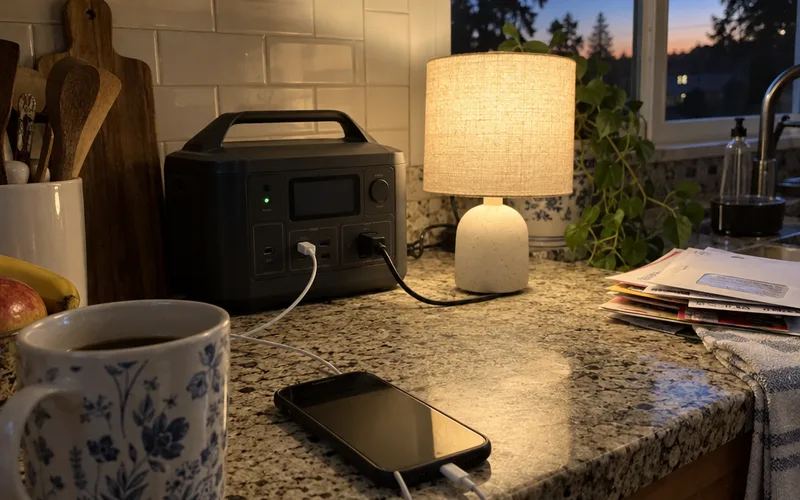
If your outage needs are small, a power station for home backup is worth comparing before you buy any gas unit.
Price and Availability
A CARB generator sometimes costs a little more than the EPA version of the same model. Outside California, the EPA version is also usually easier to find.
The extra cost comes from the certification work and the added emissions parts.
That said, the gap isn’t fixed.
Some makers price both versions the same, and some retailers stock only one. That’s how you end up with 2 listings at the same price, one saying “EPA” and one saying “CARB.”
When the price is the same, the CARB version is the better buy. You get the same generator, and it can be sold in more places.
Here’s an example with made-up numbers: say the EPA version of a model costs $50 less than the CARB version. If you live in Ohio and plan to stay, that $50 buys fuel stabilizer, a spare spark plug and a few quarts of oil.
But if a move to California is on the table, the CARB unit is the one that avoids a call to CARB later. In that case, the $50 is cheap insurance.
How to Compare the 2 Listings
Comparing the 2 listings takes a few minutes if you check the right lines. Open both product pages side by side and compare:
- The model number, since certification is tied to one exact number.
- Running watts and starting watts.
- Fuel type (gasoline, propane, natural gas or dual fuel).
- Engine size and start type.
- Warranty length and terms.
If everything matches except the certification and the price, the decision is simple.
Live outside California and the EPA unit is cheaper? Take it.
If the price is the same, take CARB.
Performance, Power and Reliability
EPA and CARB generators don’t differ in power by design, because the rules limit emissions, not watts. Makers often sell both versions of a model with the same running and starting watt ratings.
So don’t expect the CARB unit to run more appliances, or fewer. Check the 2 numbers that matter on both spec sheets: running watts and starting watts.
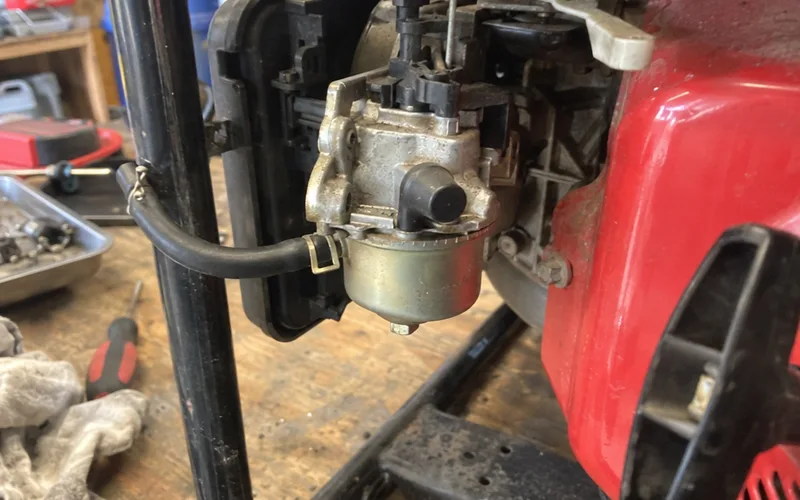
Where you may notice a difference is in how the engine is set up. CARB models are often built with a sealed carburetor set at the factory, which leaves you no mixture screw to adjust.
That sealed carburetor gives you no screw to turn when stale fuel or a partly clogged jet throws it off. That’s why the maintenance section matters more for CARB owners than for anyone else.
Do Certified Parts Make It Less Reliable?
Certified parts don’t make a generator less reliable on their own. They do add a few small parts that can crack, clog or come loose with age.
A vapor hose that splits or a canister vent that clogs can cause starting or fuel-smell problems.
The fix is routine inspection, not avoiding CARB.
A few minutes of looking during each service catches a cracked vapor line before it leaves you with a no-start.
Maintenance: Living With CARB Parts
A CARB generator needs the same core maintenance as an EPA generator, plus a quick look at its fuel-vapor parts. The habits that matter most are fresh fuel, a clean carburetor and intact vapor hoses.
Here’s a simple routine for either version:
- Keep the fuel fresh, or add stabilizer and follow a fuel storage routine between outages.
- Run the carburetor dry or drain it before long storage, as your manual directs.
- Check the vapor hoses and canister for cracks, kinks or loose clamps at each service.
- Follow the oil, air filter and spark plug intervals in your manual.
Steps 1 and 2 matter most on a sealed carburetor, because you can’t turn a mixture screw to work around varnish.
If the engine surges or won’t start after storage, a generator carburetor cleaning is the usual first fix. A strong gas smell near the tank or canister is a different problem, and the steps for why a generator leaks fuel help you trace it.
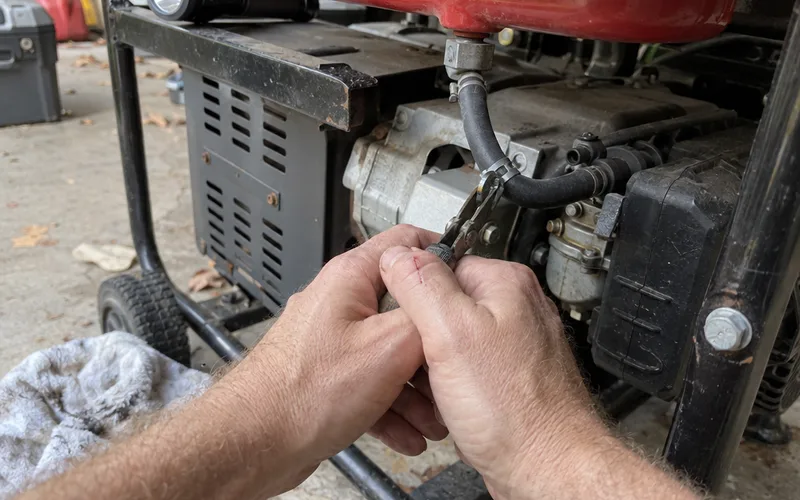
Key Takeaway: CARB parts add 1 extra check to your routine, not a new routine.
The rest of your schedule lives in the generator maintenance section, and the portable generator maintenance checklist breaks it down by task.
How to Tell If a Generator Is CARB Compliant
The fastest way to tell if a generator is CARB compliant is to read the emissions label on its engine. A CARB engine’s label names California or CARB, and the maker’s spec page for that exact model number is your second check.
Here’s the order I’d use:
- Find the engine’s emissions label. It’s usually a sticker on the engine shroud or valve cover. On a CARB engine, the label names California or CARB next to the EPA.
- Note the engine family code. It’s a string of letters and numbers marked “EF” on the label, and it identifies the certified engine design. A second code marked “EVF” describes the fuel-vapor setup.
- Check the model number online. Certification is tied to a specific model number, so 2 generators that look identical can sit on opposite sides of the line.
- Read the listing’s state notice. “Not for sale in California” or “49-state” settles it fast.
What isn’t a reliable check?
The words “EPA approved” or “EPA compliant.” Every new generator sold in the U.S. meets EPA rules, so that phrase tells you nothing about California.
Pro Tip: Take a phone photo of the emissions label when the generator is new. If you ever sell it, move or need a part, that photo answers the certification question in seconds.
Predator CARB vs EPA: Which Version to Buy
Buy the CARB version of a Predator generator if you live in California or both listings cost the same, and buy the EPA version if it’s cheaper and you live elsewhere. The Predator CARB vs EPA choice works like any other brand.
Harbor Freight’s Predator line is the brand readers ask about most, often for the 2000-watt inverter and the 3500-watt models.
One reader thread asks it plainly: “Should I get the CARB or EPA III 2000w Predator generator today?”
The same logic answers it. If the 2 listings match on watts, fuel and warranty, the price and your state decide.
The same rule applies to Champion and every other brand that sells 2 versions of a model. Once you’ve picked the version, the Predator generator reviews and Champion generator reviews help you pick the model.
In other words, the brand doesn’t change the rule. Your state and the price gap do.
Who Should Choose an EPA Generator
An EPA generator is the right choice if you live outside California, plan to stay and can buy it for less than the CARB version. In that case you’re paying only for the certification you’ll actually use.
An EPA-only model fits if:
- You live in a state that doesn’t restrict 49-state generators.
- The EPA version is clearly cheaper than the CARB version.
- The CARB version is out of stock and you need a generator before the next power outage.
- You’d rather have fewer vapor parts to inspect.
Before you buy, run the 3 state checks from the section on where each one is legal, so a ship-to limit doesn’t surprise you.
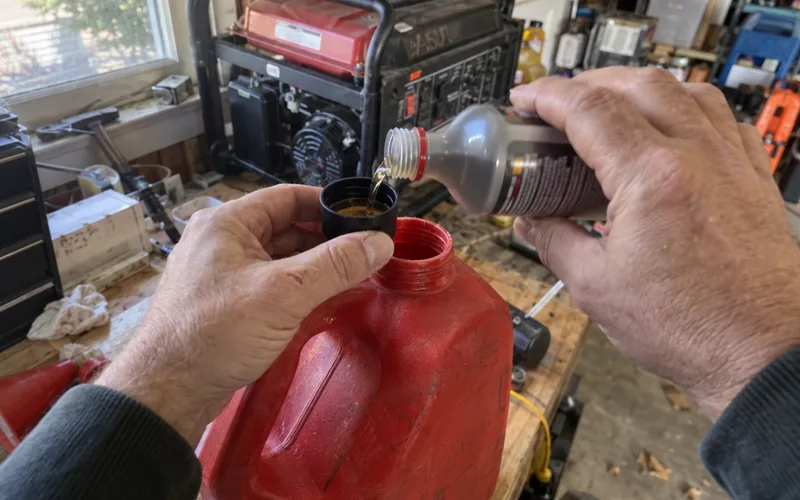
Then keep the savings, and spend part of it on fuel stabilizer and a spare spark plug.
Who Should Choose a CARB Generator
A CARB generator is the right choice if you live in California, might move there or can get it for the same price as the EPA version. It’s the version with no state limits on where it can be sold.
A CARB model fits if:
- You live in California, the 1 state where it’s the only new option.
- Both versions cost the same, so CARB costs you nothing extra.
- You may move, or you want a generator that raises no questions in any state.
- You want the stricter emission limits for your own reasons.
The main tradeoff is a few extra vapor parts to inspect and sometimes a slightly higher price.
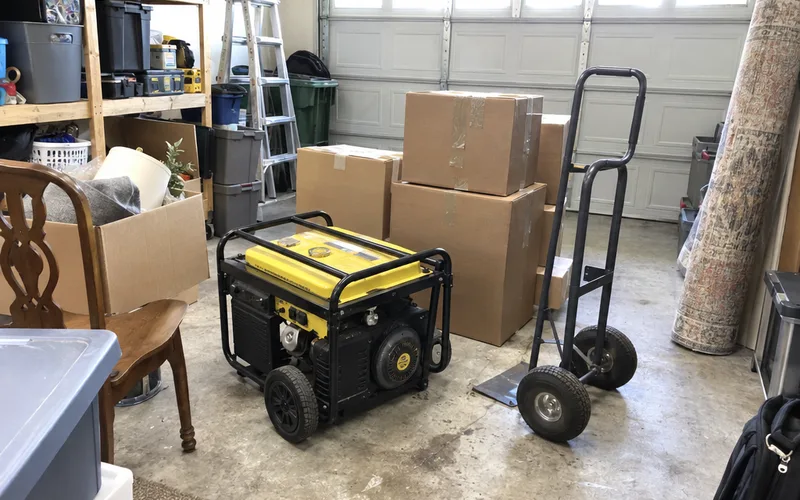
For most buyers who can get it at the same price, that’s an easy trade.
Frequently Asked Questions
What is the difference between a CARB and EPA generator?
A CARB generator is certified to the California Air Resources Board’s emission standards, which are stricter than the EPA’s federal standards, while an EPA generator meets only the federal rules. The CARB model usually carries extra fuel-vapor parts and can be sold new in all 50 states.
Who needs to be CARB compliant?
Anyone buying a new gas or propane portable generator for delivery in California needs a CARB-certified model, because CARB certification is required to sell those small engines new in the state. Buyers in other states can choose either version.
Which states are CARB compliant?
California is the state where a portable generator must be CARB certified to be sold new. Other states may follow some CARB rules for other equipment, so check the retailer’s ship-to notice and your state air agency before you buy outside California.
Is a CARB generator worth it if I don't live in California?
A CARB generator is worth it outside California when it costs the same as the EPA version, since you lose nothing and gain a unit that can be sold in any state. When the EPA model is meaningfully cheaper, the savings usually matter more.
Does a CARB generator have less power than an EPA generator?
A CARB generator’s certification doesn’t set its wattage, and makers often sell both versions of a model with the same running and starting watt ratings. Compare the two spec sheets line by line to confirm before you buy.
Can I remove the carbon canister from a CARB generator?
Removing the carbon canister from a CARB generator means it no longer matches the emissions setup it was certified with, so leave the parts in place. If the canister or its lines fail, replace them with the maker’s parts.
Final Thoughts
The EPA vs CARB generator choice comes down to one question: will this generator ever need to be sold in California?
If you live there, the CARB version is your only new option. Everywhere else, price decides, and a tie goes to CARB.
This week, pull up both listings for the model you want, compare the price and the spec sheet, and check the engine label or the maker’s model page before you pay.