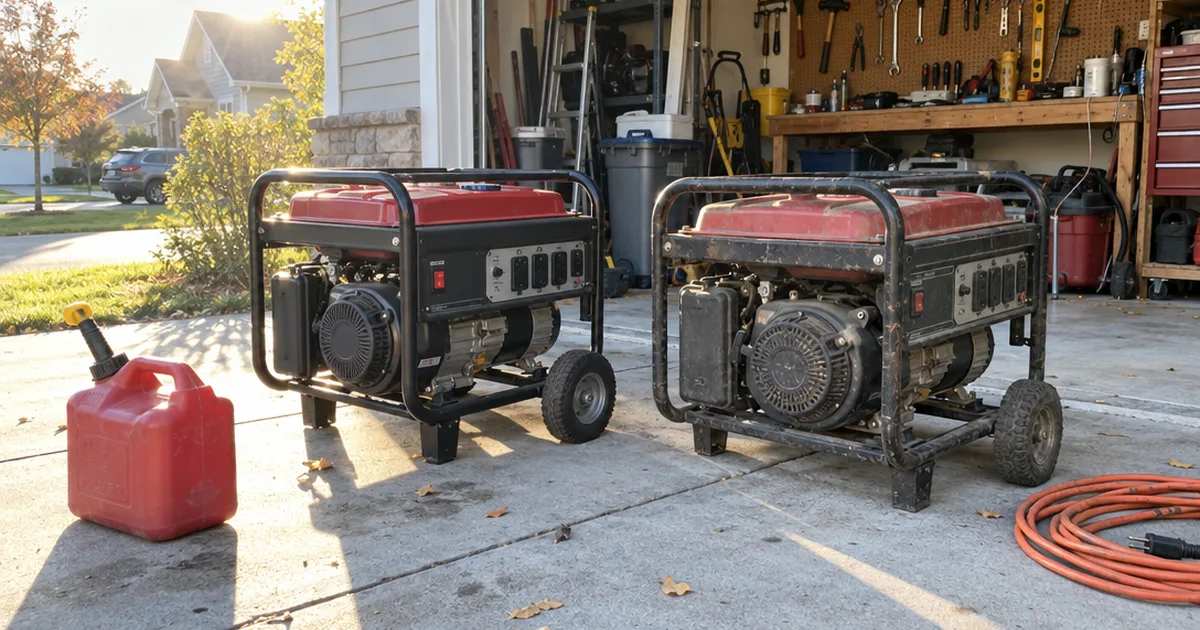

You pull a cord, an engine roars to life, and your fridge has power again. So how does a portable generator work between that pull and the plug?
In this guide, I’ll walk you through each part of the machine in plain English, from the fuel tank to the outlet. You’ll also see what that design means for runtime, safety and hooking one up to your house.
Let’s dive right in.
How a Portable Generator Works: The Energy Chain
Every portable generator is two machines sharing one frame: a small engine and an alternator. The engine makes motion, and the alternator turns that motion into electricity.
Here’s the whole chain in four steps:
- Fuel burns inside the engine and pushes a piston.
- The piston turns a crankshaft, which spins the alternator.
- The spinning alternator creates electricity.
- The control panel sends that power out through its outlets.
That’s the entire idea. A generator doesn’t store electricity; it makes it on the spot, which is why it needs fuel the whole time it runs.
It also explains why generators don’t need electricity to start. A pull cord or a small starter battery gets the engine turning, and the fuel does the rest.
The Main Parts of a Portable Generator
Before we follow the energy stage by stage, it helps to know what you’re looking at. Most portable models share the same core parts:
- Engine: usually burns gasoline, with some models running on propane or diesel.
- Fuel tank: sits on top of the frame and feeds the engine.
- Alternator: the rotor and stator that make the power.
- Voltage regulator: keeps the output steady as loads change.
- Control panel: the outlets, circuit breakers and start controls.
Each part hands its work to the next one. So let’s follow the energy in order, starting with the engine.
How the Engine Turns Fuel Into Motion
The engine is the generator’s muscle. Engineers call it the prime mover, which simply means the part that supplies the mechanical energy.
Most portable generators use a small four-stroke engine, much like the one on a lawn mower. It repeats the same short cycle over and over.
Air, Fuel and Spark
First, a carburetor or fuel injector mixes fuel with air and feeds it into the cylinder. Next, the piston squeezes that mix, and the spark plug fires to ignite it.
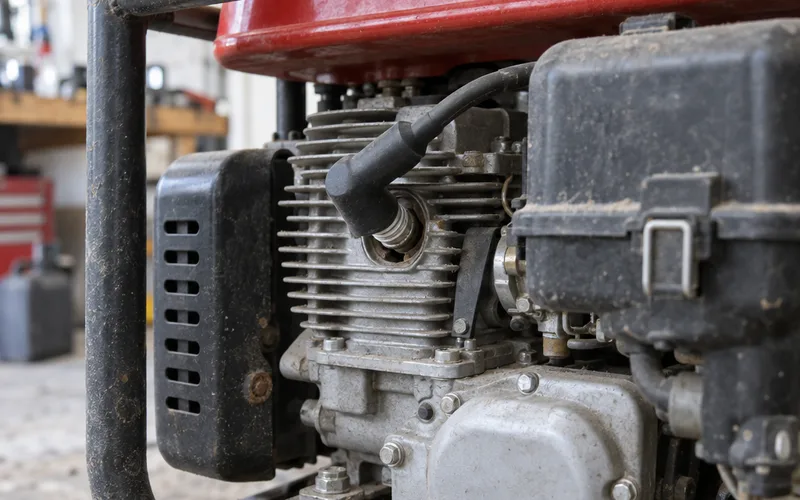
The burning fuel shoves the piston down, which turns the crankshaft. Finally, the piston pushes the exhaust out, and that exhaust is where carbon monoxide comes from.
The Governor Holds the Speed
An alternator’s output depends on how fast it spins. In fact, the frequency of the alternating current depends on the rotor’s speed and the number of magnetic poles inside it.
So a conventional generator uses a governor to hold that speed. It opens or closes the throttle as you add or remove loads, whether you’re running one lamp or a space heater.
Steady speed means steady power. When the governor can’t keep up, the engine bogs down, and that’s your cue that you’ve plugged in too much.
Built-In Engine Protection
Many generators also carry a sensor that shuts the engine off when the oil runs low. If yours stops for no clear reason, a tripped low oil sensor is one of the first things to check.
How the Alternator Makes Electricity
This part feels like magic, but it runs on a simple principle called electromagnetic induction.
Here’s the short version: move a magnet past a coil of wire, and the changing magnetic field pushes electrons through that wire. Keep the magnet moving, and you get a steady flow of electricity.
Rotor and Stator
The alternator has two main parts. The rotor is the spinning piece connected to the crankshaft, and it carries magnets or wire windings that act like magnets.
The stator wraps around the rotor and never moves. It’s made of tightly wound copper coils, and that’s where the electricity forms.
As the rotor spins, its magnetic field sweeps across those coils. That moving field induces a voltage in the stator, and current flows once you plug something in.
Why You Get Alternating Current
As the rotor turns, its magnetic poles pass the coils in alternating order. The voltage swings back and forth with each pass, so the output is alternating current (AC), like your wall outlets.
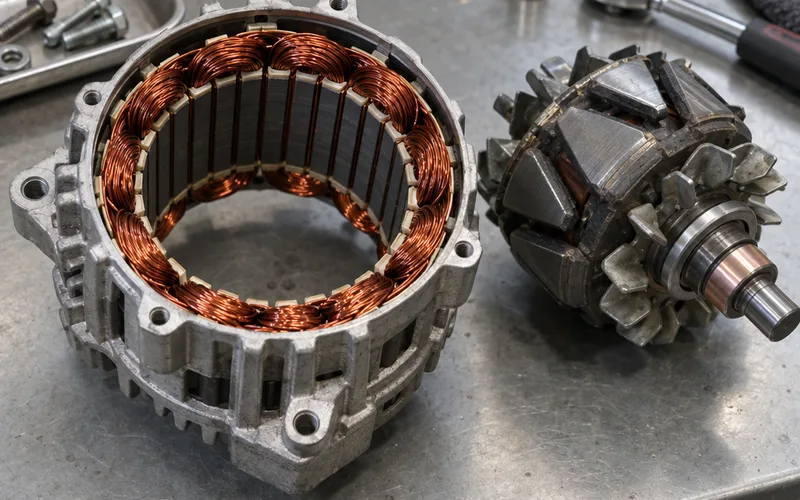
Some smaller portables use permanent magnets on the rotor. Others start from a small leftover magnetic charge that can fade in long storage, and then owners need to excite the generator again.
How the Voltage Regulator Keeps Power Steady
Your appliances care about voltage. If it sags, motors strain, and if it spikes, delicate electronics and medical devices can fail.
That’s the job of the automatic voltage regulator, or AVR, found on many generators. It watches the output and adjusts the current feeding the rotor’s magnetic field to keep the voltage level.
Why does that matter? Your loads change all the time, and a fridge compressor kicking on pulls a sudden surge the regulator has to absorb.
Pro Tip: If a generator runs but the voltage seems wrong, suspect the regulator. Some models allow a voltage regulator adjustment, but read your manual first.
Conventional vs. Inverter Portable Generators
Everything above describes a conventional portable generator. An inverter generator adds one more stage, and that stage changes how the power behaves.
In an inverter model, the alternator’s raw AC first gets converted into DC power. Then an inverter electronically rebuilds it into a clean AC sine wave before it reaches the outlets.
The best part? Because the electronics set the frequency, the engine doesn’t have to hold one fixed speed.
It can throttle down under light loads, which tends to make inverter models quieter and easier on fuel.
That clean output is why many owners pick an inverter for laptops, CPAP machines and other sensitive electronics. If that’s your main use, learn how inverter generators work first.
How the Power Gets From the Generator to Your Home
Making electricity is only half the job. Next, you need a safe path from the control panel to the things you want to run.
Outlets and Circuit Breakers
The control panel holds standard household outlets, and larger models add a twist-lock outlet. Each outlet group sits behind a circuit breaker that trips if you draw too much current or a short-circuit occurs.
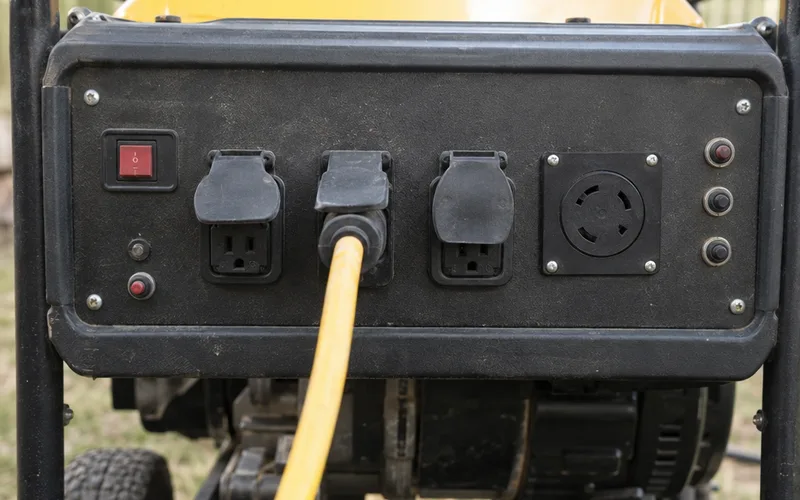
Many models also include a 12-volt DC charging outlet or USB ports for smartphones and other gadgets. So does a generator need an outlet?
No. The generator is the outlet, and you bring your cords or your transfer switch connection to it.
Cords, Interlocks and Transfer Switches
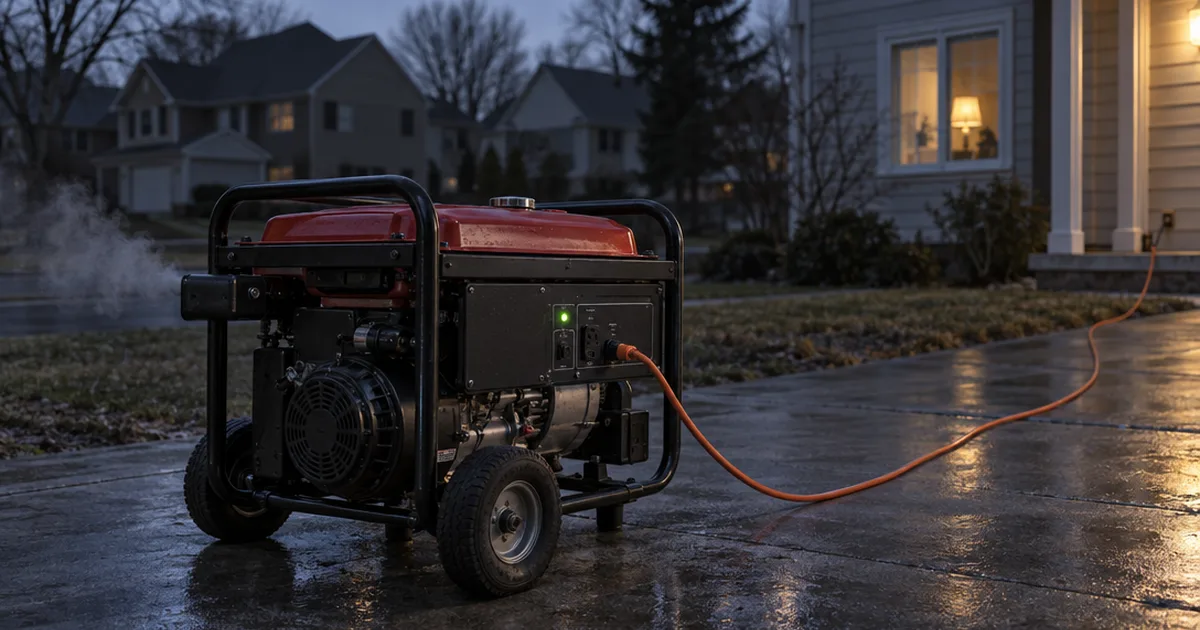
The simplest setup is a few heavy-duty outdoor extension cords. They run from the generator to a fridge, LED lighting, a Wi-Fi router or a couple of power tools inside.
To power hardwired circuits like a furnace blower or well pump, you need a transfer switch or an interlock kit installed by a licensed electrician. You plug the generator into an inlet box outside, and the switch lets you choose which circuits it feeds.
Here’s the deal: never plug a generator into a wall outlet to feed the house. That shortcut is called backfeeding a generator, and it can push power onto utility lines where line workers may be making repairs.
Which option fits depends on whether you need a few appliances or whole circuits. Compare the ways of connecting a generator to your house before you buy any hardware.
Why Portable Generators Have Batteries
Not every portable generator has a battery. Models with a recoil pull cord start by hand, and the cord spins the engine until it fires.
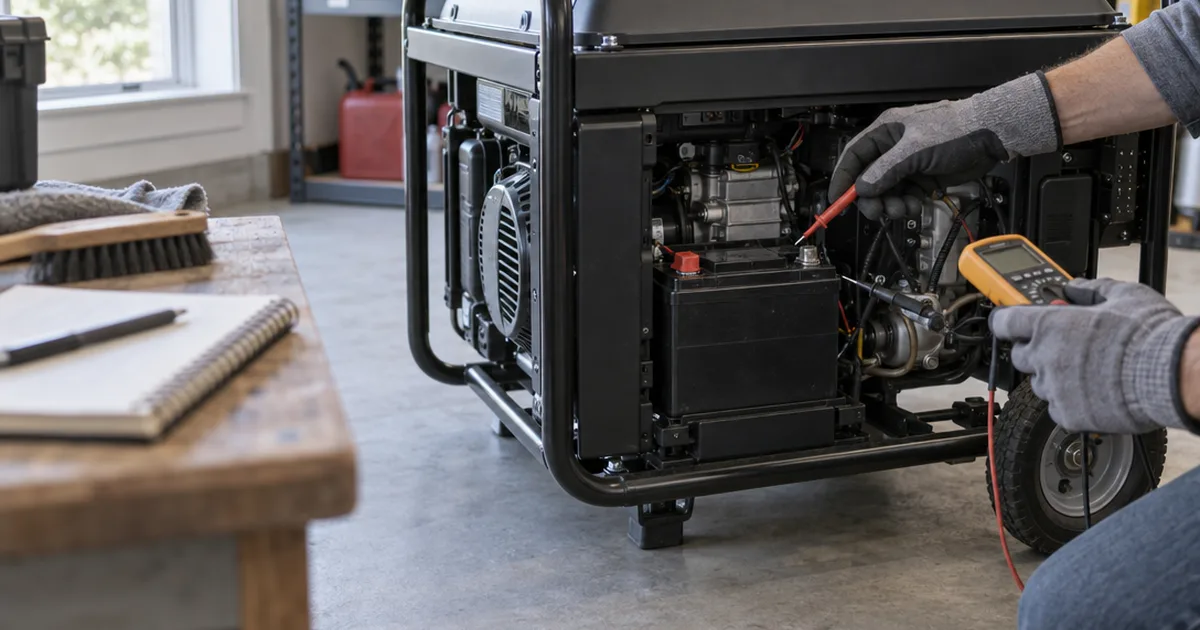
Models with electric start add a small rechargeable battery that powers a starter motor when you press a button. While the engine runs, the generator keeps charging that battery for the next start.
Note: A starter battery that sits unused for months can go flat. Regular generator battery maintenance, including a plug-in battery charger between outages, keeps that start button working when the lights go out.
How Long Can a Portable Generator Run?
Runtime comes down to tank size and how hard you work the engine. A light load sips fuel, while a heavy load drains the tank much faster.
Most manuals list runtime at a stated partial load. Treat that figure as your best case, and expect less when you run close to the limit.
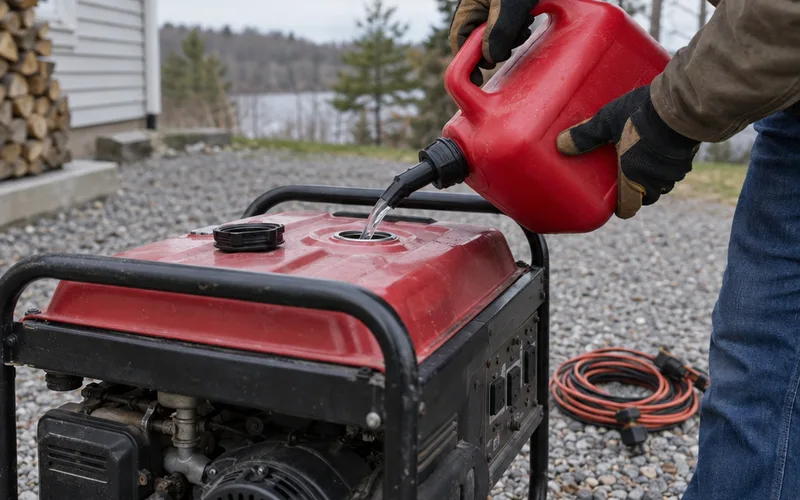
What about running it nonstop? A portable keeps going as long as you refuel it and keep the oil topped up.
But you’ll need to shut it off and let it cool before every refill, because gasoline spilled on a hot engine is a fire hazard. That’s why planning your generator fuel and runtime comes first, and safe fuel storage keeps that supply fresh.
How Much Can a Portable Generator Power?
A generator’s size is measured in watts, and there are two numbers to know. Running watts is what it supplies continuously, while starting watts is the brief boost it delivers when a motor kicks on.
Fridges, pumps and air conditioners need that extra jolt to start. Add up your running loads, from kitchen appliances to lights, leave room for the biggest starting surge, and you’ll know whether a generator can handle your list.
Learning running and starting watts is the quickest way to size one. From there, a list of common appliance loads helps you build your own plan.
Portable Generator vs. Power Station vs. Standby Generator
The word “generator” gets stuck on three very different machines. Here’s how each one works:
- Portable generator: burns fuel to spin an alternator and makes power on demand outdoors, at home or while camping.
- Portable power station: stores electricity in a lithium-ion battery and uses an inverter to turn it into AC. It needs charging from a wall outlet, car or solar panel.
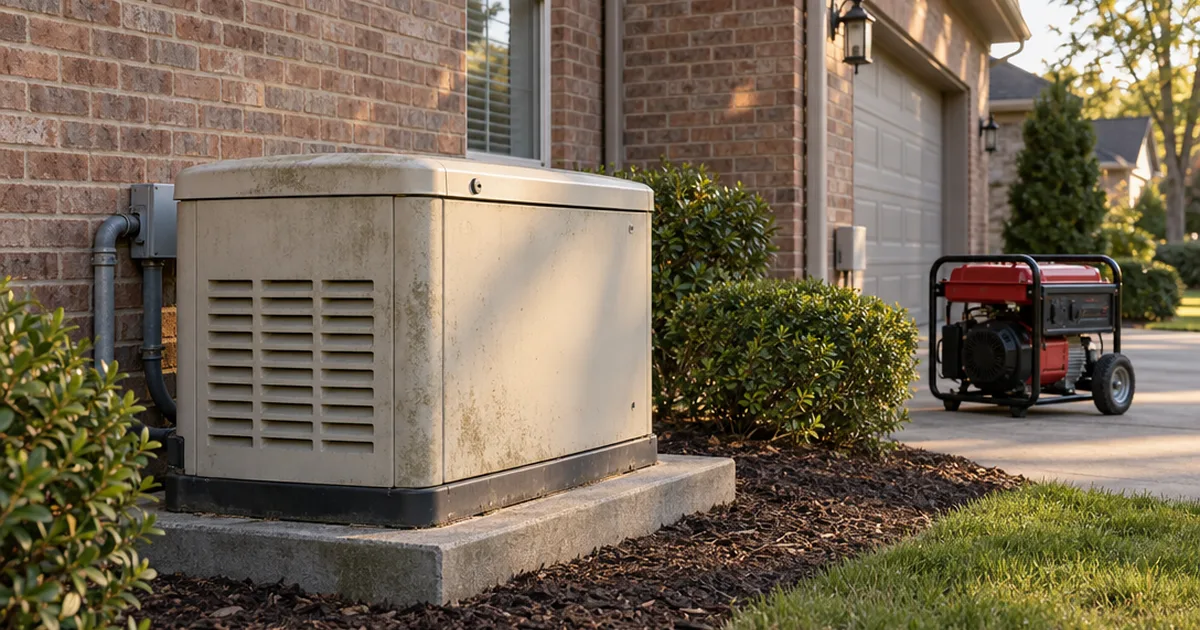
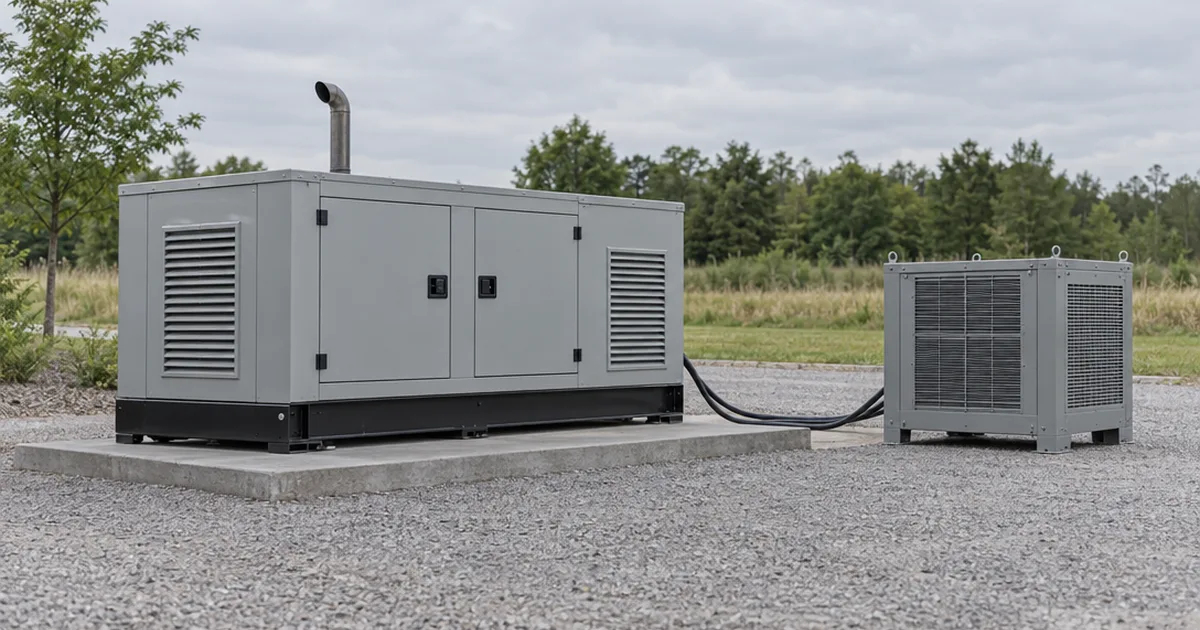
- Standby generator: stays permanently installed, runs on natural gas or propane, and starts itself through an automatic transfer switch.
So which fits your home? A power station runs quietly with no fumes but holds a limited charge.
A standby unit can cover a whole house but needs professional installation. A portable sits in the middle as backup power you set up and refuel yourself.
Battery shoppers can compare a power station vs. a generator in detail. And a Generac standby system shows how the automatic version handles an outage.
The Downsides of Using a Portable Generator
Knowing how a portable works also explains its weak spots:
- Exhaust: burning fuel makes carbon monoxide, so it only runs outdoors.
- Noise: an engine holding a steady speed is loud.
- Refueling: it runs only as long as you keep feeding it.
- Setup: you roll it out and connect it yourself, often during ice storms or heat waves.
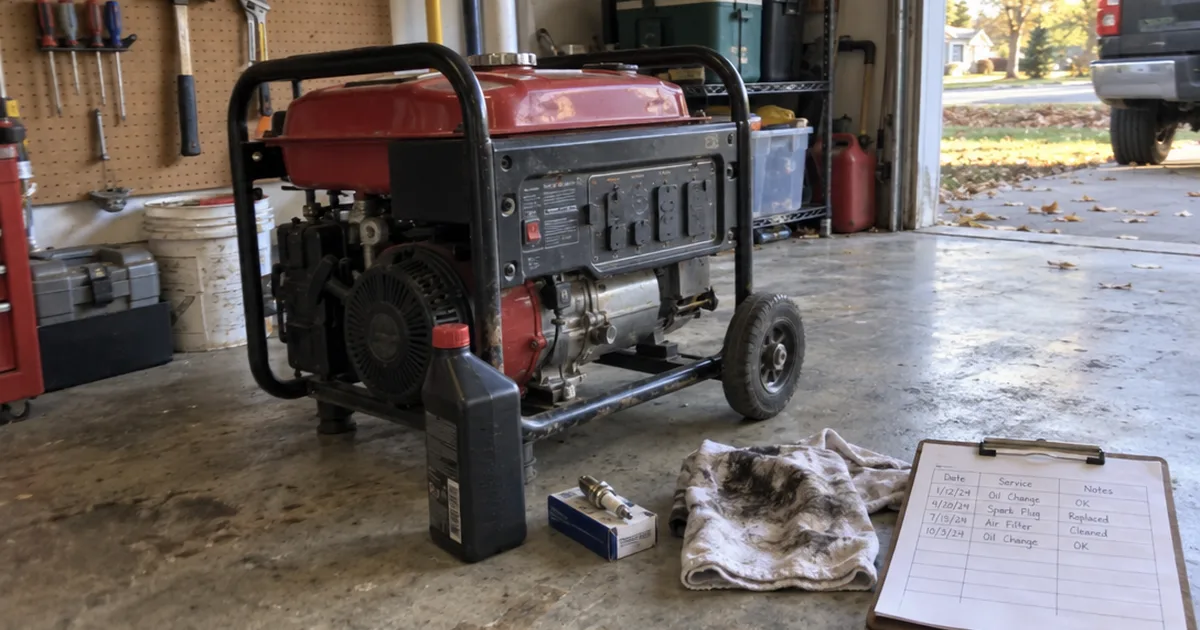
- Maintenance: the engine needs oil changes, fresh fuel and new spark plugs.
None of those rule out a portable for backup. Just plan for each one before an outage.
Why a Portable Generator Must Run Outdoors
Remember that exhaust? It contains carbon monoxide, a gas you can’t see or smell, and it can build up to deadly levels in enclosed spaces.
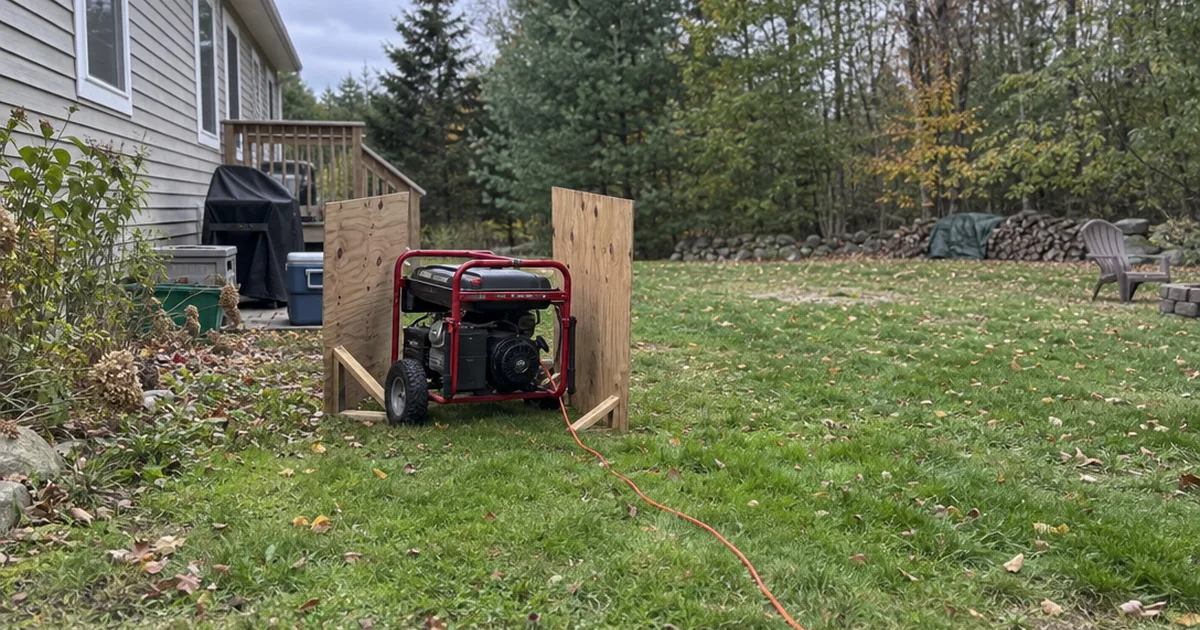
So never run a portable generator inside your home, garage, basement or shed, even with the doors or windows open. Opening a door doesn’t give it enough ventilation.
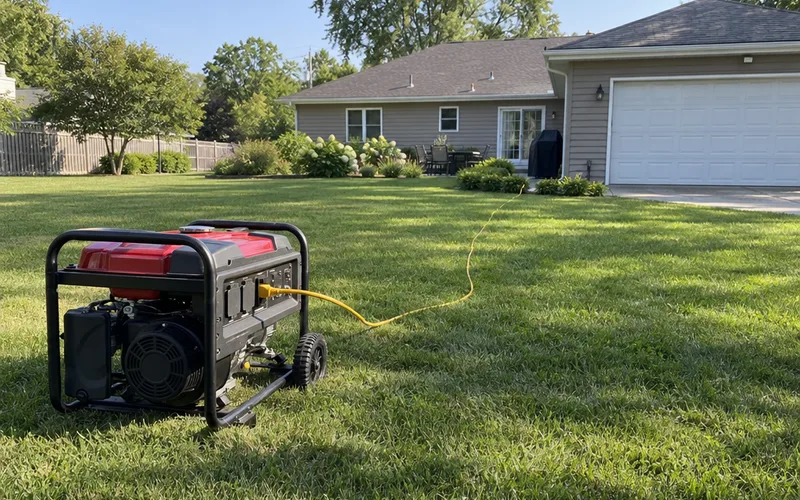
Instead, place it outside and away from windows, doors and vents, and keep battery-powered CO alarms indoors. Some newer models also carry a CO sensor that shuts the engine off if levels climb.
Exact spacing depends on your home and your manual, so check the carbon monoxide placement rules before the next storm. Then walk through safe generator operation for starting, refueling and shutting down.
Keep It Working When You Need It
A generator is only as reliable as its last tune-up. Stale fuel gums up the carburetor, low oil trips the shutdown sensor and a dead battery kills the electric start.
A simple schedule for oil, fuel, filters and spark plugs keeps every link in that energy chain healthy. Start with the basics of generator maintenance and build your routine from there.
The Bottom Line
A portable generator is a small engine spinning an alternator, with a regulator keeping the power steady. Once you picture it that way, sizing, connecting and running one safely all get easier.
So which part of your generator are you going to check first?
Frequently Asked Questions
How do you power a generator?
With fuel, usually gasoline, though some models run on propane or diesel. Fill the tank, check the oil, then start it with the pull cord or electric start.
How long can a portable generator run continuously?
As long as the tank lasts, which depends on tank size and load. Your manual lists runtime at a stated load, so expect less near full output.
Can I use a generator indoors?
No. Its exhaust contains carbon monoxide, so run it only outdoors and away from windows, doors and vents.
What will a portable generator power?
Whatever fits within its running and starting watts. Add up your loads, leave room for the biggest starting surge and compare that with its ratings.
How does a portable generator hook up to your house?
Through extension cords to single appliances, or an inlet box with a transfer switch or interlock installed by an electrician. Never plug it into a wall outlet.
How to use a portable generator during a power outage?
Set it up outdoors, check the oil and fuel, start it, then add loads one at a time. Shut it off and let it cool before every refuel.
What are the downsides of using a portable generator?
It must run outdoors, it’s noisy, and it needs refueling and maintenance. You also have to set it up and connect it yourself.
How long can you run a portable generator without turning it off?
Until the tank runs low, because you have to shut it off to refuel. Check your manual for any limit on continuous use.
Why do generators have batteries?
The battery powers the electric start, so a button replaces the pull cord. The generator recharges it while the engine runs.
Does a generator need an outlet?
No. It makes its own electricity and has outlets on its control panel, so you plug into those.