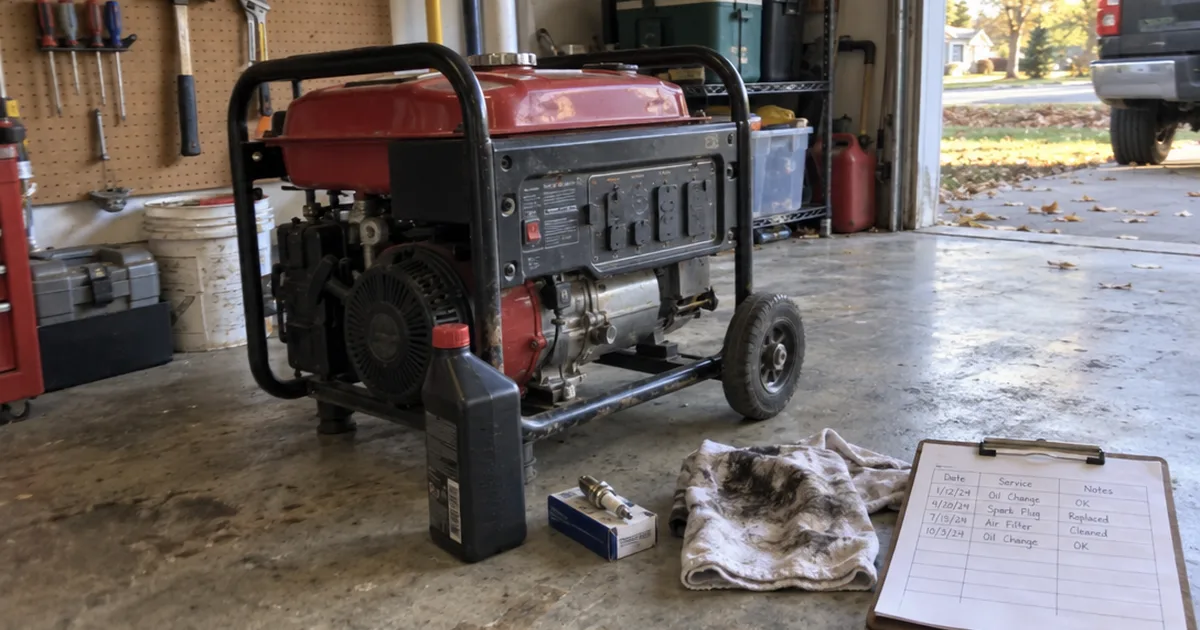

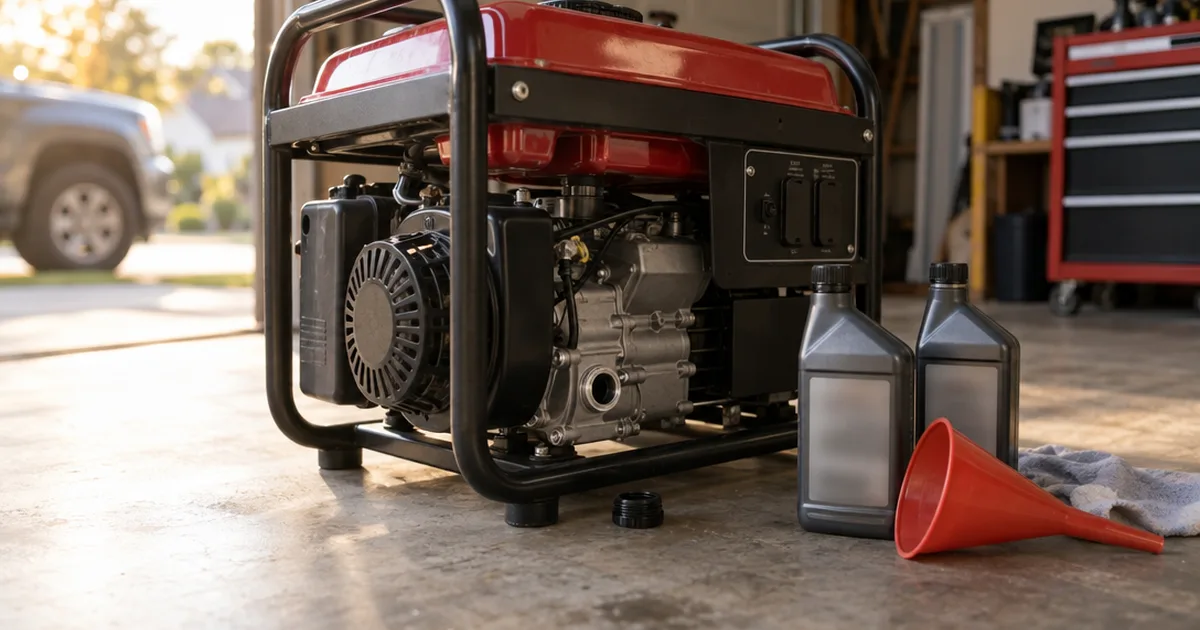
In this guide, you’ll learn how to pick the best oil for your generator, step by step.
Why does it matter? Because oil is what stands between a hot, hard-working engine and expensive damage.
You’ll see how to read the label on a bottle, when synthetic is worth the extra money and which grade fits your weather. You’ll also get simple rules for how much oil to add and how often to change it.
Let’s dive right in.
Start With Your Owner’s Manual
Here’s the deal: there’s no single “best” oil for every generator. The best oil is the one your manufacturer designed the engine around.
Your owner’s manual lists four things you need. It gives the oil grade, the service rating, the oil capacity and the change schedule.
So before you buy anything, find that page. If you lost the paper copy, the model number on the frame’s sticker will help you find a digital version on the manufacturer’s site.
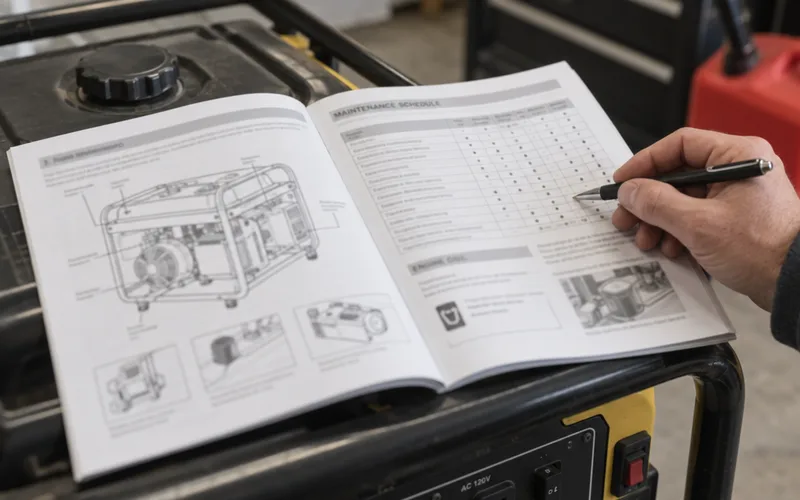
Treat the manual as the rulebook and this guide as the explanation. When the two disagree, the manual wins, because it’s written for your exact engine.
What if the manual lists several grades? That’s common, and each grade is usually tied to a temperature range (more on that in a minute).
What Oil Actually Does Inside a Generator Engine
Most home generators burn fuel in a small engine that spins the alternator. That engine has pistons, rings and bearings rubbing together thousands of times a minute.
Motor oil keeps those parts apart, which is key to the engine’s longevity. It’s a lubricant that coats metal surfaces, so they slide instead of grinding.
That film does four jobs at once:
- Lubrication: It cuts friction between moving parts, which slows wear and tear.
- Cooling: It carries heat away from hot spots like the piston and cylinder.
- Sealing: It helps the piston rings seal against the cylinder wall.
- Cleanliness: It picks up soot, dirt and tiny metal bits and holds them until you drain it.
That last job is why oil turns dark. It’s doing its work, but it also means those contaminants build up over time.
Now think about how a generator runs. Unlike a car, it often runs at a steady, heavy load for hours, sometimes days, during an outage.
Many portable units also use air-cooled engines. Those engines rely on airflow over the fins plus the oil itself to shed heat, so the oil carries a big share of the cooling job.
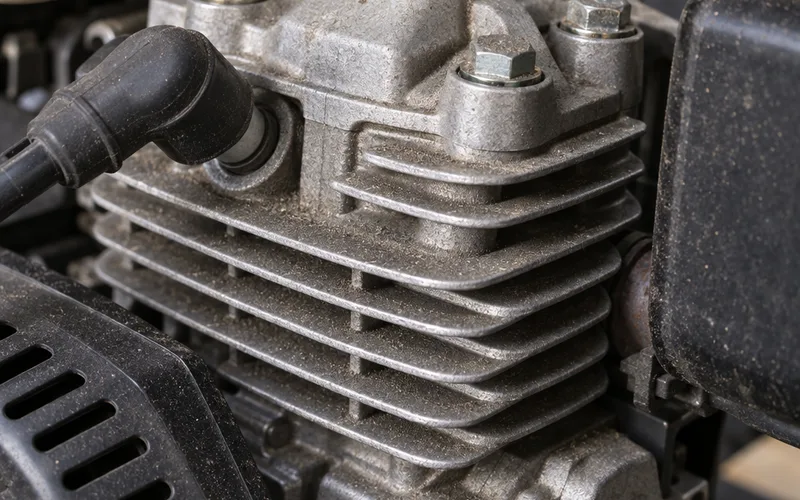
That’s why the right grade matters so much. Oil that thins out too much in the heat, or turns thick and slow in the cold, can’t protect the engine when you need it most.
How to Read an Oil Bottle
Walk down the motor oil aisle and you’ll see a wall of numbers and logos.
The good news? You only need to understand two of them.
The first is the viscosity grade, set by SAE, the Society of Automotive Engineers. The second is the API service rating from the American Petroleum Institute.
The SAE Viscosity Grade
Viscosity is just a fancy word for how thick a fluid is and how easily it flows. Thick oil flows slowly, and thin oil flows quickly.
The SAE grade tells you how the motor oil behaves at different temperatures. There are two kinds of grades on generator oil bottles.
A single-grade oil, like SAE 30, has one number. It’s built for one temperature range, which makes it a good fit for warm weather.
A multigrade oil, like 10W-30 or 5W-30, has two numbers. The first number, the one with the “W”, describes how the oil flows when the engine is cold.
The second number describes how thick the oil stays once the engine is hot. That’s what lets one bottle cover both a cold start and a long, hot run.
In plain terms, a lower first number means easier cold starts. So 5W-30 flows more easily on a frosty morning than 10W-30, yet both protect like a 30-weight oil once the engine warms up.
The API Service Rating
The API rating is usually shown in a round symbol on the back of the bottle. For gasoline engines, the rating uses two letters that start with “S”.
The second letter shows how new the standard is. Later letters replace earlier ones, so a modern oil carries a newer rating like SN or a later letter.

Skip any oil with an obsolete rating such as SA, SB, SC, SD or SE. Those old standards were written for engines from decades ago, and they lack the sludge and deposit protection newer oils have.
Diesel generators are different. They need oil rated for diesel engines, which carries its own service rating, so check that your bottle is labeled for diesel use.
Can You Use Car Oil in a Generator?
In most cases, yes. A gas generator uses the same kind of motor oil you’d buy for a car, so the oil aisle at any auto parts store has what you need.
The catch is the grade, because your car may call for a thinner oil than your generator. So buy by the grade in the generator’s manual, not by what’s in your garage.
Conventional vs Synthetic Oil: Which Is Better for a Generator?
Once you know the grade, you’ll still face one more choice. Do you buy conventional oil, a synthetic blend or full synthetic?
Conventional oil is refined from crude oil, which is why you’ll also hear it called mineral oil or petroleum-based oil. Synthetic oil is engineered from chemically built base oils, so its molecules are more uniform and create less friction.
Here’s how the three types compare:
| Oil type | Temperature range | Resists breakdown | Cost |
|---|---|---|---|
| Conventional | Moderate | Fair | Low |
| Synthetic blend | Moderate to wide | Good | Medium |
| Full synthetic | Wide | Best | High |
The pattern is simple: you pay more for oil that handles heat, cold and long runs better.
So which should you buy? It depends on how you use the generator.
When Conventional Oil Is Enough
Conventional motor oil works fine for a generator that runs a few hours a year in mild climates. Think of a portable that powers a fridge and a few lights during a short summer outage.
It breaks down faster under heat and heavy use, so it can form sludge sooner. That means you change it on schedule, without stretching the interval.
When Synthetic Pays Off
Synthetic oil holds its thickness better across hot and cold temperatures. It also resists oxidation, the chemical breakdown that happens when hot oil reacts with air.
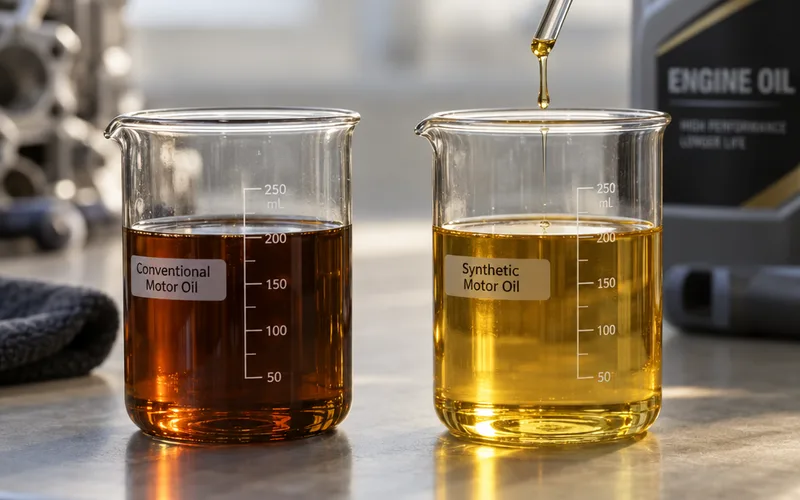
That makes synthetic a smart pick in three cases. It helps if your generator starts in freezing weather, runs for days during long outages or works hard in summer heat.
Yes, it costs more per quart. But a generator only holds a small amount of oil, so the price gap per oil change is modest compared with the protection you gain.
Where a Synthetic Blend Fits
A synthetic blend mixes conventional and synthetic base oils. You get some of the extra protection at a lower price.
It’s a sensible middle option if you run your generator now and then, in climates that get both hot and cold.
Note: Synthetic oil is not a license to skip oil changes on a generator. The service interval in your manual still applies unless the manufacturer says otherwise.
Picking the Right Grade for Your Temperature
The temperature where your generator starts and runs decides which grade from your manual fits best. This is where most people get stuck.
Why? Because oil that’s perfect at 80 degrees can be too thick to circulate well at 10 degrees.
Here’s a quick reference based on common manufacturer guidance:
| Temperature where you run it | Common grade | Good fit for |
|---|---|---|
| Above 32°F (0°C) | SAE 30 | Warm-weather use |
| Changing, mild to cold | 10W-30 | Year-round use |
| Below 32°F (0°C) | 5W-30 synthetic | Cold starts |
| Extreme heat and cold | 5W-30 synthetic | Wide temperature swings |
Use this table to understand the logic, then match it against the temperature chart in your own manual.
Cold Weather Generator Oil
Cold oil gets thick, and thick oil takes longer to reach the top of the engine. So parts run with less protection for those first few seconds.
That’s why cold weather generator oil usually has a low first number, such as 5W-30. A full synthetic in that grade is the safest bet if your generator might start below freezing.
So should you use 5W-30 or 10W-30? Pick 5W-30 for starts below freezing, and 10W-30 when temperatures stay mild or swing between cool and warm.

Here’s a hypothetical example: say your generator sits in an unheated shed in a northern state, and outages hit during ice storms. A 5W-30 synthetic gives that engine a much easier start than SAE 30 would.
Cold also affects how you run the generator, not just which oil goes in it. So before winter, read up on running a generator in cold weather, from starting it to keeping it protected.
Hot Weather and Long Runs
Heat creates the opposite problem, especially in hot climates. Oil thins out as it gets hot, and very thin oil can’t hold a strong film between moving parts.
For summer outages, SAE 30 or 10W-30 is the usual choice. If your unit runs for days in the heat, a synthetic version adds a margin of safety.
Pro Tip: Lighter oils such as 5W-30 can burn off faster in high heat. If you use one in summer, check the dipstick more often during a long run.
Best Oil for Generator Types
The kind of generator you own also shapes your choice. Engine design, cooling and fuel all play a part.
Portable and Inverter Generators
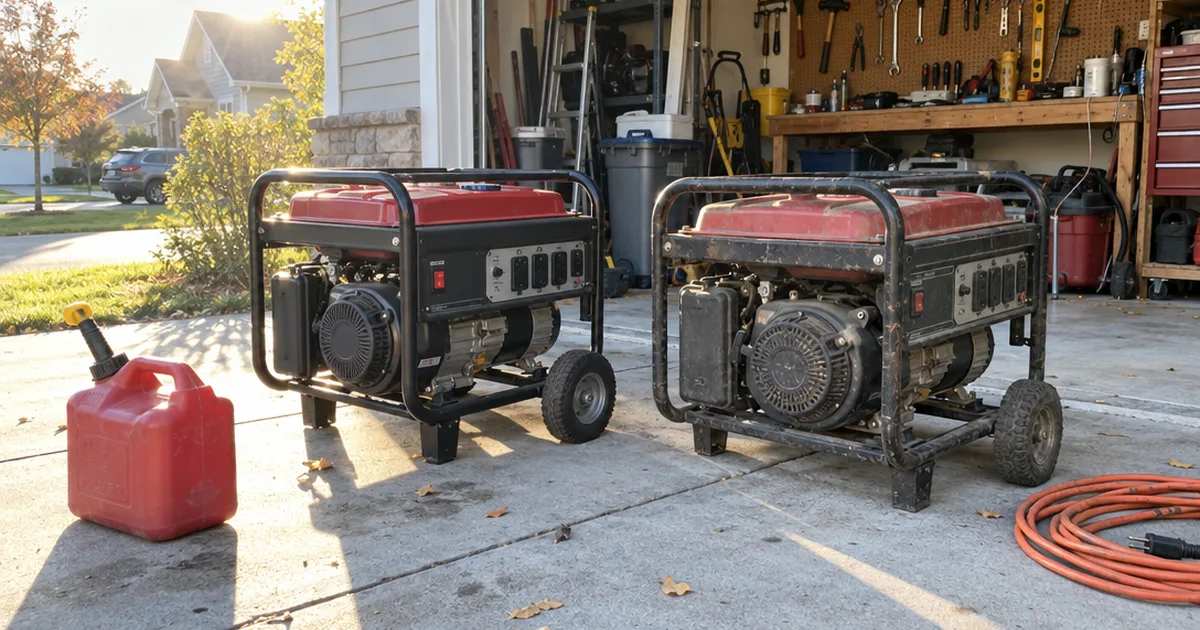
Most portable and inverter generators use small, air-cooled four-stroke engines. That makes 4 stroke generator oil, the same type of motor oil you’d put in a lawn mower or car, the right category.
For these engines, the usual portable generator oil type is SAE 30 for warm weather or 10W-30 for mixed temperatures. If you’re hunting for the best 10W-30 oil for generator use, look for a well-known brand with a current API rating in that exact grade.
Portables tend to sit for months and then run hard. So freshness matters as much as the grade.
Change the oil before storage, and check it again before the next outage. That way the engine starts its next long run on clean oil instead of last year’s leftovers.
Home Standby Generators
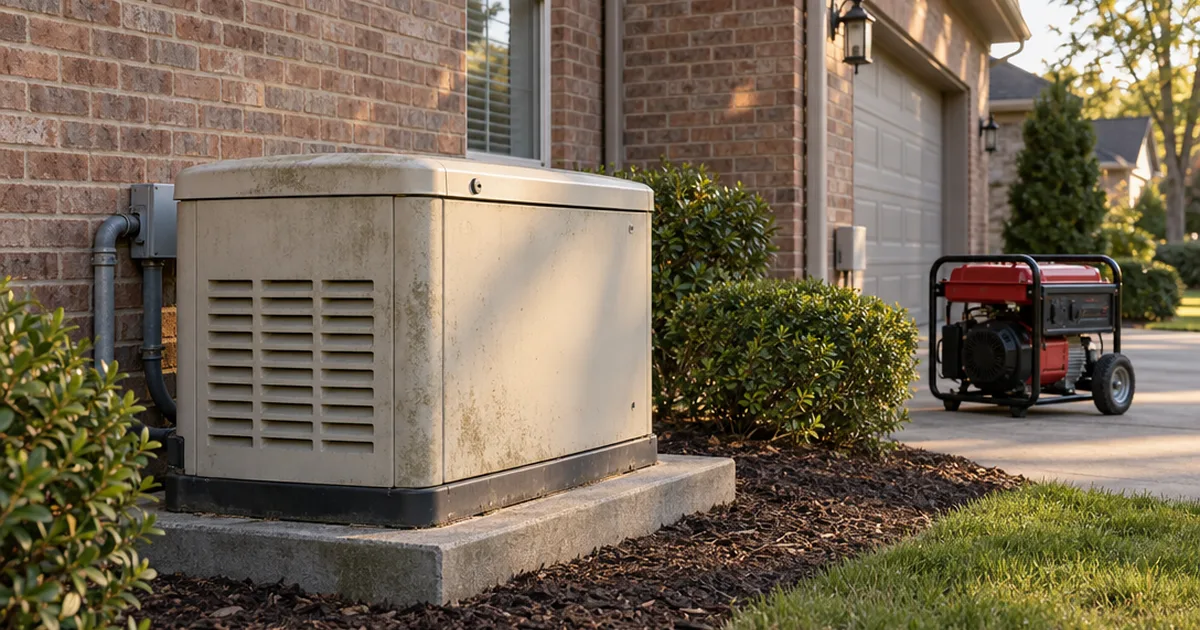
Standby generators are permanently installed and start on their own when the power drops. They’re larger machines built to carry a home through outages, and many need higher-quality oil to match.
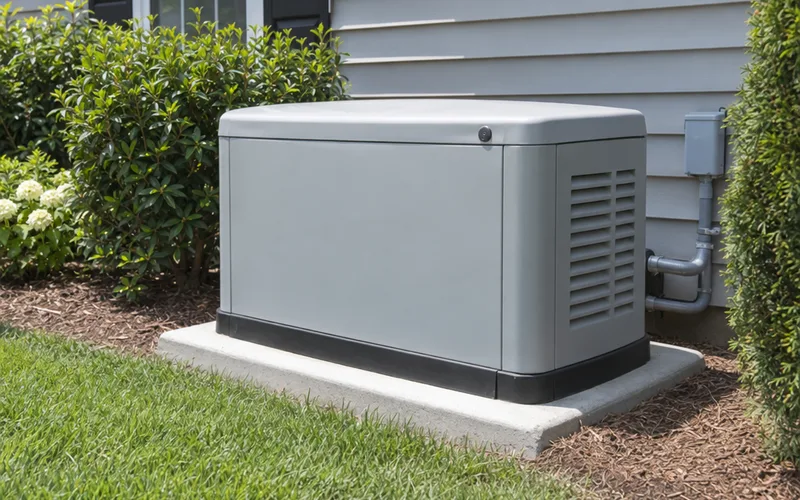
These units often call for specific grades, and some manufacturers make their own branded oil. If you own a Generac, check which oil Generac recommends for your model before you buy.
Many standby owners leave service to a dealer. But if your warranty allows it, you can change the oil in a Generac yourself with basic tools.
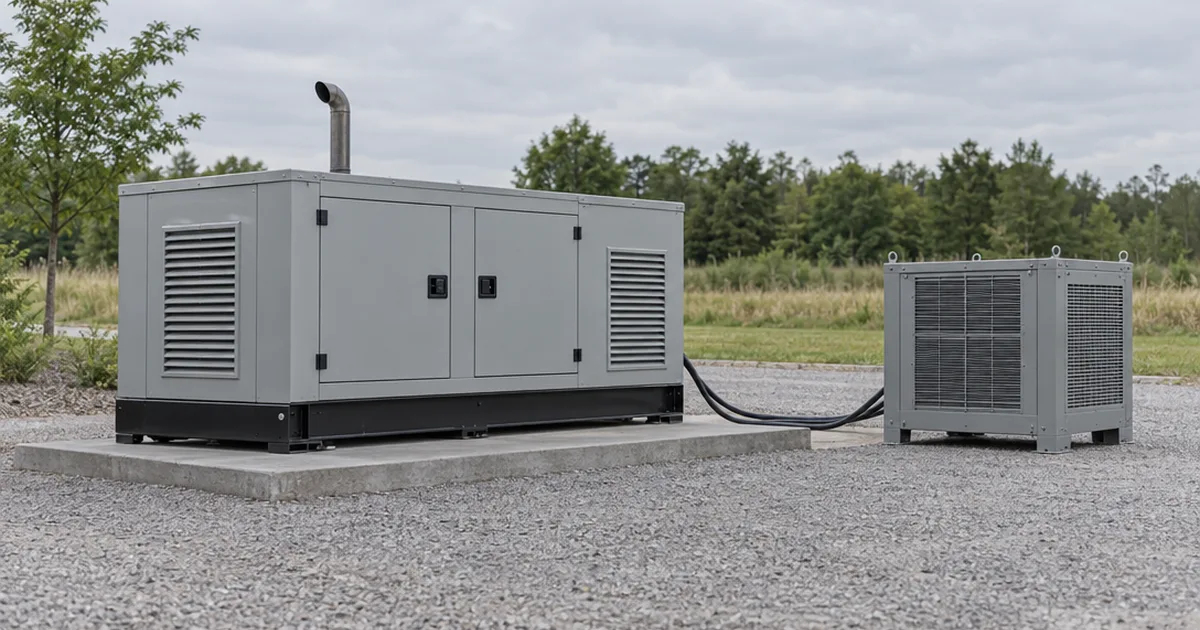
Diesel Generators
Diesel engines burn fuel differently and put different stresses on their oil than gasoline engines do. That’s why they need oil rated for diesel service, never just whatever is in the garage.
You’ll often see heavy-duty diesel oils in grades like 15W-40. But the grade still has to match your manual, so treat that as a starting point, not the answer.
Choosing engine oil for a diesel generator depends on two checks: the grade your manual lists and a diesel service rating on the bottle.
Two-Stroke Engines
A few small generators use two-stroke engines. These don’t have a separate oil sump, so their lubrication comes from two-stroke oil you mix directly into the fuel.
Never put two-stroke oil in a four-stroke generator, or skip the mix in a two-stroke. Both mistakes can ruin the engine.
Your manual and the fuel cap will tell you the correct oil and mixing ratio.
Oil Recommendations by Generator Brand
Every brand has its own engines, and the details change by model. That’s why I recommend looking up your brand’s guidance rather than relying on a general rule.
Here’s where to find brand-specific answers:
- Westinghouse: Check the Westinghouse oil grade and capacity for your model.
- Ryobi: Find the right oil for Ryobi generators, model by model.
- Predator: See which grades suit Predator engines in hot and cold weather.
- Champion: Match your engine to the Champion oil type it needs.
- Honda: Learn to drain and refill during a Honda generator oil change.
The common thread is the same. Read the manual first, then confirm the grade, the API rating and the oil capacity before you pour.
What about brands like Firman that aren’t on this list? The same method applies: find the model number, pull up the manual and match the grade to your temperature.
How Much Oil Does a Generator Need?
There’s no universal amount. A compact inverter holds far less oil than a large standby unit, so the only reliable number is the oil capacity in your manual.
That said, here’s how to fill it the right way:
- Park the generator on level ground and let the engine cool.
- Remove the dipstick or fill cap and wipe it clean.
- Pour in about three-quarters of the listed capacity.
- Wait a minute for the oil to settle, then check the level.
- Add small amounts until the oil reaches the full mark.
Why go slowly? Because overfilling causes problems too.
Too much oil can lead to leaks and other trouble. Too little starves the engine of lubrication and lets heat build up fast.
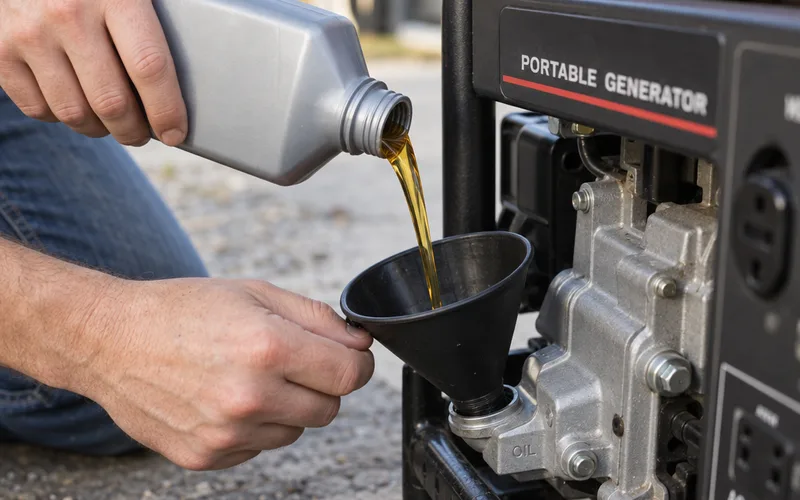
Many generators have a low-oil shutdown. It stops the engine when the level drops too far, which protects it but can catch you off guard during an outage.
If yours shuts off with plenty of oil inside, read up on the low-oil sensor before you assume a bigger fault.
Pro Tip: Store a funnel and a spare quart of the right oil with the generator. Then a top-off during an outage takes a minute instead of a trip to the store.
How Often Should You Change Generator Oil?
Oil wears out. Heat breaks it down, and the contaminants it collects pile up until it can’t protect the engine as well.
The schedule has two parts: the first change on a new engine, then regular changes after that.
The First Oil Change on a New Generator
A new engine sheds tiny metal particles as its parts wear in. That’s normal, but you don’t want those bits circulating for long.
That’s why manufacturers usually call for a short first oil change, often somewhere around 20 to 30 hours of running time. Check your manual for the exact figure, and follow the full generator break-in procedure when your unit is new.
Regular Oil Change Intervals
After the first change, intervals depend on the oil type and how hard the engine works. Here are typical ranges you’ll see in generator service guidance:
| Oil type | Typical change range | Also change |
|---|---|---|
| Conventional | Every 50 to 100 hours | At least once a season |
| Synthetic | Every 100 to 150 hours | At least once a season |
These ranges are only a guide. Your manual’s interval comes first, and dusty, dirty or very hot conditions call for more frequent changes.
Hours add up fast during a long outage. A generator running around the clock reaches 50 hours in just over two days, so keep fresh oil on hand before storm season.
Does your generator have an oil filter? Some do, and a good filter traps the dirt and metal the oil carries.
Replace it on the schedule your manual gives, which is often at the same time as the oil. A fresh filter with old oil, or fresh oil with a clogged filter, only does half the job.
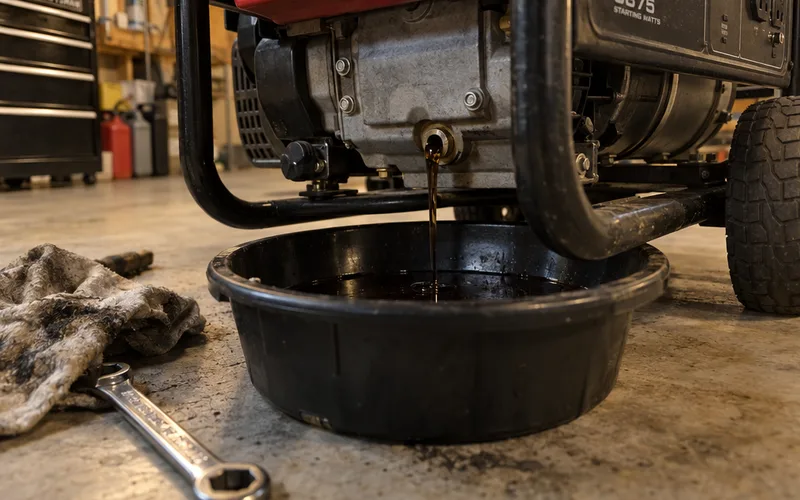
Not sure how to do it? A generator oil change takes three basic steps: drain the old oil, refill to the full mark and recycle what came out.
Check the Level Before Every Use
Changing oil on schedule isn’t enough if the level drops between changes. Small engines can burn or leak oil, especially when they run hot.
So pull the dipstick before each use. During a long run, check it every eight hours or whenever you stop to refuel.
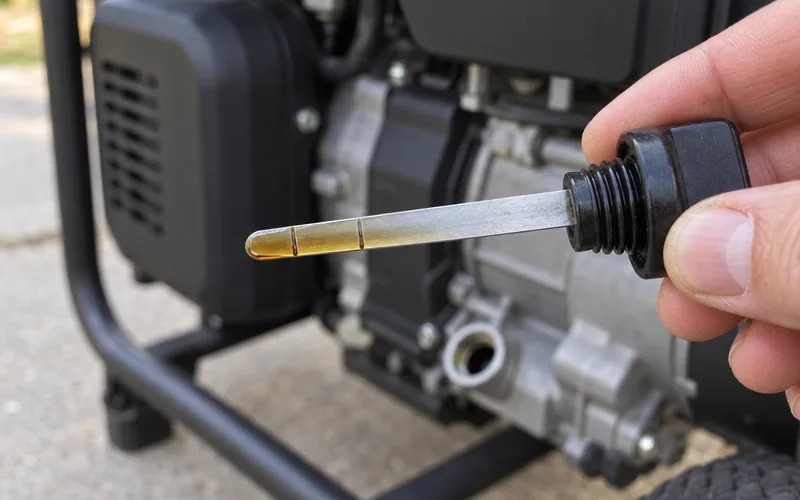
The result? You catch a low level before the engine shuts down or gets damaged.
Put this check, along with oil changes and filter swaps, on your regular generator service schedule. A written schedule beats memory when an outage turns everything upside down.
Common Oil Mistakes That Shorten Engine Life
The right oil can’t help if it’s used the wrong way. These are the mistakes that do the most damage.
Mixing Different Oils
Topping off with a different grade or type can change how the lubricant performs. Stick with one oil from change to change.
In a true emergency, adding the closest grade beats running low. Just drain and refill with the correct oil soon after.
Using the Wrong Grade for the Season
SAE 30 in a generator that starts in subzero weather is asking for a hard start. Swap to a cold-weather grade before winter if your manual allows it.
Stretching Oil Changes
A generator that sits most of the year still needs fresh oil, because oil ages even when the engine doesn’t run. So change it at least once a season, even if the hour meter barely moved.
Ignoring Leaks
Oil spots under the generator mean the level is dropping and something needs attention. Find the source soon, because a generator leaking oil can run itself low in the middle of an outage.
Dumping Old Oil
Used oil doesn’t belong in the trash or on the ground. Take it to an auto parts store or a local recycling center that accepts it.
Get these right, and you’ll avoid most of the oil-related problems that keep generators from starting and cut into their longevity.
A Simple 4-Step Way to Choose Your Oil
Let’s pull it all together. Here’s a process you can use at the store or online:
- Check the manual. Note the grades, the API rating and the oil capacity.
- Match your weather. Pick the grade from the manual’s chart that covers the coldest and hottest temperatures where you’ll run it.
- Match your usage. Choose conventional for light use in mild weather, or synthetic for long runs, cold starts and heat.
- Buy enough. Get at least two full changes’ worth so you can change oil mid-outage if needed.
Here’s how that looks in practice: say your manual lists SAE 30 or 10W-30, you live where winters dip below freezing and you expect long outages. In that case, a synthetic 10W-30, or 5W-30 if the manual lists it, is the best oil for your generator.
And if your manual lists only one grade? Even easier: buy that grade, then pick conventional or synthetic based on how hard the generator works.
Simple.
Oil is one piece of a bigger generator maintenance routine that also covers fuel, filters and the battery.
Wrapping Up
The best oil for a generator is the right grade for your engine, your weather and your usage. Start with the manual, read the bottle and change the oil on time.
Pick one step from this guide and do it before the next storm. So, which will you tackle first: checking your oil level or stocking up on the right grade?
Frequently Asked Questions
What type of oil should I use in my generator?
Use the grade and service rating your owner’s manual lists. Many gas generators call for SAE 30 in warm weather or 10W-30 for mixed temperatures, while diesel engines need a diesel-rated oil.
Should I use 5W-30 or 10W-30 in my generator?
Use 10W-30 for moderate or changing temperatures and 5W-30 when you need easier starts in real cold. If your manual lists both, let your coldest expected starting temperature decide.
Can I use 10W-30 synthetic oil in my generator?
Yes, if your manual calls for 10W-30, a synthetic version of that grade works. Synthetic resists breakdown better, so it suits long outage runs and hot or cold weather.
Should I run synthetic oil in my generator?
It’s worth it if your generator runs long hours, sits in extreme temperatures or starts in the cold. For a lightly used unit in mild weather, a quality conventional oil in the right grade does the job.
How much oil does a generator need?
It depends on the model, so check the oil capacity in your manual. Fill slowly to the full mark on the dipstick, because too much oil can cause problems just like too little.
Is 15W-40 good for diesel engines?
15W-40 is a grade you’ll see on many heavy-duty diesel oils, but it isn’t right for every engine. Use it in a diesel generator only when the manual lists it, and never swap it into a generator that calls for something else.