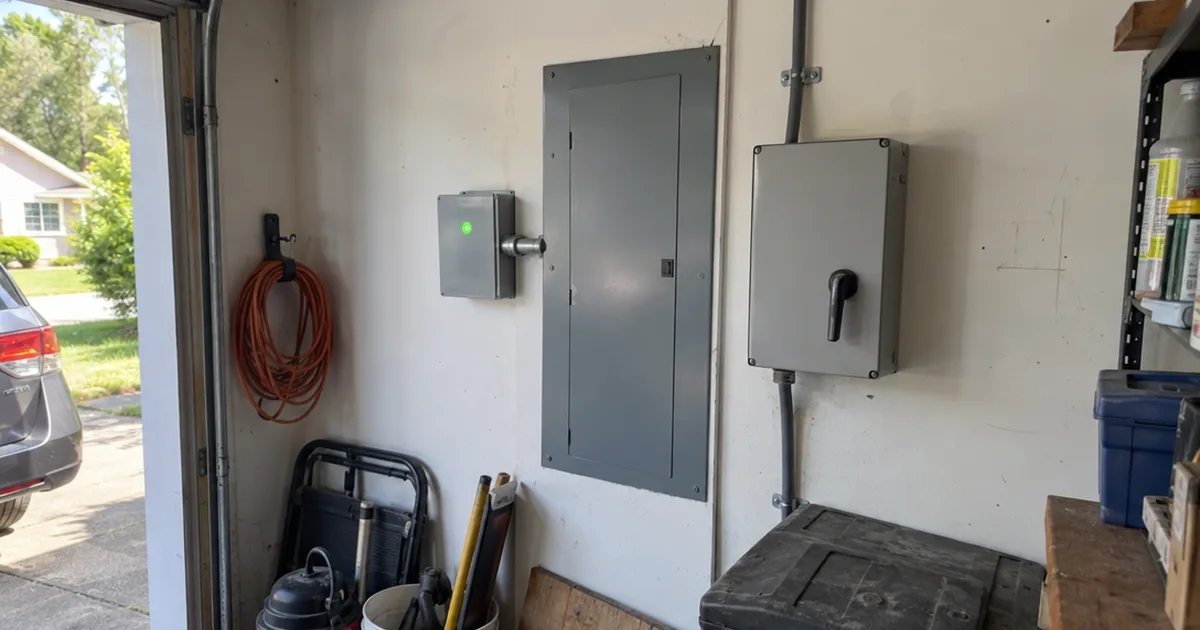
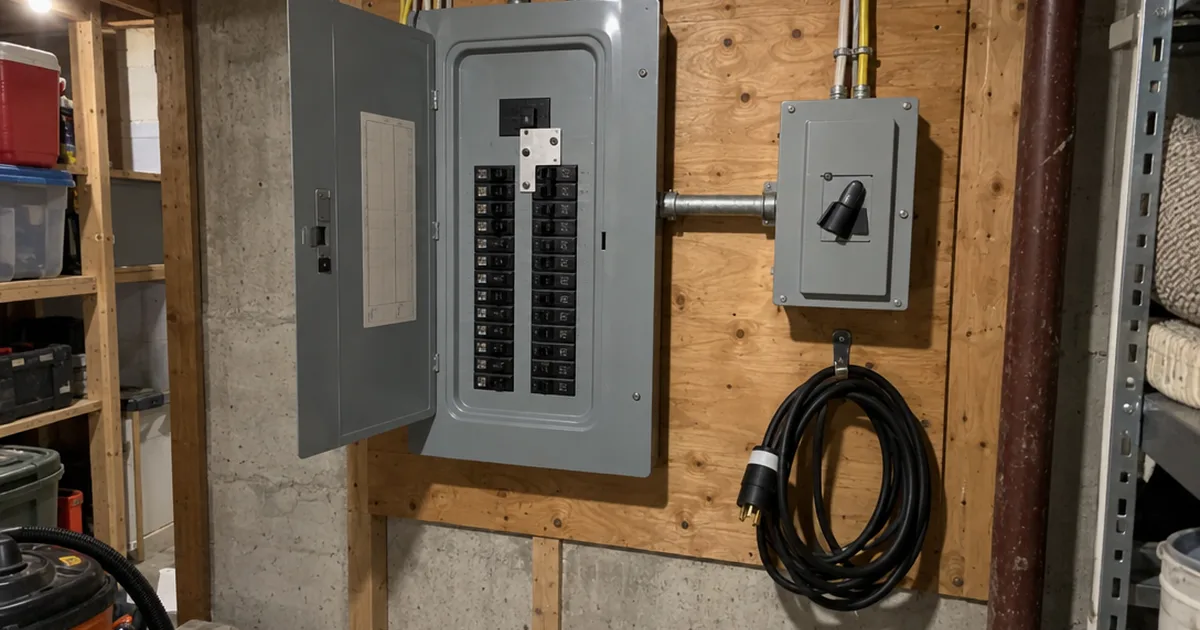
An interlock kit is just 2 sliding metal plates and a few bolts.
A transfer switch is a second panel with its own wiring and its own labor bill.
Both keep your backup power off the street’s power lines. The generator interlock vs transfer switch choice depends on circuits, cost and how much you want to think during an outage.
Here’s the fast version:
- Portable generator plus a panel with a listed kit? Go interlock.
- Family members who’d rather flip one switch than a row of breakers will do better with a transfer switch.
- A standby unit on a pad needs an automatic transfer switch.
- No kit made for your panel model means a transfer switch.
Generator Interlock vs Transfer Switch at a Glance
A generator interlock kit lets a portable generator feed your whole breaker panel, while a transfer switch sends it only a fixed set of pre-wired circuits. Here’s the transfer switch vs interlock kit comparison:
| Category | Interlock Kit | Transfer Switch | Winner |
|---|---|---|---|
| Where it goes | Main panel cover | Separate panel | Interlock |
| Circuits on generator | Any in the panel | Only pre-wired ones | Interlock |
| Typical cost | Lower | Higher | Interlock |
| Outage routine | Flip breakers yourself | Flip one switch set | Transfer switch |
| Automatic option | No | Yes | Transfer switch |
| Panel fit | One panel model | Its own unit | Transfer switch |
| Code basis | NEC Article 702 | NEC Article 702 | Tie |
| Overall | Best for portables | Best for simple or automatic | Interlock |
In any interlock vs transfer switch match-up, the interlock works inside the panel you already have, and the transfer switch brings its own. Both are safe ways to connect a generator to your house, and the other connection methods are worth a look before you buy parts.
What Is a Generator Interlock Kit?
A generator interlock kit is a lock on your main breaker panel that lets the main breaker or the generator breaker be on, never both. GenInterlock, which sells the kits, says its version is two sliding metal plates held together by bolts on the panel cover.
With the main breaker off, the plate slides aside so the generator breaker can turn on. Every other circuit breaker still works, and you pick which ones run.
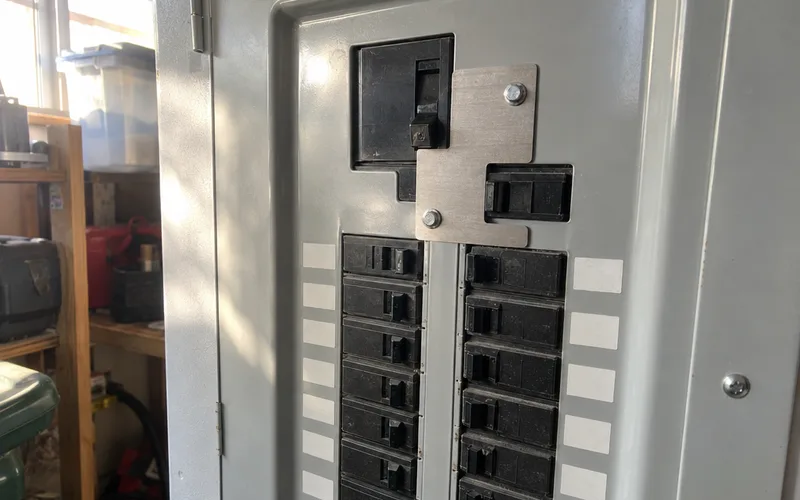
An interlock turns your whole panel into a generator panel, up to what the generator can carry.
How an Interlock Works During an Outage
The power outage routine for an interlock kit has a fixed order. The kit maker’s page lists it like this:
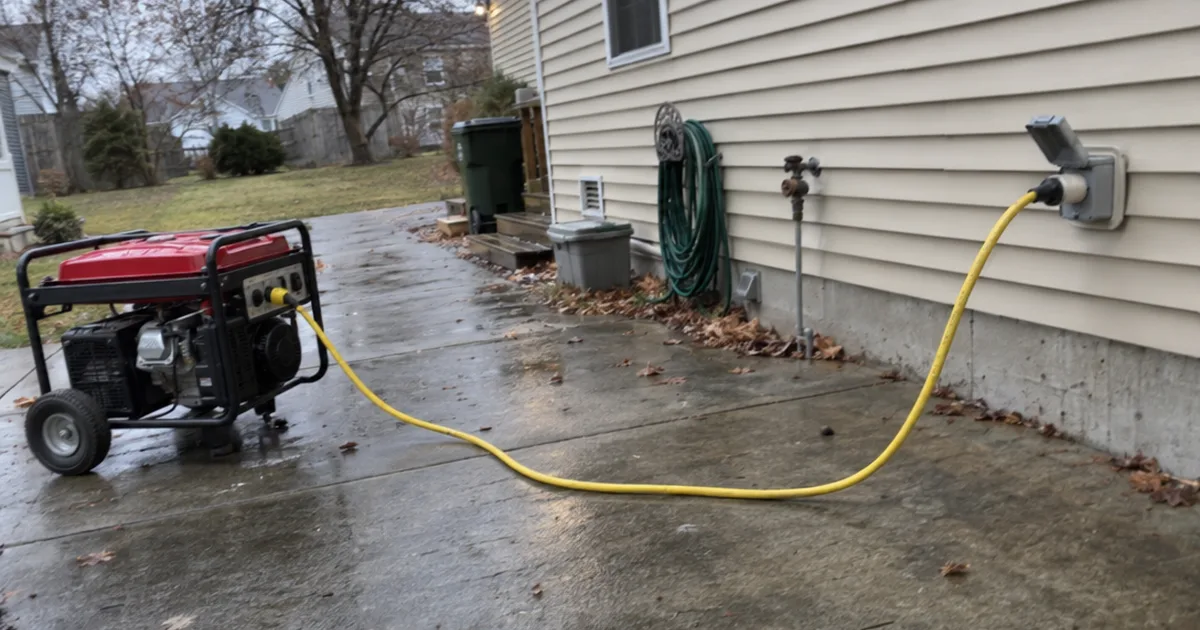
- Set the generator outdoors, plug its cord into the outdoor inlet, then start it.
- Turn off the branch circuits you don’t need.
- Switch the main breaker off, slide the plate and switch the generator breaker on.
- Turn your loads back on one at a time.
When utility power returns, reverse the steps. The panel side is covered when you install an interlock kit.
What Is a Transfer Switch?
A transfer switch is a separate panel next to your main panel that moves a chosen group of circuits to generator power. The circuits you pick at install, such as the refrigerator, furnace and well pump, are rewired through it.
During an outage, you plug in the generator and flip the switches for those circuits. Nothing else gets generator power, but anyone can follow that routine.
Manual vs Automatic Transfer Switches
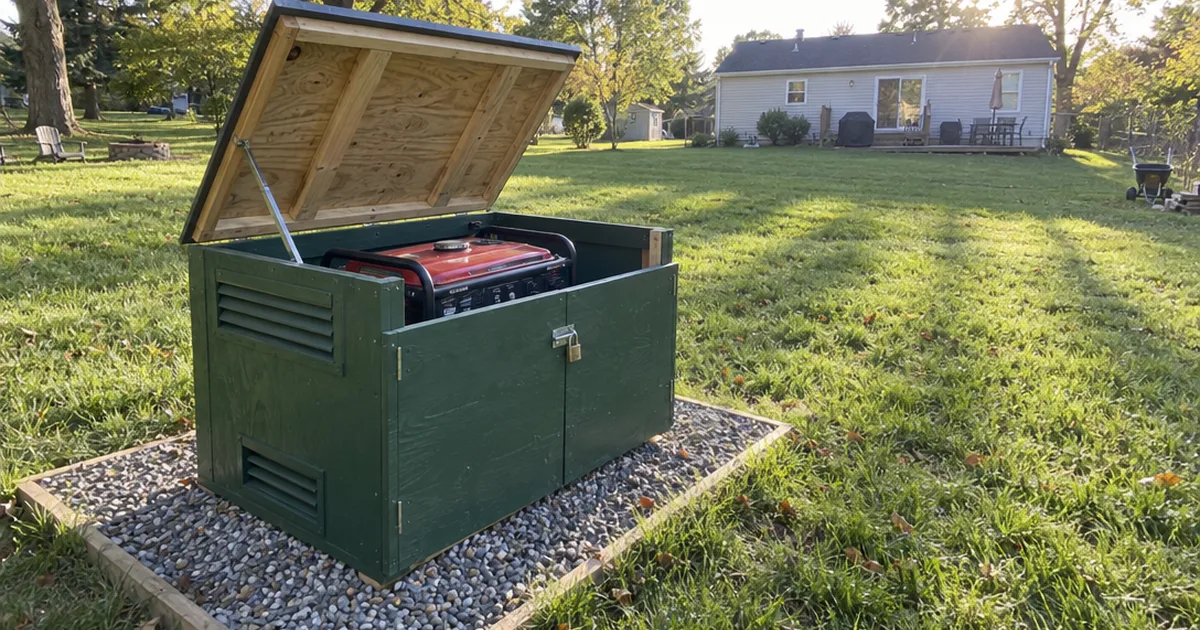
A manual transfer switch fits a portable generator, and an automatic transfer switch fits a standby generator. Cummins, which builds transfer switches, says manual switches are simple to run, have few parts that can fail and cost less than automatic ones.
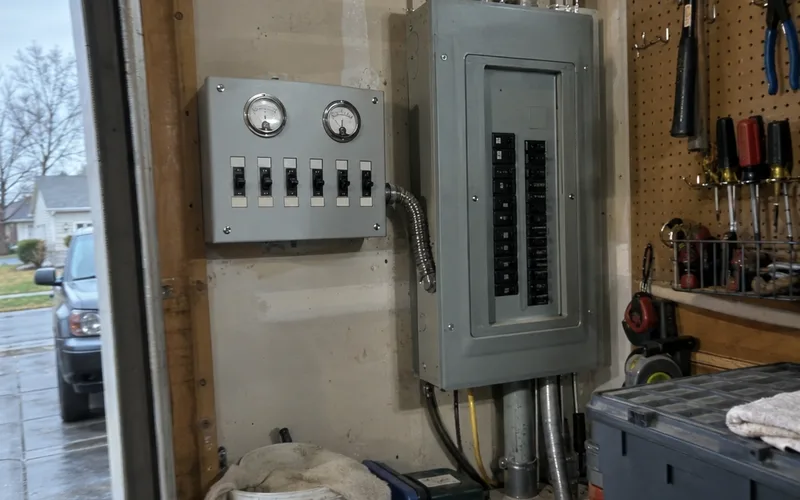
Cummins says an automatic switch’s controller can sense the outage, start the standby generator and move the load. It switches back and shuts the generator off when the grid returns.
A standby generator needs an automatic transfer switch, because no interlock kit can switch on its own. Compare the other transfer switch types if you’re still picking a generator.
Which Circuits Each One Can Power
A generator interlock kit can power any circuit in your panel, while a transfer switch powers only the circuits wired to it. GenInterlock’s table says the same: a transfer switch gives you only its pre-wired circuits.
So can an interlock power your whole house? Only up to the generator’s wattage.
A big load like an electric water heater or central air can overload many portables fast. So most outages still mean a short list.
The interlock lets you change that list by season, such as a sump pump in summer and the furnace blower in winter. A transfer switch locks the list in at install, which makes overloading harder.
If you go the interlock route, managing your generator load keeps breakers from tripping.
Interlock Kit vs Transfer Switch Cost
A generator interlock kit costs less than a transfer switch, because a transfer switch adds a second panel, wiring and labor. GenInterlock’s chart rates the transfer switch higher for added materials and labor.
Automatic switches cost more again. Cummins puts manual switches below automatic ones on price, so automatic is the priciest of the 3.
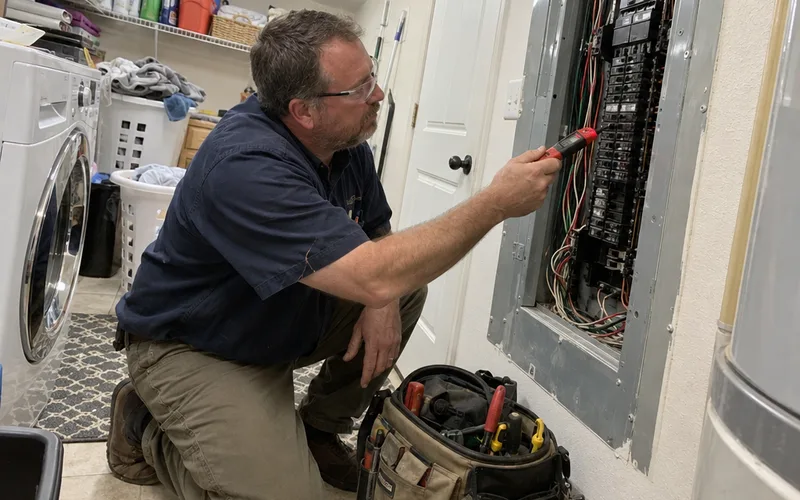
None of these sources publish a dollar figure, so ask one electrician to quote both methods, with the inlet, breaker and permit included.
Then hold those quotes up to typical interlock install costs and transfer switch install prices.
Are Generator Interlock Kits Legal and Up to Code?
Generator interlock kits are legal when a listed kit is installed correctly and your local inspector accepts it. GenInterlock cites National Electrical Code Article 702, which it says bans gear that lets the grid and the generator connect at once.
An interlock meets that rule, and so does a transfer switch. The seller’s own table lists Article 702 for both, so code alone won’t pick a winner.
The catch is local rules. The same seller notes that some towns want a listed product for a permit, so check local building codes with your building department first.
Here’s what to ask: “Do you accept an interlock kit or a transfer switch for a portable generator, and do I need a permit?” The permit rules cover the rest.
Will an Interlock Kit Fit Your Breaker Panel?
A generator interlock kit fits only the panel brand and model it was made for. GenInterlock’s page says a kit for one brand will not fit another brand’s panel, even at the same amp rating.
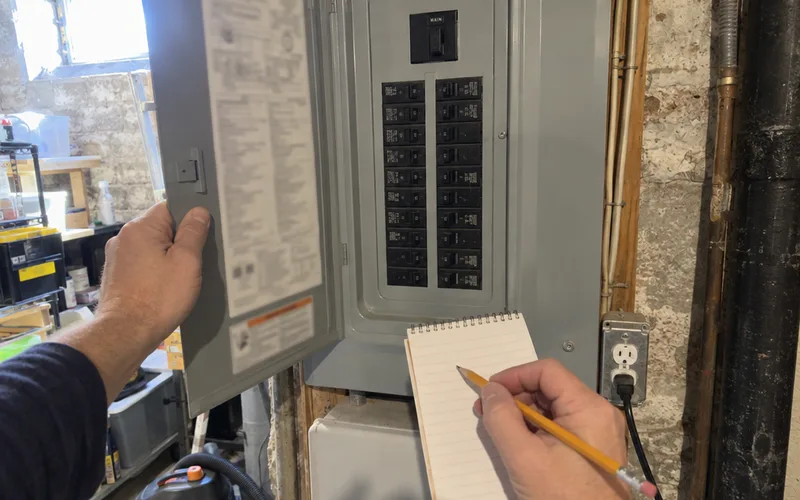
So check the fit first. Open the outer panel door and write down 3 things:
- The brand on the door label, such as Square D, Siemens or Eaton
- The model or series number on the same label
- The main breaker’s amp rating, printed on its handle
Then search for a kit listed for that exact model. If no listed kit matches, a transfer switch is the cleaner answer.
Safety: Is an Interlock or a Transfer Switch Safer?
A generator interlock kit and a transfer switch are equally safe when installed correctly, because both prevent backfeeding. Backfeeding sends generator power out of your electrical system onto the utility lines, where it can hurt line workers.
Both methods usually connect through an outdoor inlet box for the generator cord. An interlock also needs its own generator breaker in the panel.
Never plug a generator into a wall or dryer outlet to feed the house. That’s how backfeeding a generator turns deadly.
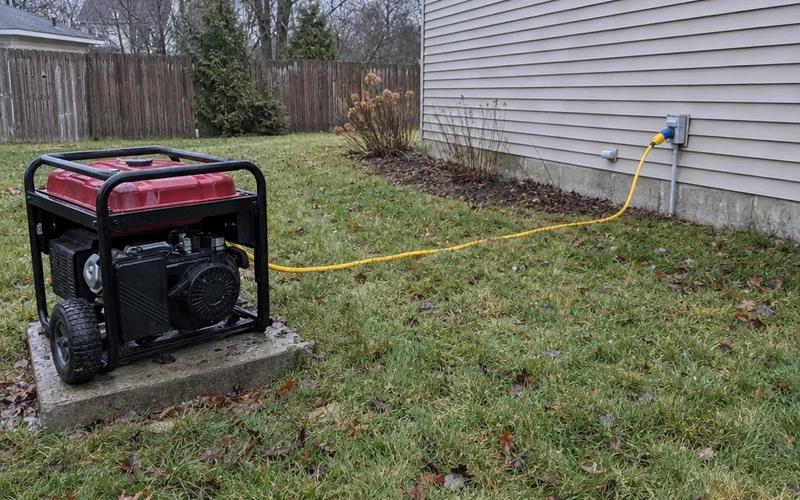
Note: Run the generator outside, away from doors and windows. The rules for where it can sit are the same for both.
Who Should Choose an Interlock Kit
An interlock kit is the right choice if you own a portable generator, your panel has a listed kit and you’ll manage the load. It fits best if:
- You want any circuit available, season by season
- You’re fine flipping breakers in a set order
- Your budget matters more than automation
Key Takeaway: For most portable generator owners, the interlock gives the most reach for the least hardware.
Who Should Choose a Transfer Switch
A transfer switch is the right choice if your panel has no listed kit, you’re adding a standby generator or someone else will run it. It also fits if:
- You want the key circuits chosen once and labeled
- You’d rather flip one set of switches than manage breakers
- Your house needs the same few circuits every outage
See how installing a transfer switch works, and what else your home needs in the home generator installation basics.
Frequently Asked Questions
Is a transfer switch a better choice than an interlock?
A transfer switch is the better choice if you want a fixed outage routine, own a standby generator or have a panel with no listed interlock kit. For a portable generator on a supported panel, an interlock kit costs less and reaches every circuit.
Can a homeowner install a generator transfer switch or interlock kit?
A homeowner can plan either one, but the panel work is best left to a licensed electrician, and your town may require a permit. GenInterlock, which sells kits, says an interlock is code compliant when a licensed electrician installs a listed kit.
Do I need a generator interlock?
You need a generator interlock or a transfer switch whenever a portable generator feeds your home’s wiring. If you only run appliances on extension cords from the generator, you need neither.
How much does it cost to have a transfer switch for a generator installed?
A transfer switch installation costs more than an interlock kit installation, because it adds a second panel, wiring and labor, according to GenInterlock’s comparison. Ask one electrician to quote both for your panel to see the real gap.
Final Thoughts
The generator interlock vs transfer switch choice comes down to your generator and who will run it.
For a portable generator on a panel with a listed kit, the interlock is the better value. Pick a transfer switch for a fixed routine, or an automatic one for a standby generator.
This week, write down your panel brand, model and main breaker size, and ask an electrician to quote both.