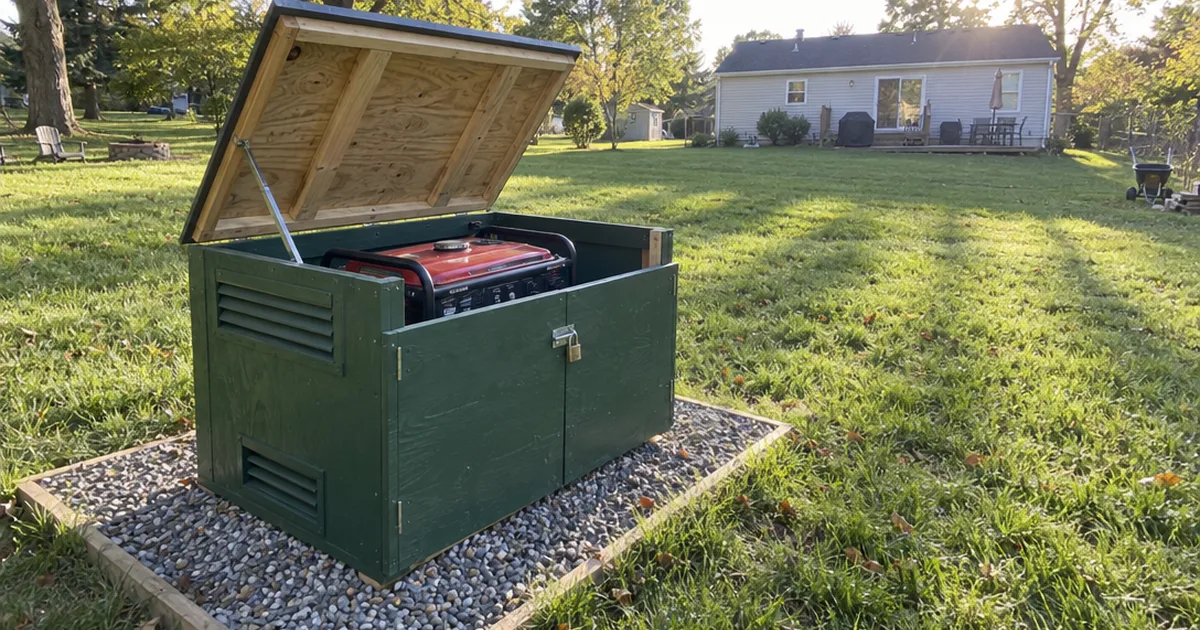

Most portable generators never need an 8-foot grounding rod.
The rod starts to matter when a generator feeds a building’s wiring. That’s also where the expensive mistakes happen.
Generator grounding comes down to 2 questions: what you plug in, and where the power goes. You’ll get a 2-question test, the one-bond rule for transfer switches and the rod-and-wire steps for the times you do need a rod.
What Generator Grounding Actually Does
Generator grounding gives stray or fault current a low-resistance path to earth, so it doesn’t travel through the person touching the generator.
That path matters because a generator’s frame is metal. If a hot wire rubs through its insulation and touches the frame, the whole housing can carry voltage.
In electrical terms, ground (electricity) is the reference point the system treats as zero volts. A good ground keeps exposed metal at that level and gives a breaker a clear fault to trip on.
A grounding rod is only one way to get there. On most portable units, the frame itself is the ground, and the engine, fuel tank and housing are bonded to it at the factory.
Do You Need to Ground Your Portable Generator?
A portable generator usually needs no grounding rod when it runs cord-and-plug loads from its own outlets and its engine, fuel tank and housing are bonded to the frame.
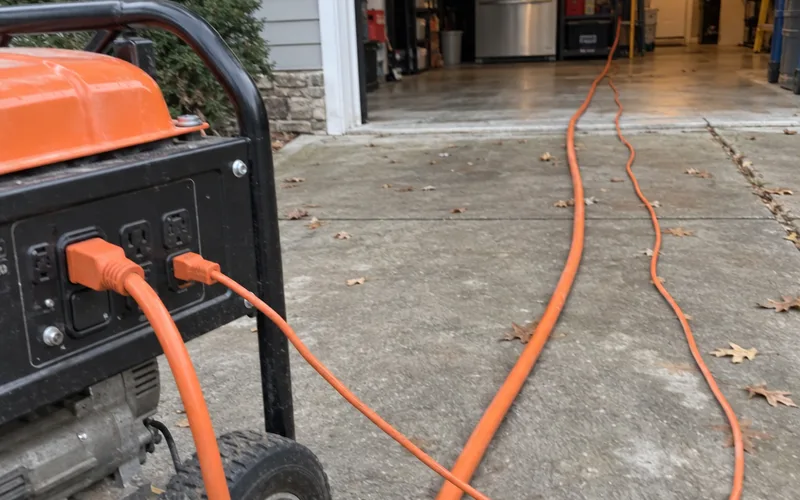
OSHA’s portable generator guidance and most generator makers say the same. Your owner’s manual has the final word for your model.
When the Frame Is the Ground
Run this 2-question test before you buy anything:
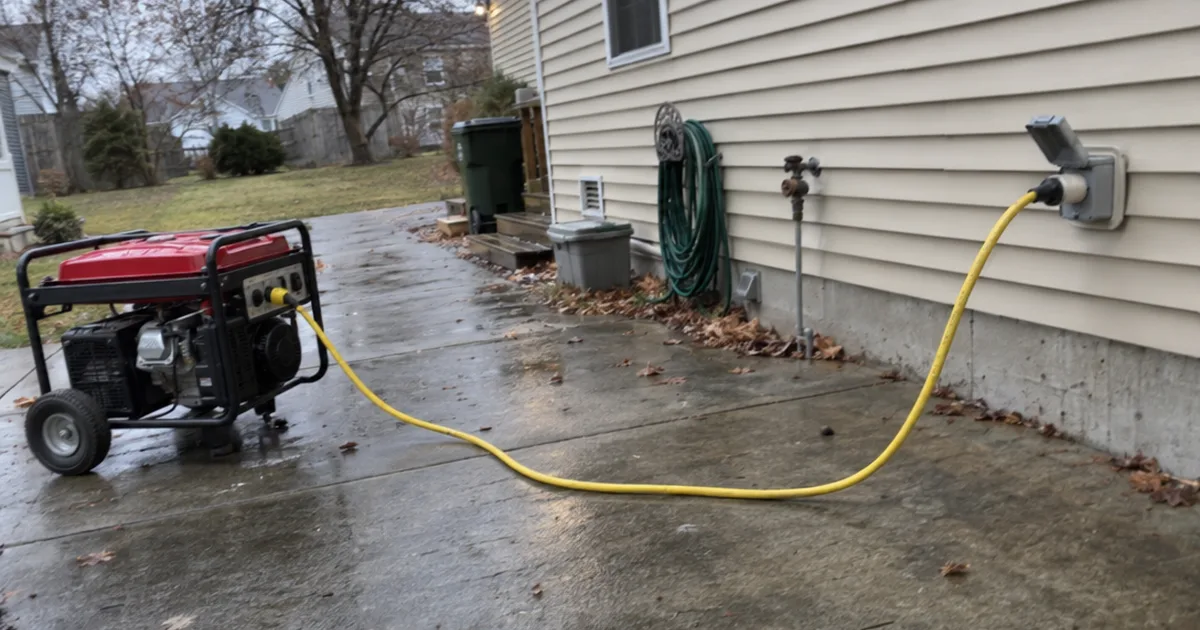
- Are your loads plugged straight into the generator’s receptacles? Extension cords count, as long as they run from the generator’s own outlets.
- Are the engine, fuel tank and housing bonded to the frame? On a modern portable unit they almost always are, and the manual will say so.
Two yes answers mean the frame acts as the grounding electrode. In other words, a fridge and a few lamps on extension cords don’t call for a rod.
When You Need a Grounding Rod
You need a rod, or another grounding electrode, in 3 situations:
- Your owner’s manual tells you to ground the generator.
- Local code or an inspector requires it.
- The generator is its own separately derived system: it keeps its neutral bond and feeds a building through a switch that also switches the neutral.
That last one is electrician territory. If you’re not sure which setup you have, treat it as a “needs a rod” case until someone checks.
Grounding Through a Transfer Switch or Interlock
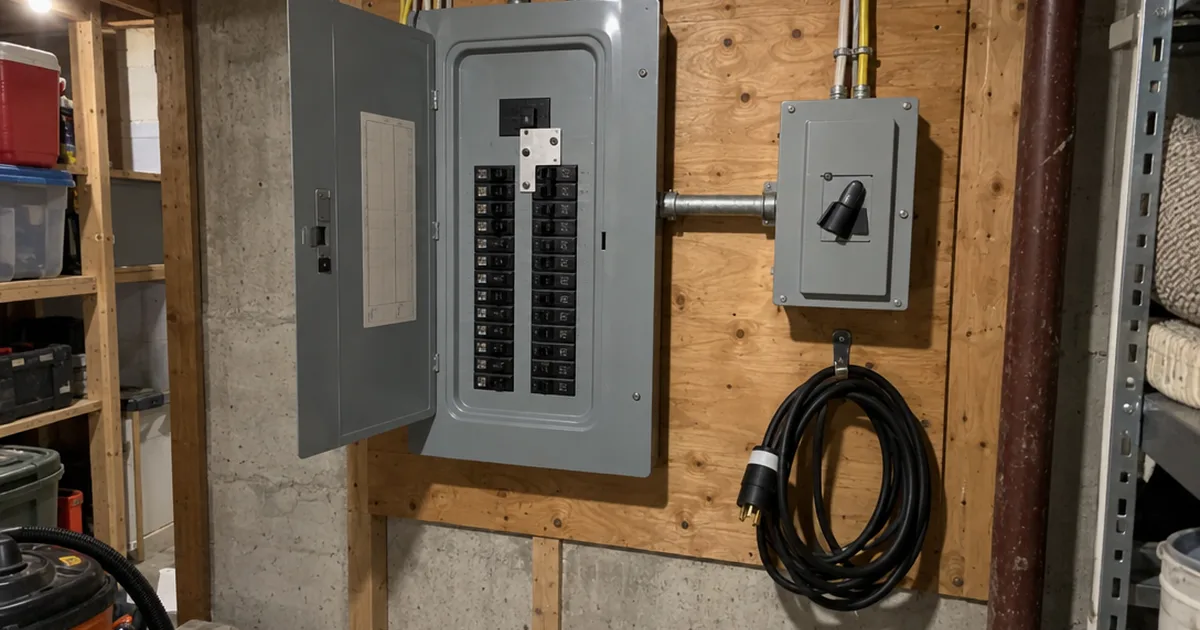
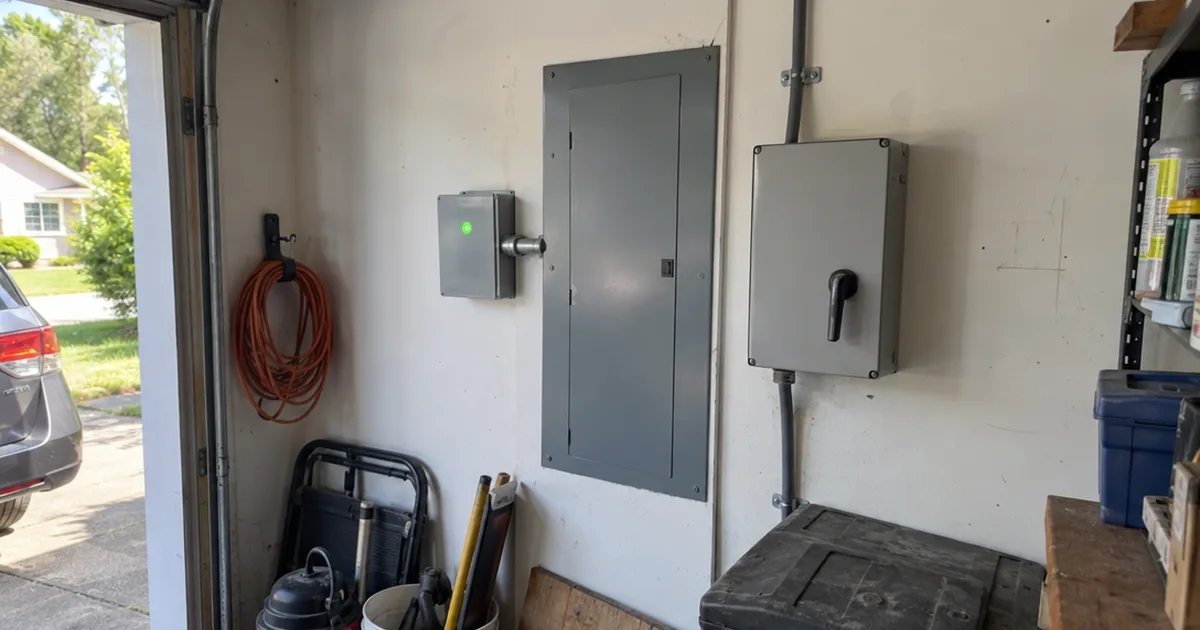
A generator that feeds your house through a transfer switch or interlock kit grounds through the house’s own grounding system, using the ground wire in the inlet cord.
So yes, you can ground a generator to your house ground, but only through a proper inlet and switch.
Here’s how the path works:
The generator’s ground pin feeds the inlet box, which feeds the panel, which is already tied to the home’s grounding electrode.
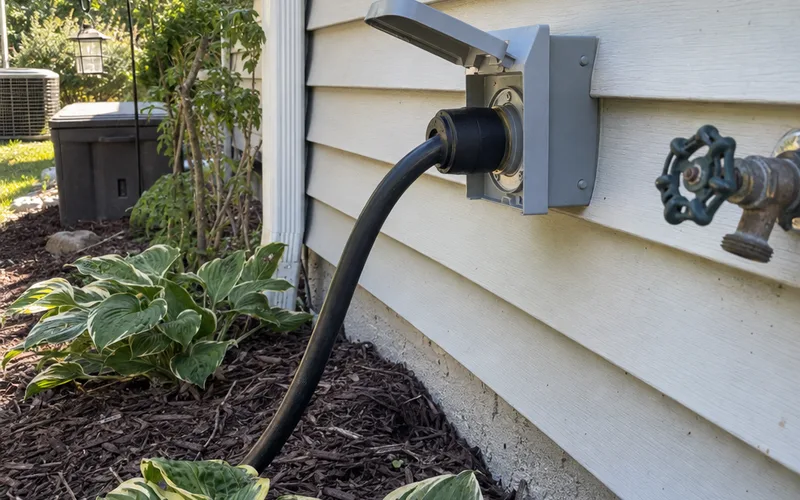
Still choosing hardware? Compare an interlock kit and a transfer switch first, then see how the power inlet box fits between them.
Manufacturers treat that connection as electrician work. EcoFlow’s Home Backup Kit product listing says its transfer switch must be installed by a qualified electrician following all applicable electrical codes.
The same listing showed that switch at $399.00 as of October 2026.
It’s a Reliance Controls Pro Tran 2 Series 30-amp, 6-circuit manual switch with an L14-30/L5-30 inlet. It’s also cULus 1008 Listed and works only with indoor breaker panels.
So budget for the electrician, not just the switch. The installation steps for a transfer switch and the home generator installation basics cover permits and placement in more detail.
Bonded Neutral vs. Floating Neutral: The One-Bond Rule
A bonded-neutral generator ties its neutral to its frame inside the unit. A floating-neutral generator keeps them apart and relies on the house panel’s bond.
Why does that matter? The National Electrical Code wants the neutral grounded at only one point in a system, usually the service entrance.
Engineer Harry L. Masten, P.E., explained the risk in EC&M magazine in 1999: a second ground creates parallel neutral and ground paths. Then neutral current can flow in a “de-energized” circuit and trip ground-fault protection when no ground fault exists.
So if you connect a bonded-neutral generator to a panel that’s already bonded, you’ve built a double bond. Most home setups solve it by using a floating-neutral generator, or by having the electrician remove or bypass the generator’s bond.
The details get specific fast. Start with how floating and bonded neutral generators differ, then check whether a floating neutral generator needs grounding on its own.
How to Ground a Generator With a Grounding Rod
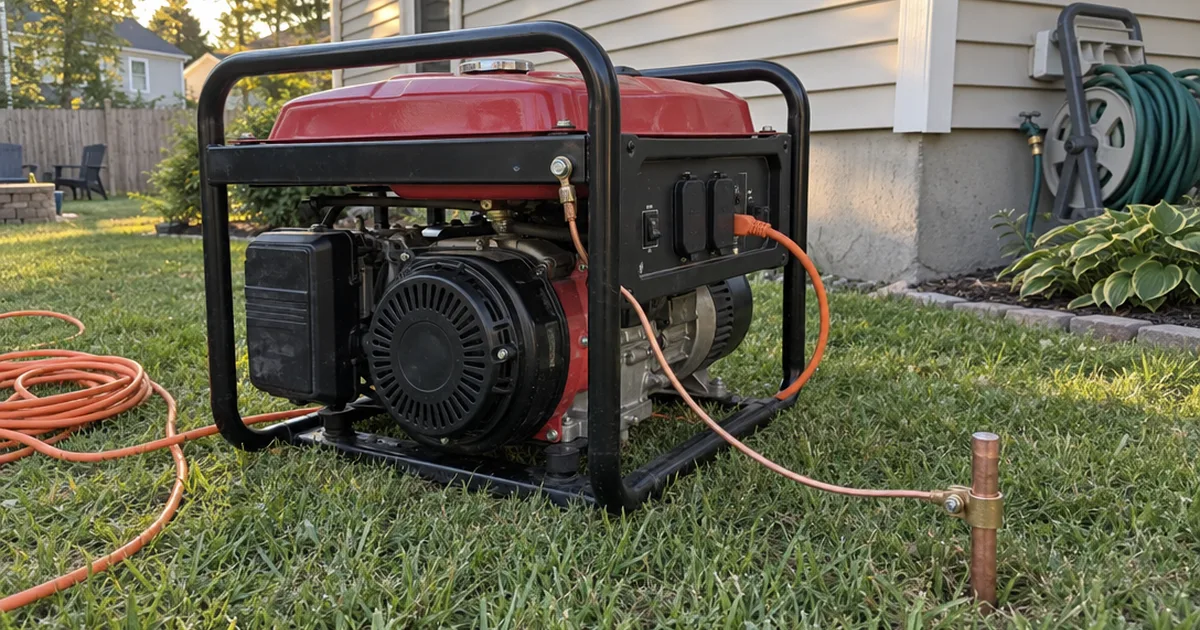
Grounding a generator with a grounding rod means driving a copper rod into moist soil and running copper wire from it to the generator’s ground bolt.
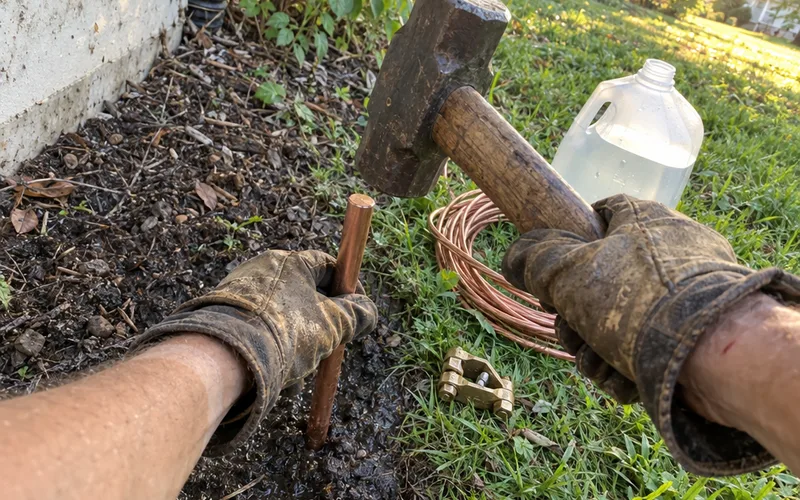
If your manual or inspector says you need a rod, gather these first:
- A copper or copper-coated grounding rod
- Solid copper grounding wire
- A ground clamp rated for the rod
- Wire strippers, pliers, a wrench and a hammer or mallet
Then follow these steps:
- Shut the generator off. Never work on the ground bolt while it’s running.
- Drive the rod. Hammer it straight down into moist soil until only about 4 to 6 inches stick out. Wetting hard ground first helps.
- Hit rock? Stop there. Don’t cut the rod short; ask an electrician about angling or trenching it, since the code limits both.
- Clamp the wire to the rod. Strip the end, set it under the ground clamp and tighten it hard.
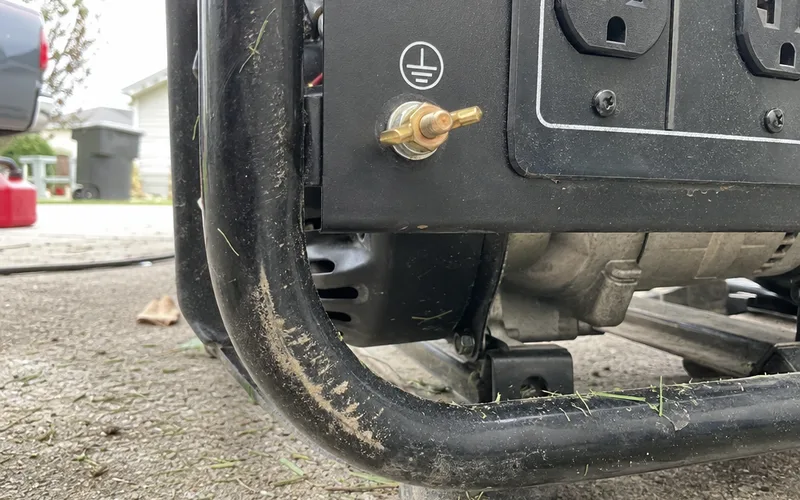
- Connect the generator end. Loosen the ground bolt on the frame, usually marked with the ground symbol, wrap the stripped wire under it and tighten.
- Cover the exposed rod top with a protective cap or fitting so nobody trips on it.
What Size Grounding Rod and Wire Do You Need?
Most grounding guides call for a rod at least 8 feet long and 5/8 inch thick.
For wire, the advice clusters around 6 AWG solid copper, with some guides allowing 8 AWG. Use what your manual lists, and ask your inspector before you buy a 1/2-inch rod, since local rules decide what passes.
How to Test the Connection
Give each end a firm tug first. A loose ground is close to no ground at all.
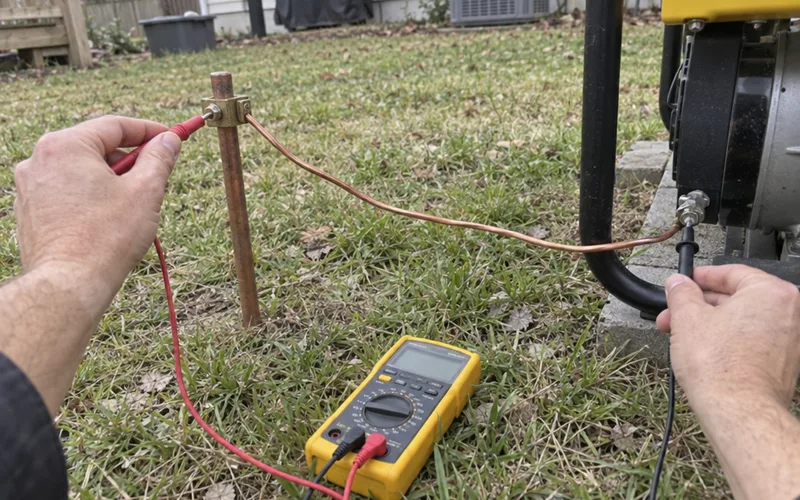
If you have a multimeter, set it to resistance and check from the ground bolt to the rod clamp. The reading should sit near zero and stay steady; a jumpy reading means a loose wrap, so redo that end.
What Happens If You Don’t Ground a Generator?
An ungrounded generator that needs grounding can leave its metal frame live after a fault. Then the next person who touches it can get an electric shock.
The same fault can overheat wiring, damage what’s plugged in or start a fire near the fuel tank. And a generator wired into a house without a proper switch can backfeed the utility lines, a separate danger that can kill line workers.
Grounding handles shock risk, not every hazard. Carbon monoxide and placement still matter, and the generator safety basics cover both.
Inverter, RV and Standby Generators
Inverter, RV and standby generators follow the same grounding rule. Loads plugged into the generator’s own outlets rely on its bonded frame, and a panel connection uses the building’s or RV’s ground.
Here’s how it plays out:
- Inverter generators: loads plugged into the unit’s own outlets follow the frame rule. Check the manual for the neutral type before you feed a panel.
- Camping and RVs: cords run straight from the generator need no rod. Feeding an RV’s electrical panel is a panel connection, so follow the RV and generator manuals for the bond and ground.
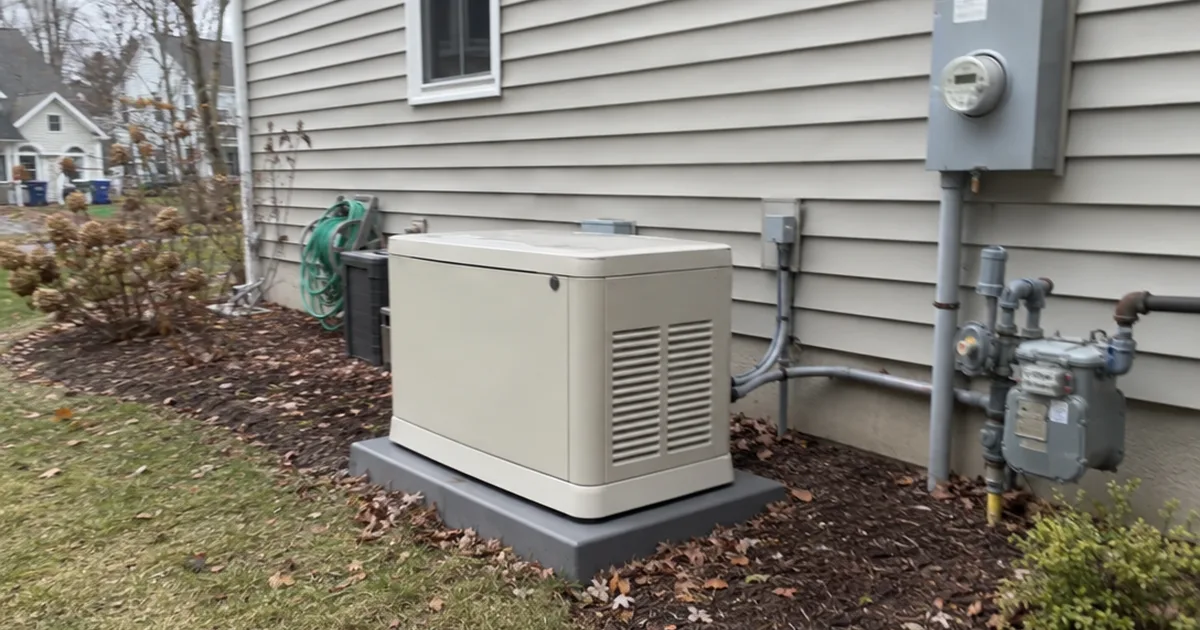
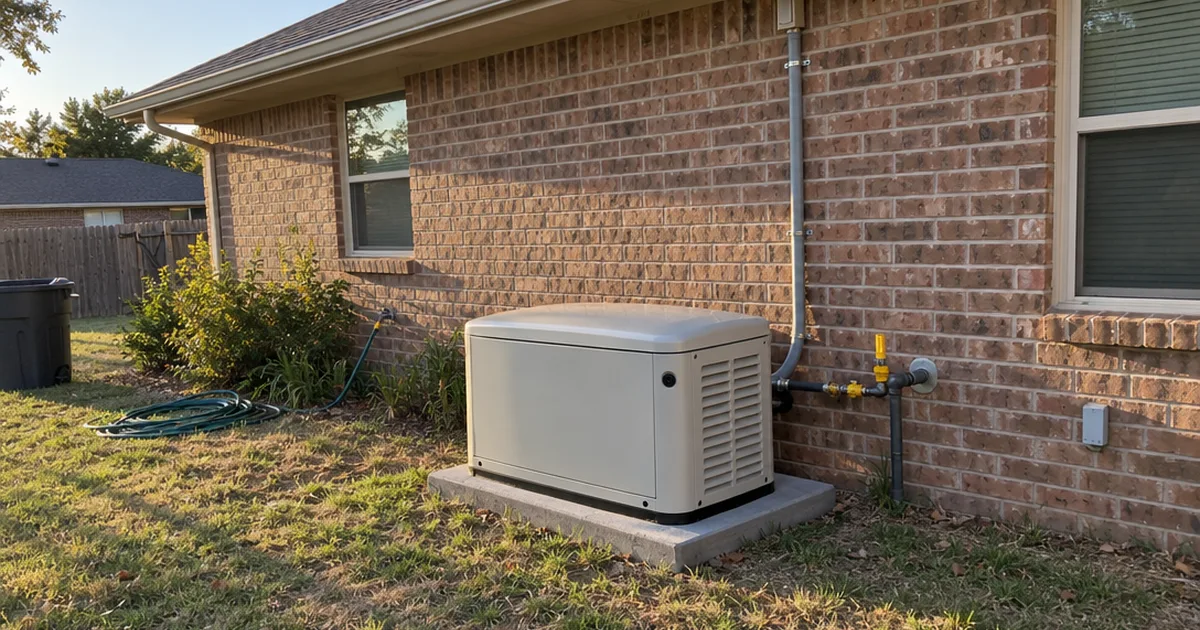
- Standby generators: the installer grounds a standby unit to the home’s grounding system as part of the permit job. Check the installation requirements before the dealer visit.
Not sure which group your setup falls in? Connecting a generator to your house walks through each method and the hardware it needs.
The Bottom Line
Grounding a generator is about where the power goes, not about owning a rod.
This week, find your owner’s manual, read its grounding section and write down whether your unit has a bonded or floating neutral.
Frequently Asked Questions
Do I need 1/2 or 5/8 grounding rod?
Most generator guides call for a 5/8-inch rod that is at least 8 feet long, which matches the rod size they cite from the National Electrical Code. Ask your local electrical inspector before buying a thinner rod, because the inspector decides what passes in your area.
What happens if there is no grounding wire?
Without a grounding wire or a bonded frame, a fault can leave the generator’s metal frame energized, so the next person who touches it can get a shock. It can also damage connected appliances or overheat wiring, so fix a missing ground before you run the generator again.
What are the earthing requirements for a generator?
A portable generator’s earthing requirement depends on its use: the bonded frame serves as the ground for cord-and-plug loads, while a generator feeding a structure through a transfer switch must connect to a grounding electrode system. Your owner’s manual and local code set the exact rule.