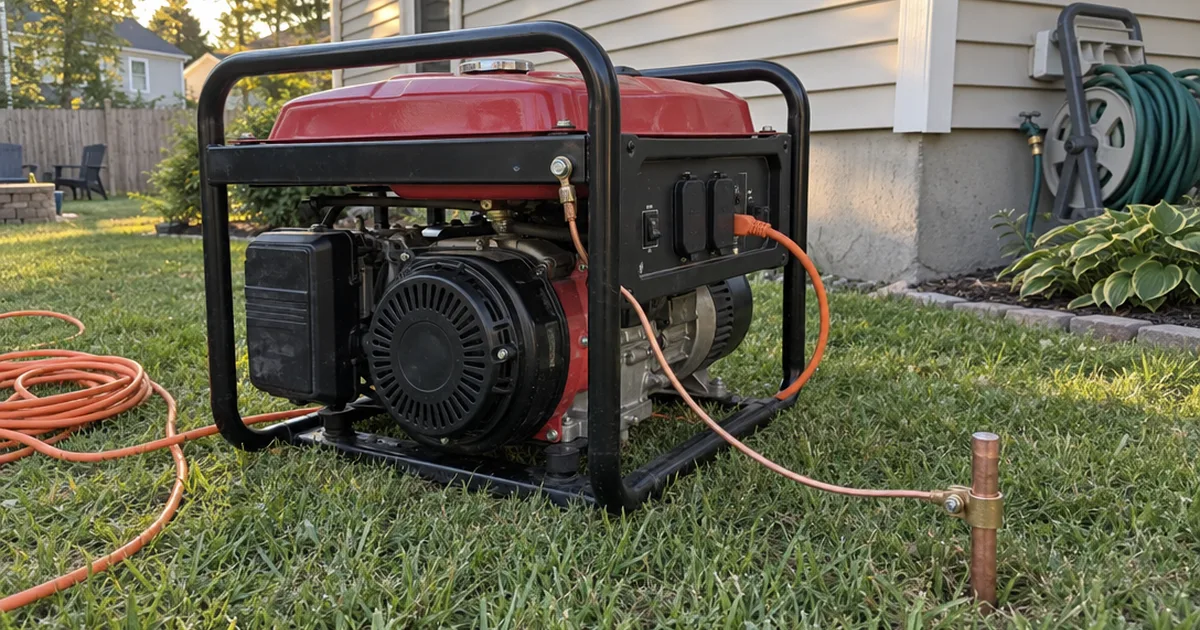

A generator rated at 62 decibels is often measured from 25 feet away.
That’s how Popular Mechanics explains noise ratings, and it means a unit parked beside your bedroom window sounds louder than its label.
A good generator enclosure takes on that noise, plus rain, snow, wildlife and theft.
The catch? Only some enclosures are safe while the engine runs.
So every type below is sorted by that one question first, then by noise, airflow, size and cost.
What Is a Generator Enclosure?
A generator enclosure is any structure built around a generator to protect it from weather, theft and wildlife, and often to cut its noise. The term covers 5 shapes: running covers, quiet boxes, storage sheds, standby housings and full generator rooms.
Those 5 do very different jobs.
Some stay on while the generator runs during power outages. Others only protect it between outages, while it sits switched off and waiting.
Why does that split matter so much?
A running generator is an internal combustion engine that burns fuel such as gasoline. Its exhaust carries carbon monoxide, a gas you can’t see or smell.
That gas causes carbon monoxide poisoning, so an enclosure around a running engine must push exhaust and heat outside the whole time.
Cover, Box, Shed or Room: What People Mean
People use these words loosely, so pin them down before you shop.
- Cover or tent: fabric stretched over a metal frame, open at the sides or bottom.
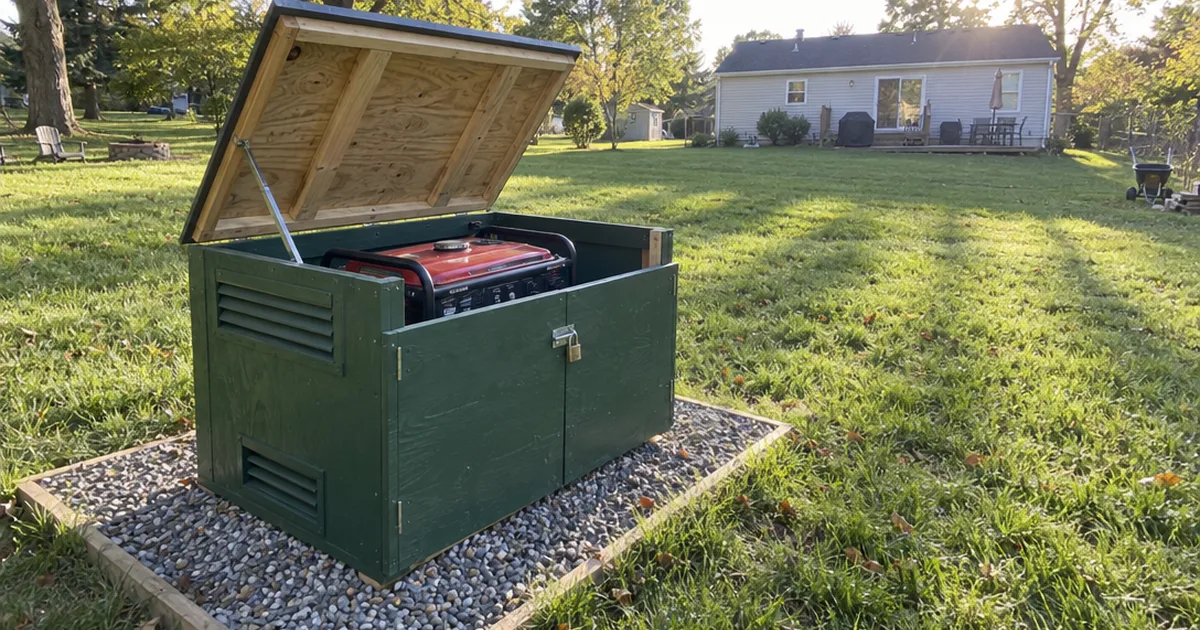
- Box: a rigid case sized closely to one generator, often lined to cut noise.
- Shed: a small building with a roof and doors you can open wide.
- Room: a space inside or attached to a building, designed around a permanent unit.
Key Takeaway: Decide whether the engine will be running inside it, then pick the shape.
Can You Run a Generator Inside an Enclosure?
A generator can run inside an enclosure only when that enclosure is built for running: open-sided, or vented with fresh air coming in low and exhaust and heat going straight outside. A closed storage shed, garage or plain storage box is never a safe place to run a portable generator.
Everything else on this page builds on that rule, because the same box can be safe for storage and dangerous for running.
The Run-or-Store Rule
Before you buy or build anything, answer one question: will the engine be on while it’s in there?
If the answer is yes, you need a design made for running. That means a running cover, a vented quiet box, a model-specific standby enclosure, or a generator room that a professional has designed for airflow.
If the answer is no, you have far more freedom. A storage building or a lockable box keeps your generator dry and hidden, and you roll it out to an open spot when the power goes out.
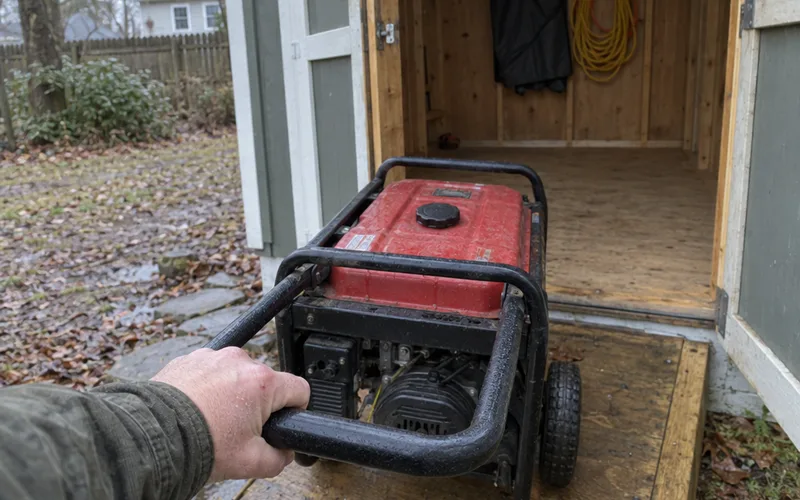
In other words, storage enclosures and running enclosures are different products, even when they look alike.
Why a Closed Shed Turns Dangerous
A closed shed traps the 2 things a running engine makes most: exhaust and heat.
The exhaust builds up inside, and it can drift toward the house through gaps, vents and open windows. The heat builds up too, which can make the generator overheat and shut down right when you need it.
Opening the door partway doesn’t fix that. The full answer on running a generator in a shed explains why and what to do instead.
Note: Put a battery-powered CO alarm inside your home before you run any generator near it. The carbon monoxide safety rules explain where alarms and generators should go.
The 5 Types of Generator Enclosures
The 5 types of generator enclosures are running covers, quiet boxes, storage sheds and boxes, standby generator enclosures, and generator rooms. Covers, vented quiet boxes and standby enclosures are made for running, a generator room must be engineered for it, and a plain storage shed is for storage only.
Here’s how they compare on the question that matters most, plus the job each one does best:
| Type | Runs inside it? | Main job | Best for |
|---|---|---|---|
| Running cover | Yes, sides open | Rain and snow | Portables in storms |
| Quiet box | Yes, if vented | Noise | Portables near neighbors |
| Storage shed or box | No, storage only | Weather and theft | Off-season storage |
| Standby enclosure | Yes, model fit | Noise and looks | Air-cooled standby units |
| Generator room | Only if engineered | Full protection | Permanent setups |
You don’t need all 5. A portable generator owner might pair a storage shed for the off-season with a running cover for storms.
1. Running Covers and Generator Tents
A running cover is a waterproof fabric tent on a metal frame. It keeps rain and snow off a portable generator while it runs, with the sides open to air.
Best for: portable generator owners who run during storms. Skip it if you need noise control, since fabric does little for sound.
For example, Amazon’s listing for the GenArmor tent says it fits most 4,000 W to 13,000 W portable generators. It carries a 4.7 out of 5 star rating on that page.
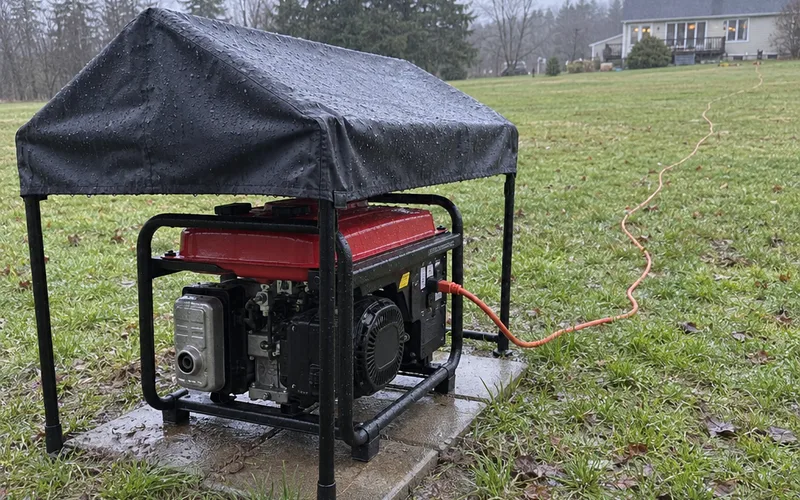
Check your unit’s height and which side the exhaust exits before you order, since the cover should never block it. Compare the frame styles in the roundup of generator covers for running before you pick one.
2. Quiet Boxes (Baffle Boxes)
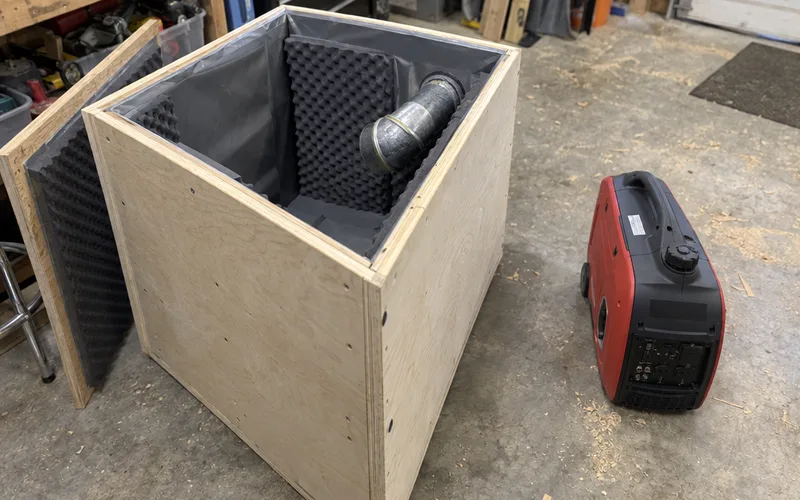
A quiet box is a rigid, sound-lined case that fits over or around a portable generator and cuts noise with mass, padding and bent vents.
Best for: portable owners with close neighbors or a noise rule to meet. Skip it if you can’t commit to building or buying real ventilation, because a sealed box will cook the engine.
Here’s how it works:
Sound travels in straight lines, so a quiet box sends its intake and exhaust air through turns and lined ducts. The air gets out while much of the sound bounces back into the lining.
You can buy one ready-made or make your own. The quiet box build steps walk through materials, cut sizes and vent layout for a DIY version.
3. Generator Sheds and Storage Boxes
A generator shed or storage box keeps a portable generator dry, locked and out of sight between power outages. It isn’t a place to run it.
Best for: anyone who stores a portable unit outdoors or wants the garage back. Skip it if you plan to run the generator in place without moving it.
The trick is a fast roll-out: wide doors, a ramp threshold and a clear path to your running spot.
Pro Tip: Keep the running cover, cords and a funnel in there too, so everything you need for an outage leaves together.
4. Standby Generator Enclosures
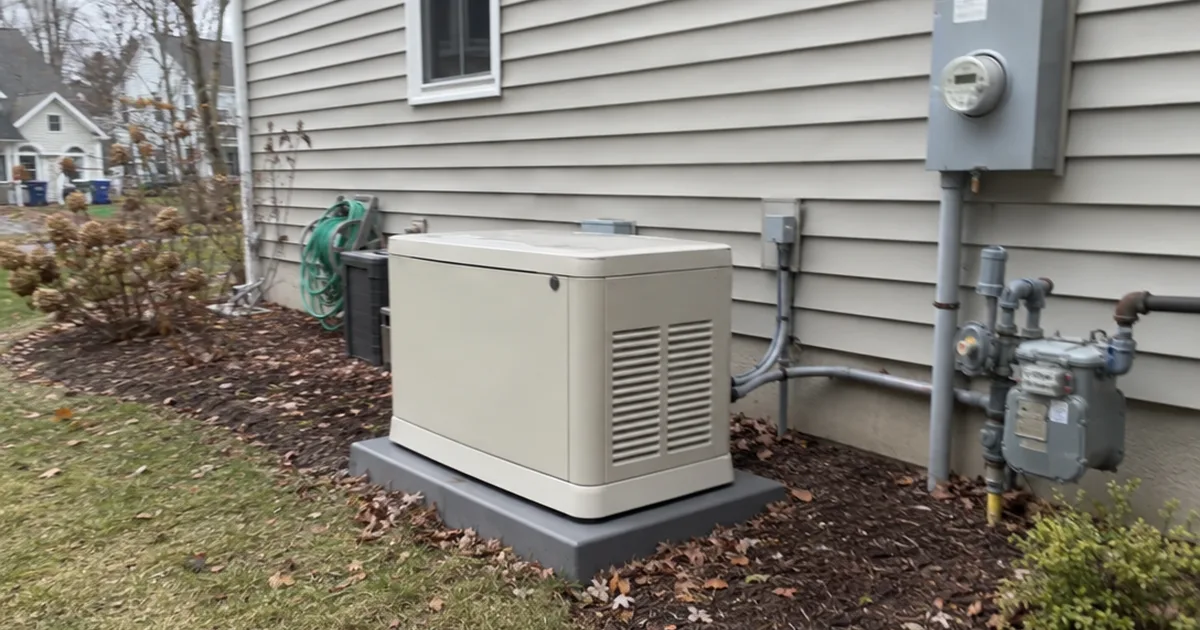
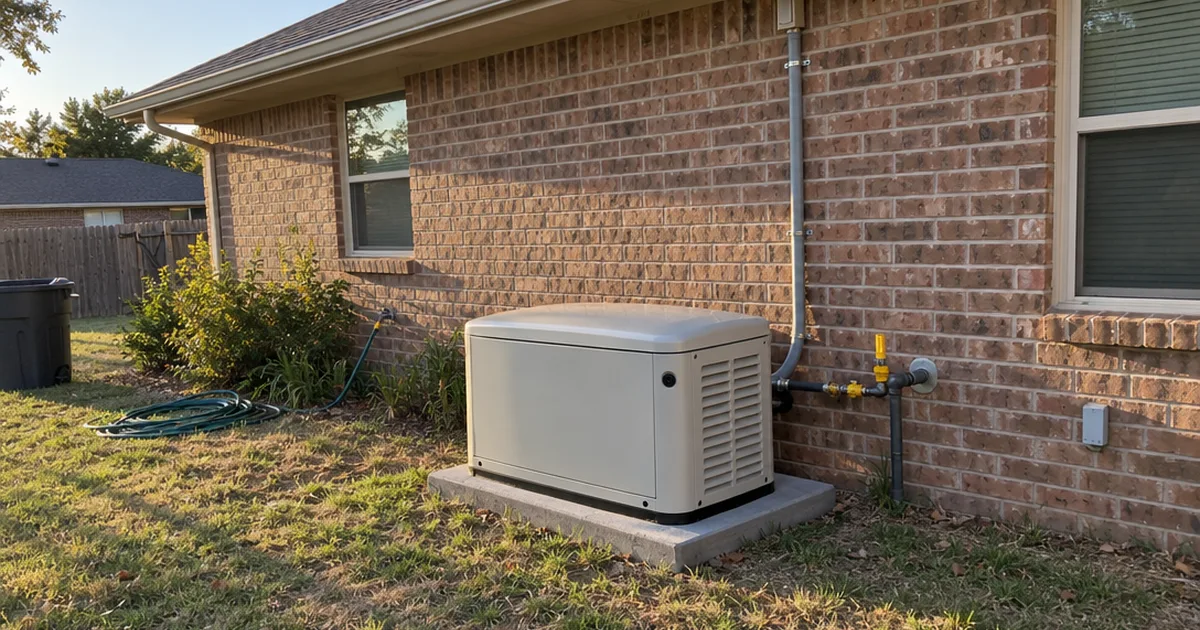
A standby generator enclosure is an add-on sound and weather box for a home standby generator. Each one is sized for specific makes and models.
Best for: standby owners who want a quieter or better-looking install. Skip it if your model isn’t on the maker’s fit list.
ZombieBox is one example. ZombieBox’s own listing prices its standby package, the box plus a rubber base mat, from $2,199.00.
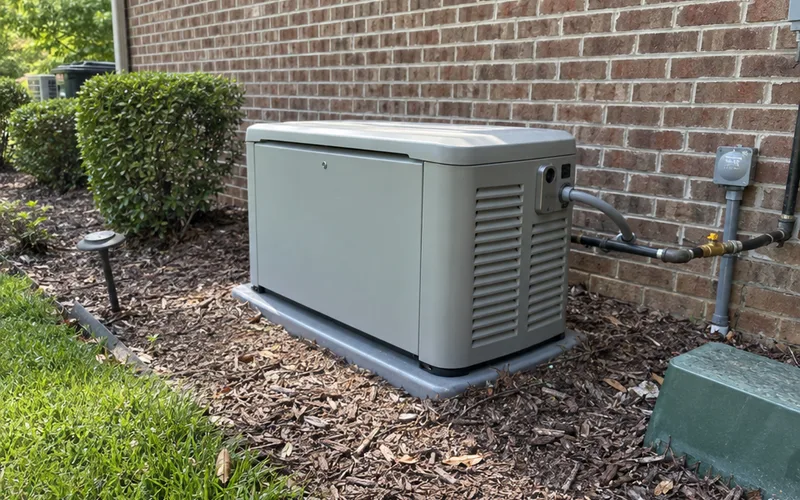
The same listing says the box fits air-cooled Generac, Kohler and Briggs & Stratton standby units, new 18 to 26 kW models only. So fit is the first thing to check, before price or color.
5. Generator Rooms
A generator room is a dedicated space in or beside a house, built around a permanent generator with engineered intake air, exhaust and fire protection.
Best for: large permanent setups where an outdoor unit isn’t practical. Skip it if you own a portable generator, since a room is never a place to run one.
This is a job for licensed pros, such as a builder and an electrician, not a weekend build. The guide to a generator room for a house covers when it makes sense and what the room needs.
Portable vs Standby: Which Enclosure Fits Your Generator
A portable generator needs an enclosure you can open fast or roll it out of. A standby generator already sits in its own factory weather housing, so it only takes an add-on box for extra quiet or looks.
For a portable unit, the enclosure is the main protection, so rain, theft and storage come first. For a standby unit, an add-on is mostly about noise and how the yard looks.
Standby placement also follows its own rules. Clearances, the pad, the transfer switch and permits all come before any add-on box, and the standby installation requirements lay those out.
So the enclosure follows the generator, never the other way around.
Does a Generator Enclosure Reduce Noise?
A generator enclosure reduces noise when it adds heavy walls, absorbs sound inside and forces escaping sound through bends. ZombieBox’s listing, for example, claims its standby enclosure gives up to 60% quieter operation.
Treat that figure as the maker’s own claim. It isn’t an independent test.
Here’s the part most buyers miss:
Generator noise ratings are measured in decibels, and Popular Mechanics notes those ratings are often taken at 25 feet. So even an inverter generator that sounds fine on paper can feel much louder at 10 feet, right under a window.
What Makes an Enclosure Quieter
4 things do almost all the work, and the best quiet boxes use all of them:
- Mass. Dense walls such as medium-density fiberboard (MDF), mass-loaded vinyl or concrete block stop sound passing through.
- Absorption. Soft insulation such as mineral wool soaks up sound that bounces around inside.
- Baffled vents. Air paths with turns let air through while blocking a straight line for sound.
- Vibration control. A rubber mat under the generator stops it shaking the floor and walls.
Skip any of the 4 and sound leaks out there. A heavy box with straight open vents, for example, still sends noise right out the holes.
If you want a ready-made box, the best generator quiet boxes are compared side by side. And if a full enclosure feels like too much, there are simpler ways to make a generator quieter, starting with distance and placement.
How to Ventilate a Generator Enclosure
A generator enclosure is ventilated by bringing cool air in low on one side, letting hot air out high on the opposite side, and sending engine exhaust straight outside instead of into the box. A fan helps, but only when the intake can feed it.
Here’s the order to plan it in:
- Check your generator’s manual for its clearance and which way cooling air flows.
- Put the fresh-air intake low, near where the engine pulls in cooling air.
- Put the hot-air outlet high, on the far side from the intake.
- Route the exhaust so it leaves the enclosure directly, pointed away from the house.
- Screen every opening against insects and rodents without shrinking it.
Hot air rises, so low-in and high-out lets the box pull fresh air through on its own. An exhaust fan then speeds up that flow on hot days.
Louvers and Free Area
Wall louvers are angled blades in a frame that let air through a wall opening while keeping out rain and debris.
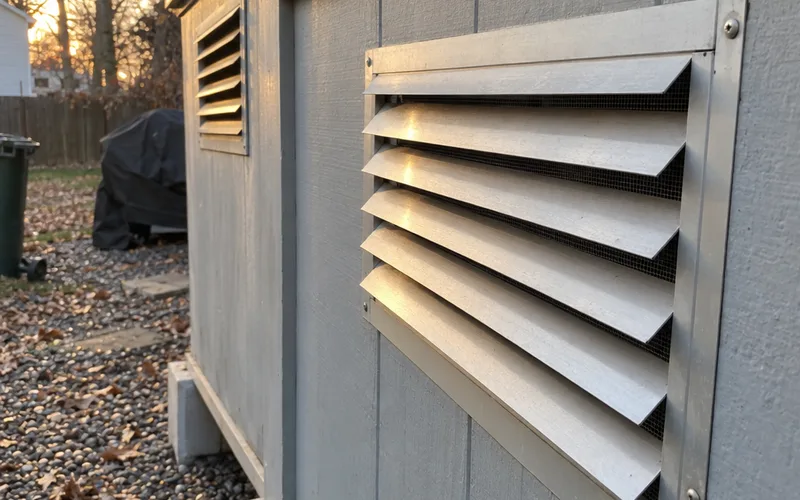
The catch is that the blades take up space. Architectural Louvers, a louver maker, says common louvers leave 35% to 60% of the wall opening free for air.
What does that mean for you?
A louvered vent passes far less air than an open hole of the same size. So if your plan calls for a certain vent area, make the louvered opening bigger to make up for the blades.
Heat Buildup in Metal and Plastic Boxes
Heat is the quiet failure in enclosures. A box can look well vented and still run hot inside on a summer afternoon.
Sheet metal soaks up sun, and plastic resin boxes can soften near a hot muffler. Either way, the engine breathes hotter air and works harder.
So add a thermometer or a temperature-switched fan, watch it on your first long test run, and enlarge the vents if it keeps climbing.
How Big Should a Generator Enclosure Be?
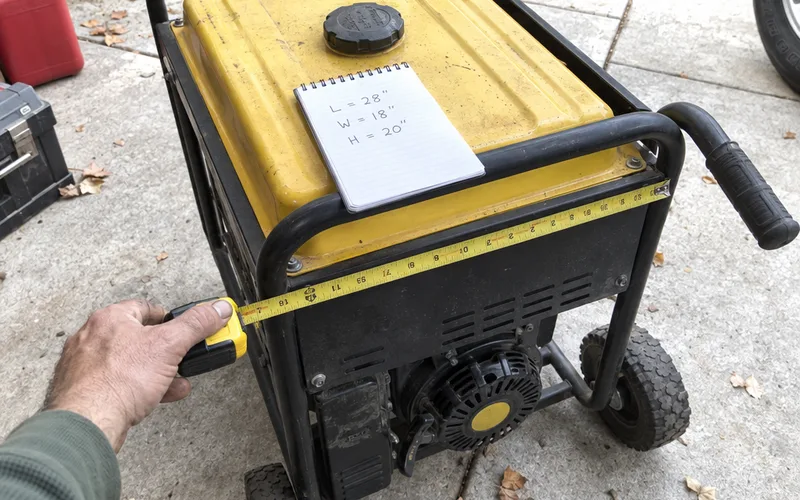
A generator enclosure should be big enough to leave open air on every side, reach the controls, fuel cap and outlets, and open fully for service. The exact gap comes from your generator’s manual, so measure the unit and read its clearance section before you cut or buy anything.
Start with a tape measure.
Measure the length, width and height, including handles, wheels and any fuel selector that sticks out. Then add the clearance the manual asks for, plus the thickness of any sound lining you plan to add.
Then check how you’ll use it:
- Can you reach the start button, choke and fuel valve without moving the box?
- Is there a clear exit for cords, so the lid or door closes without pinching them?
- Can you open it wide enough to change the oil and spark plug?
- Is there room to refuel safely once the engine has cooled?
Finally, size the generator before the enclosure. Building a snug box and then upgrading to a bigger generator is the most expensive way to do this twice.
What Should a Generator Enclosure Sit On?
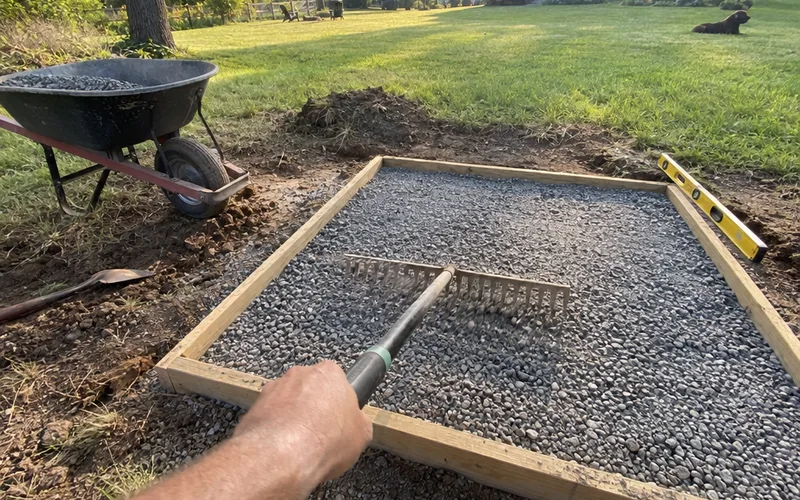
A generator enclosure should sit on a firm, level, well-drained base, such as compacted gravel, pavers or a steel-reinforced concrete pad. Never set one in a low spot where water pools after rain.
The base keeps the generator level and keeps water and humidity away from the outlets and engine.
It also gives the enclosure a fixed footprint you can anchor to.
Here’s how the common options compare:
- Compacted gravel: drains well and is quick to lay, and suits portable storage boxes and small buildings.
- Pavers or patio blocks: firmer than gravel on level ground, and easy to extend later.
- Concrete pad: the most solid and watertight choice, and standard for permanent units.
A steel-reinforced concrete slab, with rebar inside, is the strongest of the three, which matters for heavy block or metal enclosures. Standby units usually sit on a pad built to the maker’s spec, and the generator pad requirements explain the sizes and materials.
Pro Tip: Put a rubber anti-vibration mat between the generator and a hard base. Concrete passes vibration straight into the walls, and the mat stops it at the source.
Where to Put a Generator Enclosure
A generator enclosure belongs outdoors on open ground, away from doors, windows and vents. Popular Mechanics reports that most building codes require generators to sit at least 5 feet from a house opening and 5 feet from flammable materials.
That 5-foot figure is a code minimum for permanent units, not a comfortable distance for a running portable.
Portable generators need more room, and the exhaust should always point away from the house. The full rules on how far a generator should be from the house give the distances for each kind of opening.
Then check the spot itself:
- High ground, never under a deck, an overhang or low branches.
- Clear of dry grass, firewood and stored gasoline, which are all fire hazards.
- Close enough to run a heavy-duty extension cord or reach the inlet without trip hazards.
- Somewhere you can reach safely in rain, snow and the dark.
Your town and HOA may add noise ordinances, setbacks and rules on looks, so call the permit office before you build.
Choosing Enclosure Materials
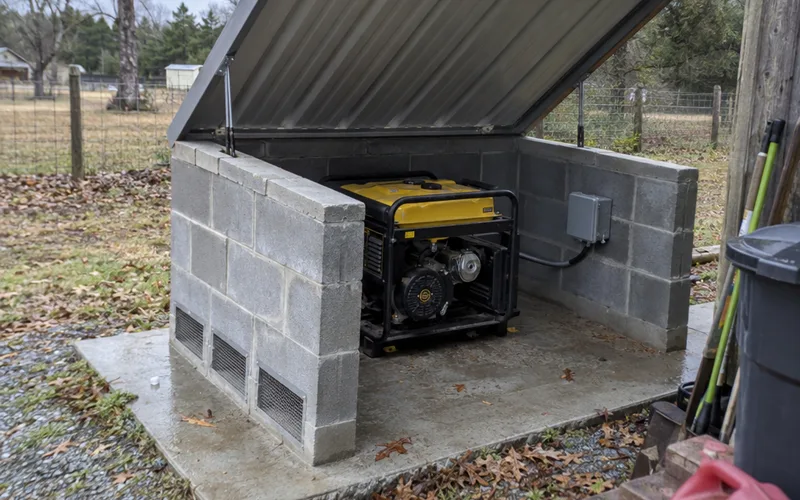
The best generator enclosure material depends on the job. Fabric suits running covers, treated wood is easiest for sheds, sheet metal resists rot and fire, and concrete block is the quietest and most secure.
- Fabric on a metal frame: light and quick to set up, but does little for noise or theft.
- Treated wood and plywood: easy to cut and build with, but needs sealing against rot, moisture and humidity.
- Sheet metal, galvanized steel or aluminum: won’t rot and doesn’t burn, but gets hot in direct sun.
- Concrete block and mortar: the heaviest, quietest and hardest to break into, but slow to build.
- Plastic resin: cheap and rustproof for storage, but a poor choice near a hot running engine.
Your climate narrows the list.
Near the coast, saltwater spray and humidity push you toward sealed wood, coated aluminum or block instead of bare steel, which can rust. In snow country, a sloped roof drops snow so its weight never sits on the lid.
Key Takeaway: Build for your worst storm week of the year, not the average one.
How Much Does a Generator Enclosure Cost?
A generator enclosure costs anywhere from the price of a fabric running cover to over $2,000 for a model-specific standby box. ZombieBox’s listing, for example, prices its standby enclosure with a rubber base mat from $2,199.00.
Covers and storage boxes are simpler products, and prices swing so much by size and material that one average would mislead you. Here’s how to get your own number:
- Write down your generator’s wattage and its length, width and height.
- Search a retailer for “generator enclosure” plus your wattage, and filter by size.
- Check that each listing names a fit range that includes your generator.
- For a DIY build, price a materials list at your local home center, adding vents, hinges and a lock.
Then compare like with like, since a cover, a quiet box and a storage building solve different problems.
Should You Buy or Build a Generator Enclosure?
Buy a generator enclosure when you need a model-specific fit, a running cover before the next storm, or a product with real ventilation already engineered in. Build one when your generator is an odd size, you have the tools and a free weekend, or you want a storage shed that matches your yard.
Buying makes the most sense for a standby add-on, where the maker has matched airflow to specific models, and for a running cover.
Building suits storage buildings and boxes best, since the engine is off inside them. Quiet boxes sit in the middle: very buildable, but their airflow needs careful testing before a long outage.
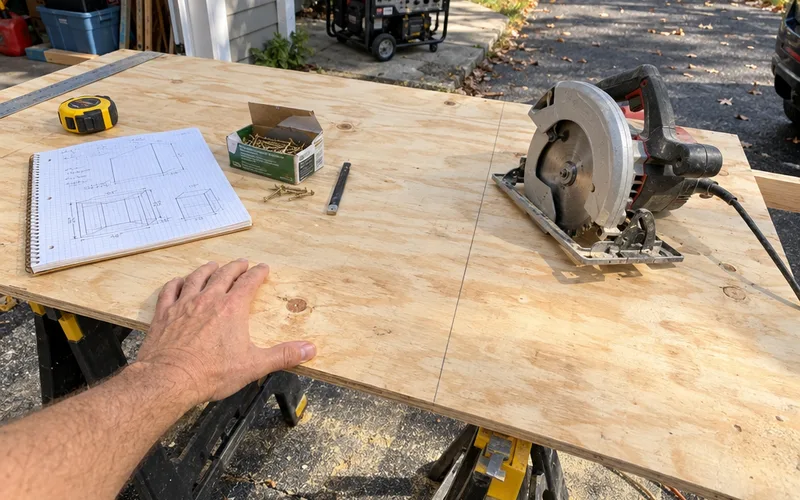
If you go the DIY route, the DIY generator enclosure guide covers plans, materials and a build order.
Can You Turn a Storage Shed Into a Generator Enclosure?
A store-bought storage shed makes a good generator enclosure for storage, but not a safe place to run a portable generator unless it’s rebuilt with real intake and exhaust paths. Treat a stock shed as a garage for the generator, not a room to run it in.
Stock sheds are built to keep air out, and their vents are sized for storage, not for an engine pushing out hot exhaust.
Their materials matter too. Plastic resin can soften near a muffler, wood can catch fire, and a metal one heats up fast in the sun.
So if you buy one, plan to wheel the generator out to run it. That’s the simplest safe setup, and it costs nothing extra.
Protecting Against Weather, Wildlife and Theft
A generator enclosure protects against weather by keeping rain, snow and humidity off the outlets and engine. It protects against wildlife by closing the gaps rodents and insects use, and against theft with a lock and a fixed anchor.
Water in the outlets can stall a generator or create an electrocution risk, and humidity slowly causes corrosion on metal parts. A solid roof, sealed seams and a raised base handle most of it, and snow needs extra steps covered in protecting a generator from snow.
Wildlife is the sneaky one. Mice and squirrels chew wiring, and wasps and birds nest in warm, quiet spaces, so screen every vent and close every gap against pests and dust.
Theft is the expensive one. A lockable enclosure deters casual thieves, and a chain to an anchor in the base makes the generator much harder to carry off.
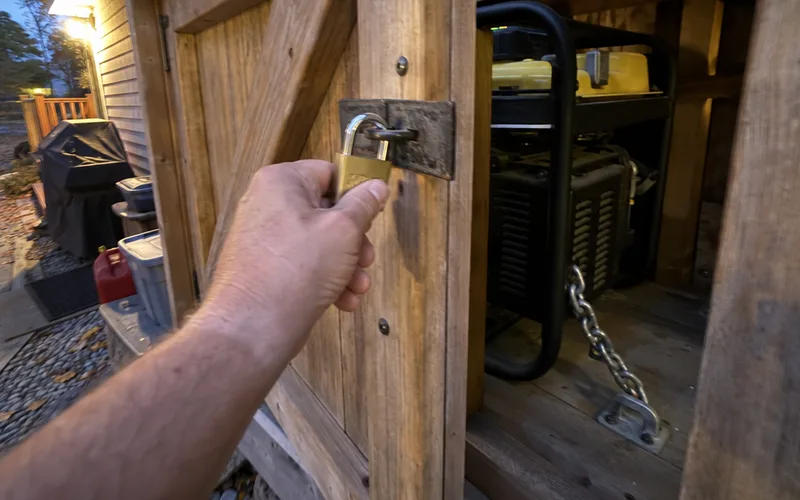
The wider generator theft prevention steps cover chains, anchors and storage habits.
Generator Enclosure Mistakes to Avoid
The most common generator enclosure mistakes are storing fuel inside it, blocking access and closing the lid on cords. Each one is easy to avoid at the planning stage:
- Storing fuel cans in the enclosure. Keep fuel in a separate spot, away from a hot engine.
- Blocking access. A door that won’t open fully means fumbling in the dark during an outage.
- Forgetting the cords. A lid that closes on a cord can damage it and let water in.
- Skipping a test run. Run it for an hour on a calm, dry day before you rely on it during power outages.
Plan around those 4 from the start, and your enclosure will be ready when the power goes out.
Your Next Step
The right generator enclosure starts with one answer: will the engine run inside it?
This week, measure your generator and read its clearance section in the manual. Then match it to one of the 5 enclosure types: cover, quiet box, shed, standby box or room.
For the bigger picture on backup power pads, permits and placement, see the full home generator installation plan.
Frequently Asked Questions
Can you put a generator in an enclosure?
Yes, you can put a generator in an enclosure, but a portable generator should only run inside one built for running, with fresh air in and exhaust straight out. A closed storage shed is for storage only.
Can you build a box around a generator to make it quieter?
Yes, a box built around a generator makes it quieter when its walls add mass, its lining absorbs sound and its vents bend. Plan the airflow first, because a sealed box overheats the engine.
What can I cover my generator with while it's running?
A purpose-made running cover or generator tent is what you cover a generator with while it’s running, since it keeps rain and snow off while the sides stay open to air. Amazon’s listing for the GenArmor tent, for example, fits most 4,000 W to 13,000 W portable generators.
What are some ideas for enclosing a portable generator?
The main ideas for enclosing a portable generator are a running tent for storms, a vented quiet box for noise and a storage shed or lockable box for the off-season. Pick by whether the engine will run inside it.
How close can a portable generator be to a house?
A portable generator should sit well away from the house, and Popular Mechanics reports most building codes require generators to be at least 5 feet from a house opening. Treat that as a floor, not a target, and point the exhaust away from doors, windows and vents.
How can I muffle the sound of a generator?
You can muffle the sound of a generator by moving it farther away, setting it on a rubber mat and using a vented quiet box. Distance matters because decibel ratings are often measured at 25 feet.