
The cord most people picture for this job is the one that can kill a line worker.
It’s a homemade cord with a plug on both ends, and it pushes your generator’s power back out through the utility lines.
So if you want to know how to connect a generator to your house, start with the setups that make that impossible.
Below are the 9 steps, in order, from picking a method to switching back when the grid returns.
- Best for: Portable generator owners who want to run house circuits. Skip it if you only need a fridge and a lamp for one night.
- Cost: Lowest with cords, more for an interlock kit, most for a transfer switch. Get your real number from 2 electrician quotes.
- Payoff: Your chosen circuits running in an outage from one cord at the side of the house.
- Time: Set by your electrician and the permit office. After that, switching over takes minutes.
- First step: Open your panel door and photograph the label with the brand and model.
How to Connect a Generator to Your House Step by Step
Connecting a generator to your house takes 9 steps: pick a method, list your circuits, match the cord and inlet, get the permit, install the inlet, place the generator, switch over, switch back and test.
The first 5 happen once, and the last 4 become your outage routine.
Step 1: Pick the Connection Method That Fits Your House
Your first decision is how the generator’s power will reach the house, because every later step depends on it.
You have 4 legal options: cords to appliances, an interlock kit, a manual transfer switch or an automatic one.
Most portable generator owners pick an interlock kit or a manual transfer switch.
Both let one cord from the generator feed your panel safely, and the legal ways section below compares them.
Step 2: List the Circuits You Need During an Outage
Next, decide what actually has to run when the power is out.
Go to your panel and write each must-run load beside its breaker number: fridge, furnace fan, well pump, sump pump, a few lights and the router.
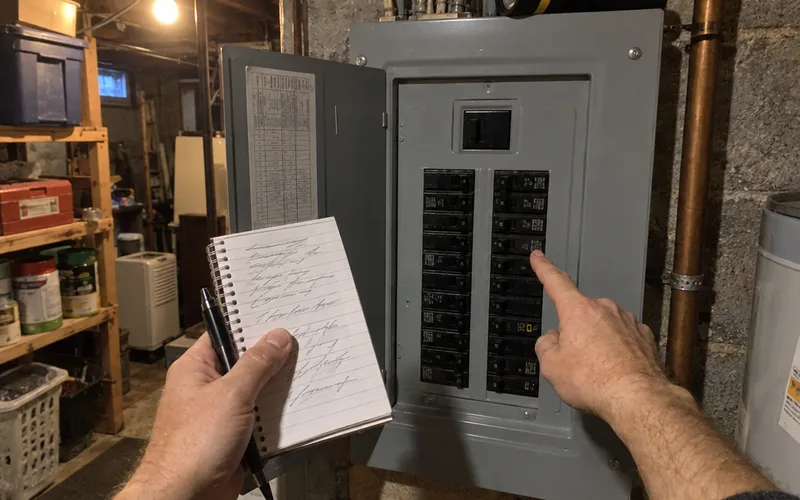
Then add up what those circuits draw.
The generator sizing guide walks through that math, including the startup surge of motors like a well pump or a fridge compressor.
Your circuit list decides the method, the cord and the size of everything else, so do it before you buy a single part.
A gas furnace is a load people often forget.
It burns gas, but its blower and controls still need power, so some owners add a plug to the furnace to run it from a cord.
Step 3: Match the Generator Outlet, Cord and Inlet
Now look at the outlet panel on your generator, because its largest outlet sets the size of your whole hookup.
Most home hookups use one of 2 twist-lock or straight-blade outlets: a 30-amp NEMA L14-30 or a larger 50-amp 14-50.
The inlet box on your house and the generator cord between them must match that outlet exactly.
That’s the job of the NEMA connector standard: each plug shape fits only the outlet built for its amps and volts.
If you’re unsure which side of the line you’re on, the 30 amp vs 50 amp comparison explains what each size can carry.
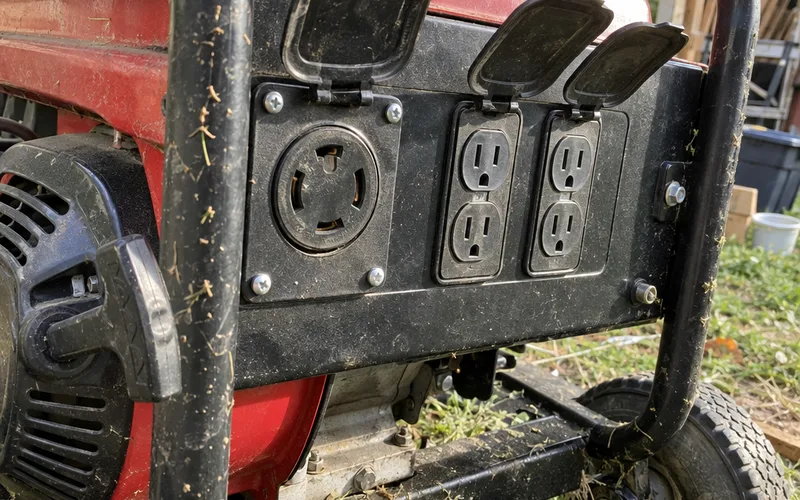
Some owners of 50-amp generators build their own cord, and you can follow the steps for making a 50 amp cord too.
Photograph the generator’s outlet panel and keep it with your panel photo.
Those 2 pictures answer most of the electrician’s first questions.
Step 4: Get the Permit and Book a Licensed Electrician
With your method, circuit list and photos ready, call your local building or permit office.
Ask 2 things: does a generator inlet need a permit, and can a homeowner pull it or must a licensed electrician?
Many towns require a permit for this work, and skipping it can mean fines or tearing the work out later.
The rules for permits on transfer switches vary enough by town that a phone call beats any general answer.
Here’s what to say when you book the electrician:
“I have a portable generator with a 30-amp L14-30 outlet. I’d like an outdoor inlet box and an interlock kit on my panel, which is a [brand and model]. Can you quote it with the permit?”
Swap in your own outlet and method.
That one message gets you a comparable quote from every electrician you call.
Step 5: Install the Power Inlet Box and Generator Breaker
This is the electrician’s step, and it’s the one that makes the hookup permanent.
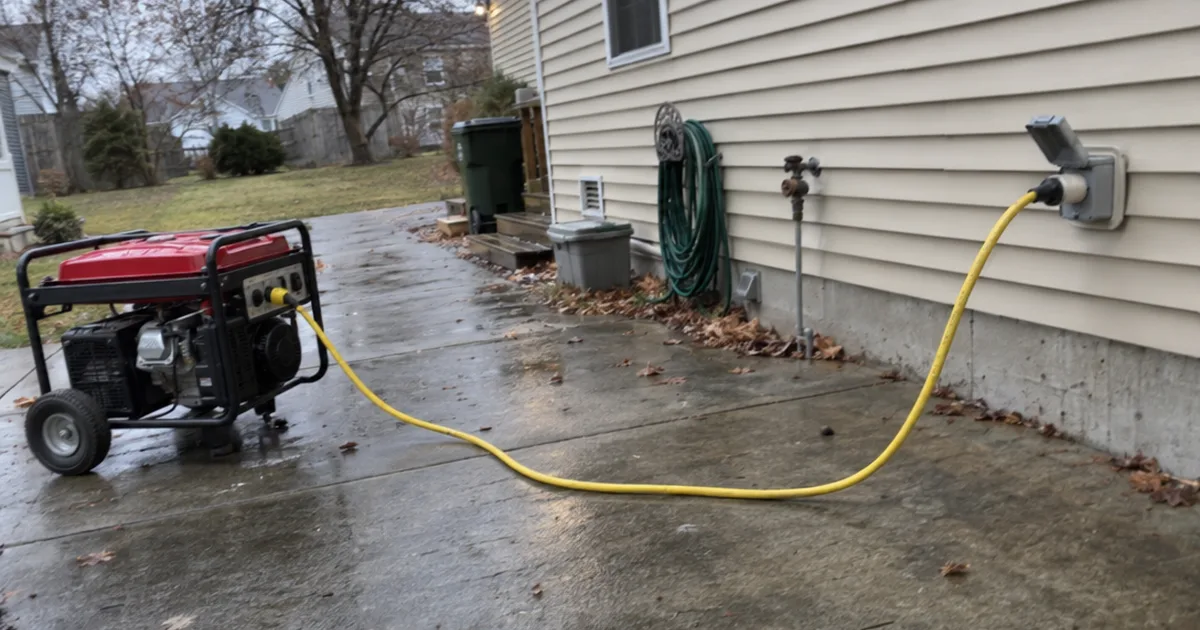
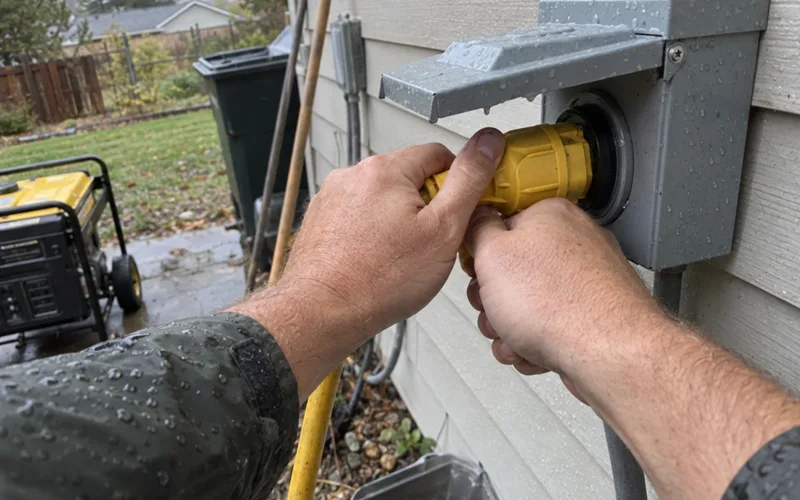
The power inlet box is a weatherproof socket on an outside wall, so your cord plugs into the house, not through a window.
From there, wire runs into the panel and lands on a new generator breaker.
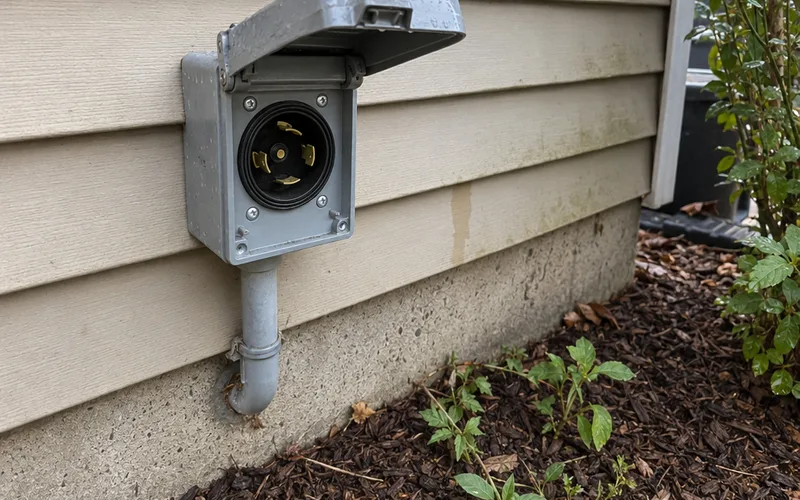
The inlet box installation guide covers where the box goes and how the wire gets inside.
That generator breaker has to be sized for the inlet and the wire, not just for the generator.
The details of choosing the breaker size explain why a mismatched breaker either trips constantly or fails to protect the wire.
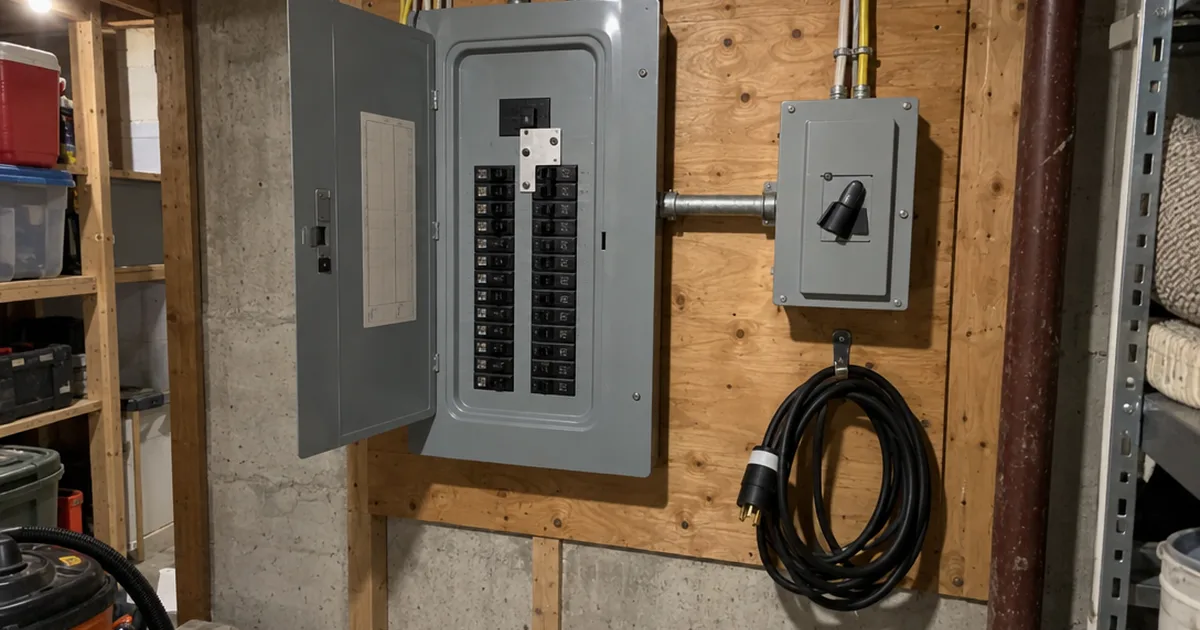
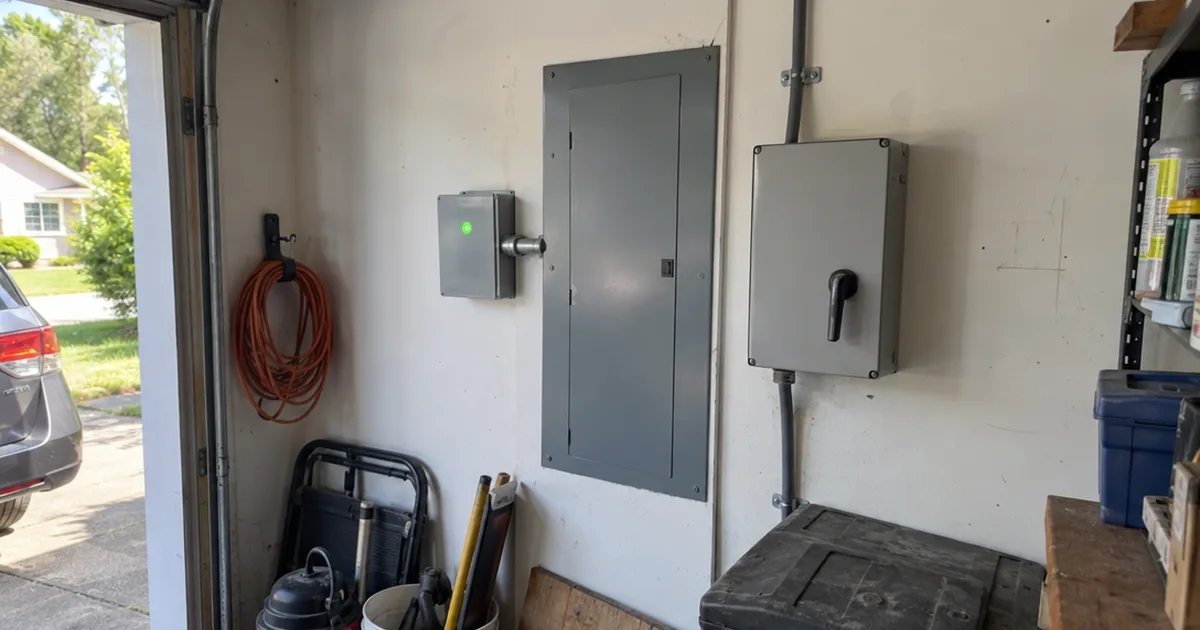
Last comes the safety device itself: the interlock plate on the panel cover, or the transfer switch mounted beside the panel.
Nothing in this step is safe to do with the panel live, and most of it is permit work, so let the electrician handle it.
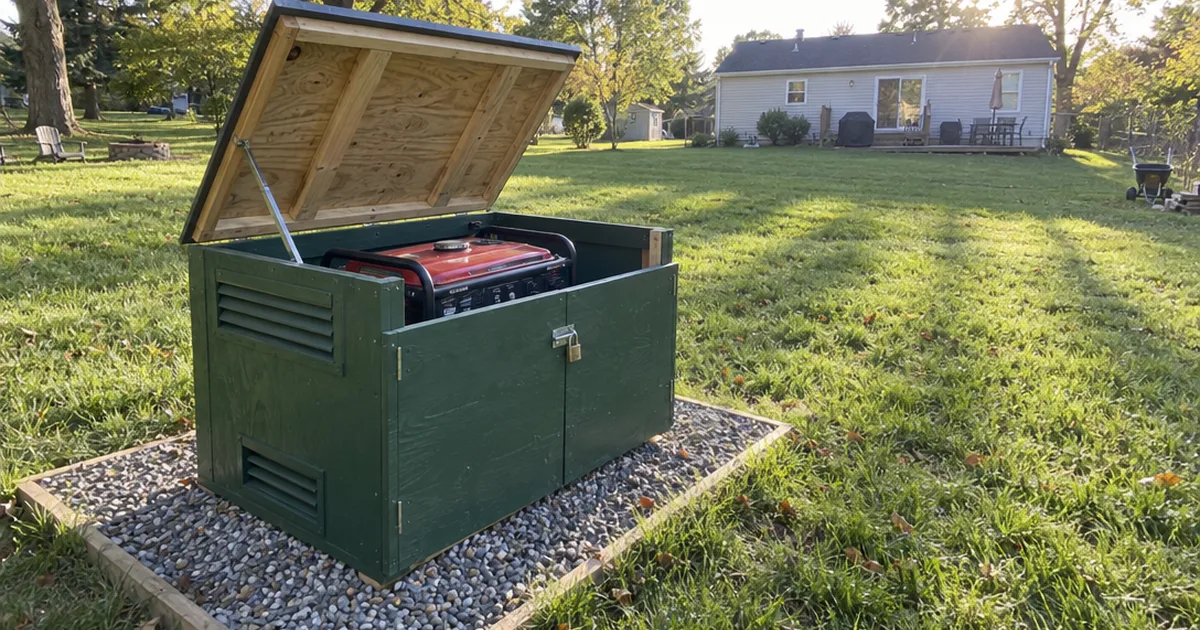
Step 6: Set the Generator Outside, Away From the House
On outage day, the first thing you do is roll the generator to its spot.
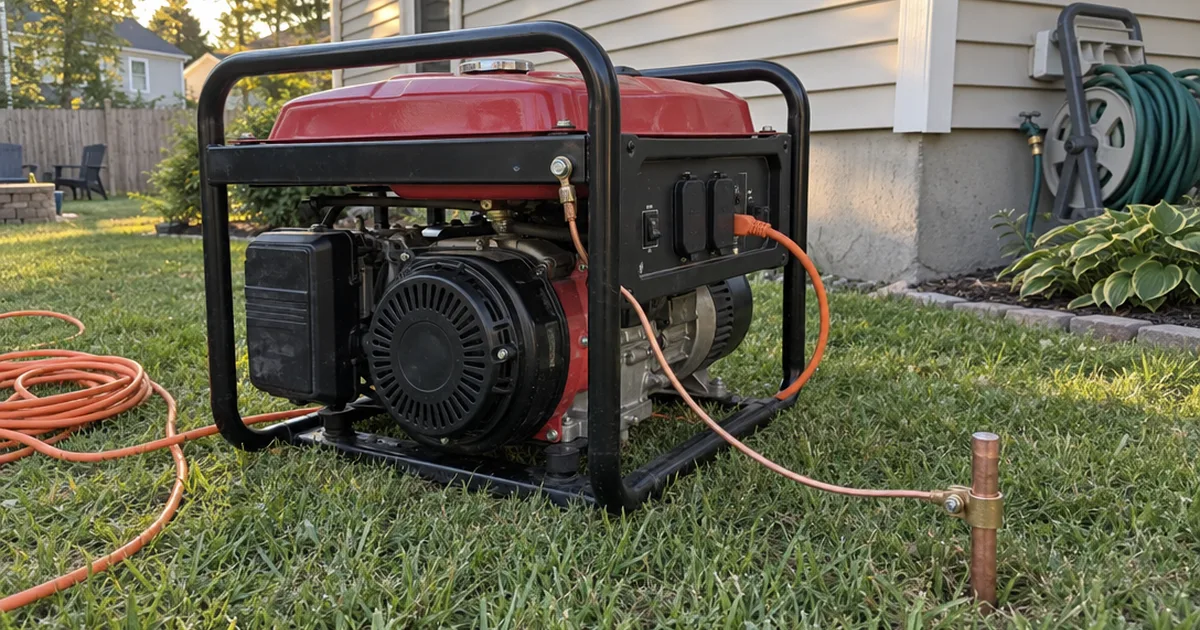
It goes outdoors on a dry surface, away from doors, windows and vents. Never use a garage or shed, even with the door open.
Why does this matter so much?
A gas or propane generator makes carbon monoxide, an odorless gas that can drift through an open window or a dryer vent into the house.
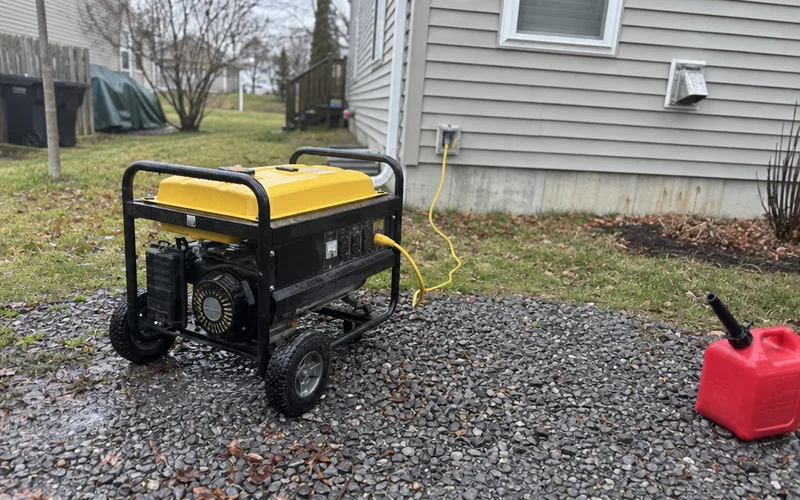
Your generator’s manual gives the minimum distance for your model, so follow it rather than a number you heard from a neighbor.
Pick the spot now, while the weather is good, and make sure your generator cord reaches the inlet box from there.
Step 7: Switch the House Over to Generator Power
Now the order of operations matters more than anything else in this guide.
Here’s the sequence for an interlock kit:
- Turn off every branch breaker in the panel.
- Turn off the main breaker.
- Slide the interlock plate so the generator breaker can move.
- Plug the generator cord into the generator, then into the inlet box.
- Start the generator and let it settle for a couple of minutes.
- Turn on the generator breaker.
- Turn on your must-run breakers one at a time, pausing between each.
With a manual transfer switch, the main breaker usually stays on.
You plug in, start the generator, then flip each circuit on the switch from LINE to GEN one by one.
Either way, the one-at-a-time habit is what keeps the generator from stalling.
Each motor gets its startup surge alone, instead of all of them hitting the generator at once.
Step 8: Switch Back When Utility Power Returns
When the neighbors’ lights come back, reverse the sequence in the same careful order.
For an interlock kit:
- Turn off your branch breakers.
- Turn off the generator breaker.
- Slide the interlock plate back and turn the main breaker on.
- Turn your branch breakers back on one at a time.
- Shut off the generator, let it cool, then unplug the cord.
A manual transfer switch is simpler: flip each circuit back to LINE, then shut the generator down and unplug.
One catch with an interlock kit: with the main breaker off, you can’t see the grid come back from inside the house.
So check a neighbor’s porch light or your utility’s outage map before you switch back.
Step 9: Run a Test Before the Next Storm
The last step is the one most owners skip, and it’s the one that saves you on a dark, wet night.
Pick a calm afternoon, turn off the main breaker and run the whole house on the generator through steps 6 to 8.
Watch which circuits you actually need and whether the generator struggles with any of them.
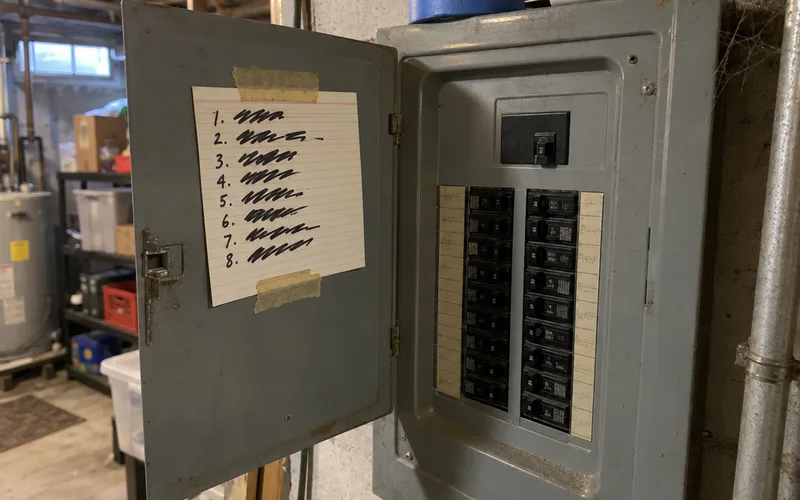
Then tape a short list inside the panel door: the breakers to turn on, in order, and the ones to leave off.
A tested hookup with a written breaker list beats a better generator you’ve never switched over in the dark.
What You Need to Connect a Generator to Your House
Connecting a generator to your house takes a generator cord, a power inlet box, an interlock kit or transfer switch, and a generator breaker with wire sized to the inlet.
Here’s what each part does, so you know what the electrician’s quote should include.
The Generator Cord
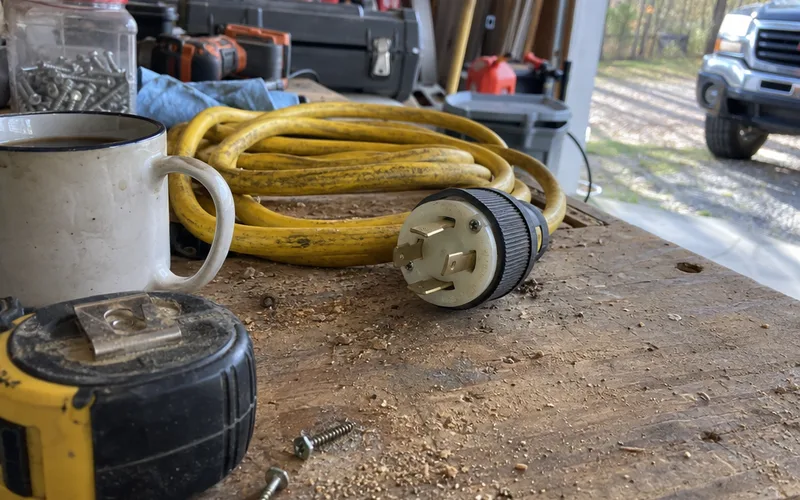
This heavy cord has a twist-lock plug at each end, matched to your generator’s outlet and to the inlet box.
It’s the only cord you touch on outage day, so buy it before the storm.
The Power Inlet Box
The inlet box must match the cord’s plug and amps, which is why Step 3 comes before any shopping.
The Interlock Kit or Transfer Switch
An interlock kit is made for one panel brand and model, so your panel photo decides which one fits.
A manual transfer switch is a separate box beside the panel with a set number of circuits.
The Generator Breaker and Wire
The electrician supplies the breaker, wire, conduit and fittings, sized to the inlet.
Ask for each as a separate line on the quote, so you can compare electricians fairly.
What Are the Legal Ways to Connect a Generator to Your House?
The 4 legal ways to connect a generator to your house are extension cords, an interlock kit, a manual transfer switch and an automatic transfer switch.
Each one keeps your house from being fed by the grid and the generator at the same moment.
That’s the whole legal test, and it’s why a plain cord into a wall outlet fails it.
Extension Cords Straight to Appliances
Extension cords are the cheapest legal hookup: you plug appliances into heavy-duty cords that run from the generator.
Nothing touches your panel, so there’s no electrician, no permit and no backfeeding risk.
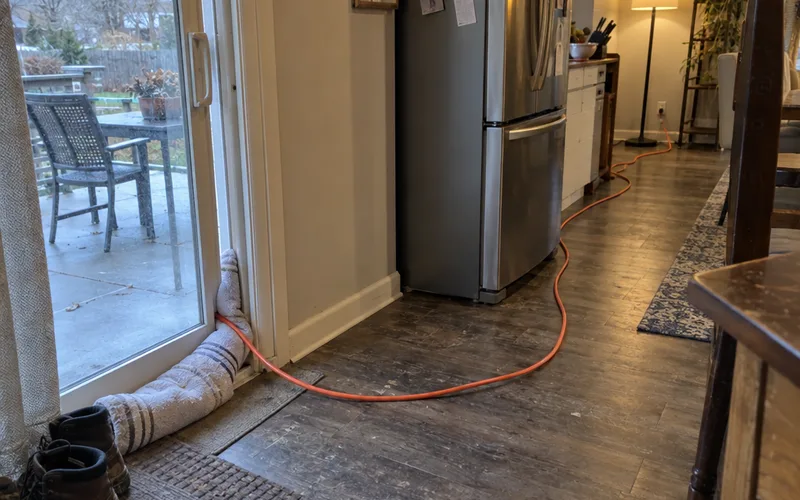
The trade-off is reach.
Hardwired loads like a furnace, a well pump or a water heater can’t plug into a cord, and you’re limited to the generator’s outlets.
Cord quality matters here, so check the extension cord picks for outdoor-rated, heavy-gauge options.
Interlock Kit and Inlet Box
An interlock kit is a sliding metal plate on your panel that stops the main breaker and the generator breaker from both being on.
Since it uses your existing panel, you can run any circuit in the house, as long as the total fits the generator.
It’s usually the less expensive panel option, and it needs no separate switch box.
The downside is that you manage the load by hand, so it’s easy to leave a big load on by mistake.
The full process for installing an interlock kit shows how the plate and the breaker go in.
Manual Transfer Switch and Inlet Box
A manual transfer switch moves a fixed set of circuits between grid power and generator power, and nothing else can reach the generator.
That makes it close to foolproof, since a central air unit you didn’t wire to the switch can never overload the generator.
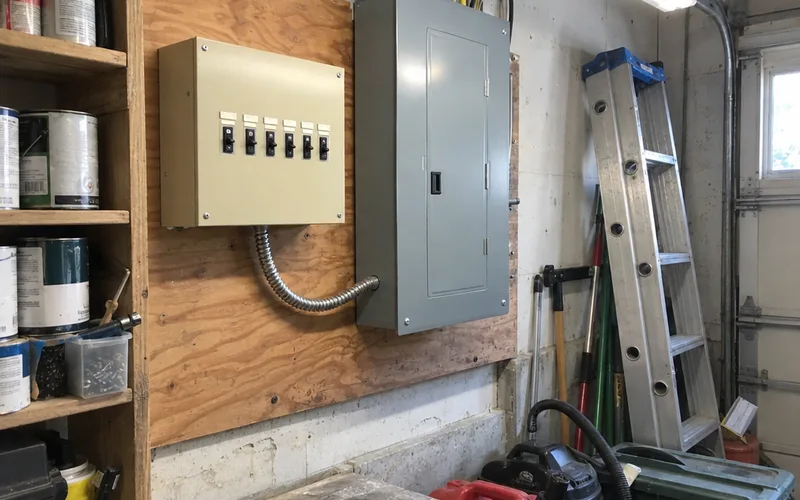
The cost is flexibility.
If your needs change, adding a circuit means rewiring, and the switch itself usually costs more than an interlock plate.
The transfer switch installation walk-through covers mounting and moving circuits in 8 steps.
Automatic Transfer Switch
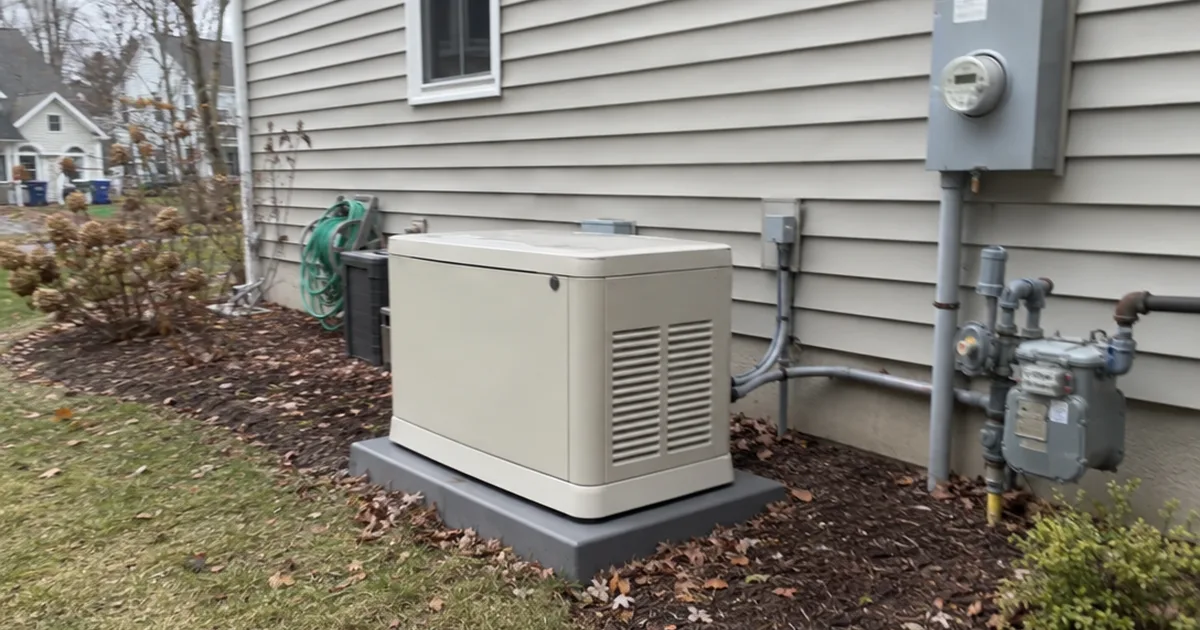
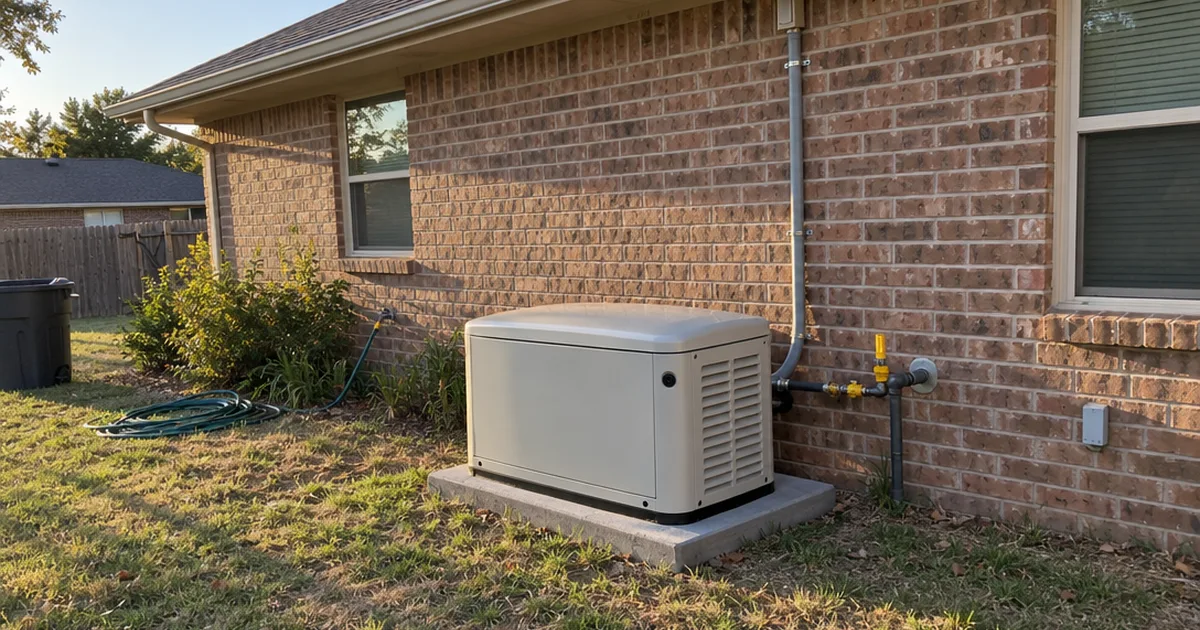
An automatic transfer switch senses the outage, starts a compatible generator and moves your circuits over on its own.
It’s normally paired with a home standby generator, though some portable models now offer a wired auto-start link to a compatible switch.
That setup is a bigger project with its own site rules, which the standby installation requirements cover.
So which one should you pick?
The interlock vs transfer switch comparison lines the 2 popular choices up side by side, so start there if you’re stuck between them.
Can You Connect a Generator Directly to House Wiring?
No, you can’t wire a generator straight into your house without an interlock kit or transfer switch, because its power can flow back into the utility lines.
That reverse flow is called backfeeding.
Here’s why it’s so dangerous:
Your generator’s power doesn’t stop at your meter.
It can re-energize a line that a utility crew believes is dead, and the shock can kill the person working on it.
It’s also a fire risk at home.
If grid power returns while the generator is tied in, 2 power sources meet in your panel. That can wreck the generator and start a fire.
The deeper explanation of what backfeeding a generator does covers how it happens and how to rule it out.
A double-male cord, sometimes called a suicide cord, is the most common way people backfeed, and it’s never safe.
Plug one end into the generator and the other end’s bare prongs are live, waiting for a hand.
Even with the main breaker off, one forgetful moment re-energizes the grid.
That’s also why your insurer may refuse to pay for damage traced to a homemade hookup.
How to Connect a Generator to Your House Without a Transfer Switch
You can connect a generator to your house without a transfer switch in 2 legal ways: extension cords or an interlock kit.
The interlock kit is the closest thing to a transfer switch without one.
It uses a generator breaker and an inlet box like the switch does, but the safety comes from a plate that blocks the main breaker.
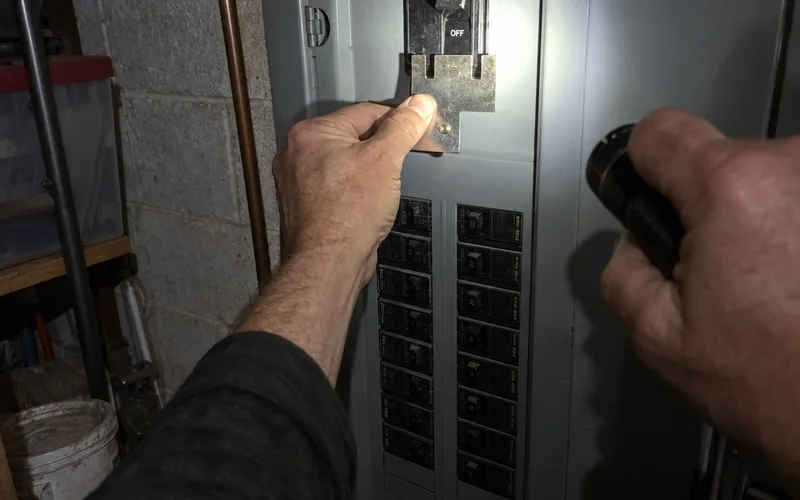
For cords, the goal is getting power inside without leaving a door wide open.
Some owners use a through-the-wall cord kit, one of the safer ways to run a generator extension cord into the house.
What you can’t do is plug into a wall outlet, a dryer outlet or the meter base.
Hookups at the meter base are your utility’s business, so call them before you buy anything that connects there.
Do You Need an Electrician to Connect a Generator to Your House?
You need a licensed electrician for any generator hookup that touches your panel: an interlock kit, a transfer switch or an inlet box.
Extension cords straight to appliances are the only setup you can do alone.
The panel work isn’t hard to describe, but it’s easy to get wrong in ways you won’t notice until an outage.
A panel-specific interlock, a correctly sized breaker and wire rated for the inlet are all details an inspector checks.
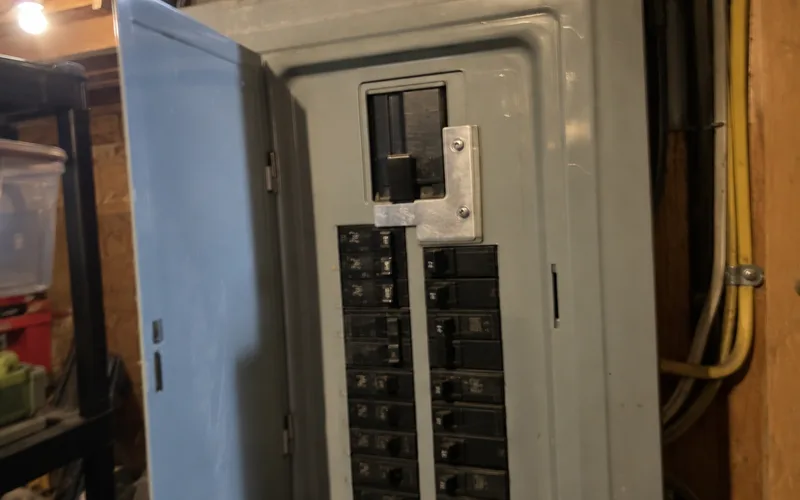
Some towns let homeowners pull a permit for their own house, and some don’t.
If yours does, the home generator installation section explains which jobs are realistic for an owner and which aren’t.
In other words, plan the job yourself and let a licensed electrician sign for the panel work.
How Much Does It Cost to Hook a Generator Up to Your House?
The cost to hook a generator up to your house depends on the method. Cords cost the least, an interlock kit costs more and a transfer switch usually costs the most.
Your real price comes from local labor, the permit fee and how far the inlet sits from the panel.
So the fastest way to an accurate number is to ask for it.
Here’s how:
- Send 2 or 3 electricians the message from Step 4, with your panel and outlet photos.
- Ask each to price an interlock kit and a manual transfer switch as 2 separate options.
- Ask whether the permit fee is included.
That gives you comparable quotes in a few days instead of a guess.
For a closer look at the cheaper route, the interlock kit installation cost breakdown lists what goes into that bill.
Does a Generator Need to Be Grounded When It Powers a House?
Whether a generator needs its own ground depends on how its neutral is built and how your interlock or transfer switch connects it.
So the answer comes from the generator manual and your electrician, not from a rule of thumb.
Here’s the short version.
Some generators tie the neutral to the frame and some leave it floating. That changes how they act when they feed a panel that has its own ground.
The comparison of a floating vs bonded neutral explains the difference in plain terms.
If yours is the floating type, the guide on whether a floating neutral generator needs grounding covers that exact case.
The broader rules for a generator ground rod cover the other setups.
Read your manual’s grounding section before the electrician visits, and bring the page with you.
Common Mistakes When Connecting a Generator to a House
The most common mistakes when connecting a generator to a house are buying parts first, switching everything on at once, forgetting automatic loads, skipping the test and parking the generator too close.
Each one comes from habit, not bad equipment.
- Buying parts first. An inlet or cord bought before you check the generator’s outlet often goes back.
- Switching everything on at once. Motors starting together can stall the generator.
- Forgetting automatic loads. A well pump or central air can kick on alone and overload it.
- Skipping the test. The first switchover in the dark is when mistakes happen.
- Parking it too close. A spot near a window or vent puts exhaust where you sleep.
Every one of these is fixed by Steps 2, 7 and 9: a written list, a slow switchover and one calm test run.
Frequently Asked Questions
Can I just plug my generator into a wall outlet?
No, you can’t plug a generator into a wall outlet, because that takes a double-male cord that backfeeds the grid and leaves live, exposed prongs on the loose end. Use an interlock kit or transfer switch with an outdoor inlet box instead.
Can I connect a generator to a dryer outlet?
No, a dryer outlet is built to deliver power to the dryer, not to take power in, so feeding a generator through it is backfeeding. Have an electrician add a power inlet box and an interlock kit or transfer switch, which gives you the same 240-volt connection safely.
What parts do I need to connect a generator to my house?
To connect a generator to your house you need a power inlet box, a generator cord that matches the generator’s outlet and the inlet, and either an interlock kit with a generator breaker or a transfer switch. Wire, conduit and fittings come with the electrician’s installation.
What size generator do I need?
The generator size you need is the total running watts of the circuits you plan to power at once, plus room for the largest motor’s starting surge. Add up the labels on your must-run appliances before you choose the inlet and cord, since the generator’s outlet decides both.
How do I install a whole house transfer switch?
A whole house transfer switch is installed at the service entrance by a licensed electrician under a permit, and it usually pairs with a home standby generator that starts on its own. A portable generator normally uses a smaller manual switch or an interlock kit instead.
How do I install a home generator?
A home standby generator is installed on a level pad outside, connected to a fuel line and wired to an automatic transfer switch, which means a permit, a licensed electrician and often a gas plumber. A portable generator only needs the inlet box and interlock or manual switch described above.
Final Thoughts
Connecting a generator to your house safely comes down to one rule: the house can never be fed by the grid and the generator at the same time.
This week, pick your method, write down the circuits you need and call your local permit office with one question: what does a generator inlet need here?